
Cement Duty Returns After December 2025 Shortages
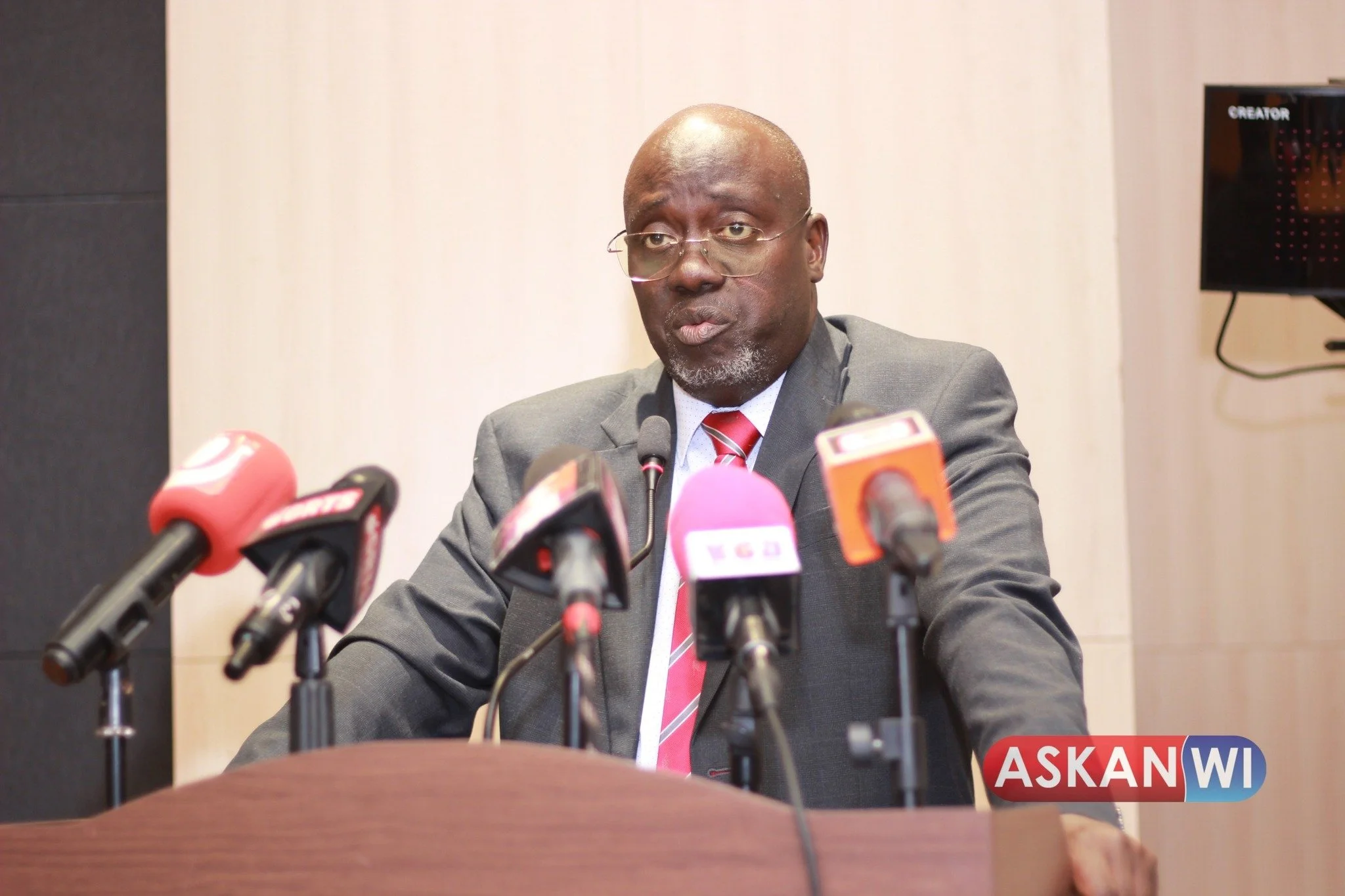
Minister for Trade Mod K. Ceesay © Askanwi
By Yusef Taylor, @FlexDan_YT
The Gambia’s Minister of Trade, Industry, Regional Integration and Employment, Hon. Mod K. Ceesay, has issued a press statement announcing that the cement excise duty will be reinstated from D30 to D180 per 50kg bag, effective 1st February 2026.
However, in December 2025, Minister Ceesay was questioned on whether the government’s decision to reduce the excise duty was permanent. In response, he explained that “at the moment, what we have is a temporary reduction of the excise duty on cement from D180 to D30, and it will remain so until further directives or direction.”
To justify the reinstatement, Minister Ceesay noted that the government has been implementing a protectionist measure to support its planned cement factories. This justification has raised concerns, given that The Gambia lacks the natural deposits required to process cement locally.
These concerns are confirmed in a study by the Gambia Consumer Competition and Protection Commission (GCCPC) on the country’s cement industry, which highlights that “geological investigations to date have not identified significant limestone deposits to support cement production.”
The GCCPC further questioned the government’s protectionist policy in the absence of cement deposits, noting that “had The Gambia been endowed with the major inputs for manufacturing cement and/or having a producing plant as in Senegal, the frequent shortage of cement and the resulting price hikes would not have been experienced.”
The study reveals that The Gambia’s cement industry is dominated by three companies—Jah Oil, GACEM, and SALAM—all of which import cement into the country and bag it locally for resale. To protect these companies, the government introduced high excise duties on cement imported from Senegal, effectively pushing out middlemen who also imported cement for resale.
Notably, one of the three leading companies began as a cement importer from Senegal. According to the GCCPC, SALAM “started as an importer of bagged cement from Senegal, brand name ‘Socosim,’ and switched to cement bagging in 2013 with the brand name ‘Salam’ at its plant located at Denton Bridge.”
This protectionist approach has been widely criticised by the public, as consumers continue to struggle with persistent cement price hikes. The government’s policy has repeatedly resulted in supply shortages, particularly since April 2024, when cement excise duties were increased from D30 to D180 per 50kg bag.
The Commission warned that “the frequent scarcity of cement resulting from supply not matching demand leads companies to capitalise on their competitors’ shortages to hike prices from time to time.”
According to the study, price increases are also influenced by the depreciation of the dalasi against the CFA. Using data from 2010 to 2014, the report noted that “importers usually cite the appreciation and availability of the CFA as the reason for price increments.”
The government’s protectionist policy was put to a serious test in early December 2025, when Cabinet convened to address cement supply challenges following difficulties faced by importers in securing vessel access at the Port of Banjul.
To ease the shortages, the excise duty was reduced to D30 per 50kg bag in late December 2025. However, this temporary reduction lasted for less than two months. It remains to be seen whether the three main cement importers will be able to meet the country’s cement demand in 2026.
