
Commercial Drivers in Soma Decry Rise in Bridge Tariff
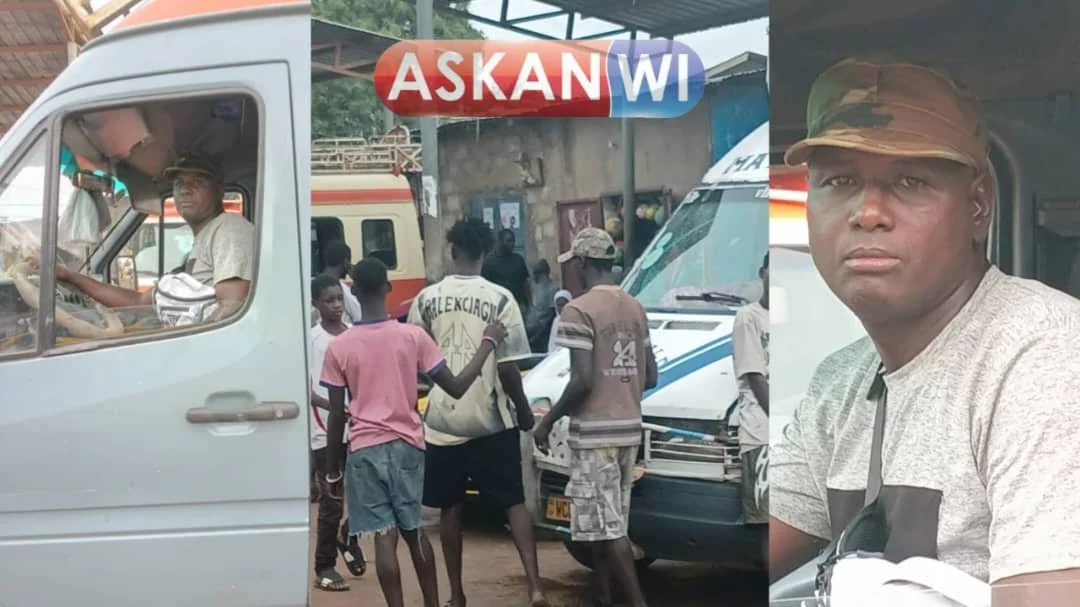
Malal Jallow Driver at Jarra Soma © Askanwi Media
By Eliman Sowe,
Commercial drivers in Jarra Soma have raised concerns over the D200 toll fee levied on them at the Senegambia Bridge.
Speaking to Hilltop FM, the drivers attributed their low returns to the high toll charged on every crossing at the Senegambia Bridge, coupled with the high cost of fuel.
Malal Jallow, who drives a seven-seater between Soma in the Lower River Region and Farafenni in the North Bank Region, said they are facing tough conditions to make profits.
“We, the seven-seater drivers, are paying the same price as 14-passenger vehicles at the toll booth. I think that should be considered very well.” He added that, in addition to the toll cost, the rising cost of fuel is also affecting them.
The Senegambia Bridge connects the north and south banks of The Gambia and is in the hands of Africa50, which entered into an asset recycling partnership with the government in 2024, a deal that has received criticism from the opposition and other Gambians.
Momodou Jallow, a sprinter van driver, also echoed similar sentiments about the crossing toll and the rising cost of fuel.
He noted, “We want the government to know the costly price of fuel is making our job difficult to a point where the little profit we have goes straight into essential household needs and feeding, leaving us with no savings.”
Jallow further explained that, apart from the mentioned issues, they face additional challenges, including “the unequal treatment of the vans and bus services by the police officers who often park them for overload while allowing the buses to fill up beyond their capacity.”
He added, “Even if we carry five passengers in rows, people will report us to the police for overload.” Jallow questioned the authorities, “Why are we treated differently from the buses when we all operate in the transport sector?”
Upon hearing the concerns of his voters, Omar Ceesay, President of the General Transport Union, promised to engage with relevant authorities, notably the government and Africa50, in future meetings where the issues surrounding the bridge tariff will be discussed.
He explained that “earlier this year, we had a meeting with Africa50 alongside government, and they declared their intention was to increase the fee from D200, citing lack of profit and even telling us they had government approval.”
Although Ceesay said, “We insisted instead that it should be reduced from D200 because many transporters were also complaining that the D200 price tag was expensive,” the increment proceeded.
He said he does not have clear information about the terms and conditions of the government’s contract with Africa50 but maintained that “the union will always advocate” for a reduced price structure that will not affect the economy and is in line with the national interest.
On the issue of overloading, he warned that it should be treated fairly by law enforcement.
“You know transport has different modalities, and mass transport is different from small transportation. Of course, each bus has a capacity it registered with government, so only the police, not the GTU, can determine whether a bus is overloaded or not based on its capacity.”
He also explained that “there are vehicles that are built to accommodate passengers to stand in what is called city transportation, but in terms of international transport, it is allowed for passengers in the bus to stand,” adding that “only the police can determine the issue of overload”.
When pressed further on the alleged bias by the police when it comes to overloading by GTSC buses, he said, “When it comes to international best practices within Kombo or urban areas, the law allows buses to have passengers standing. There are buses designed for that, but for long-distance transport, it is not allowed because it has risk factors.”
“The law must not have selective justice or segregation. Whether it is a GTSC driver or any driver found wanting, they should face the full force of the law because it will amount to an offence against the Motor Traffic Act, and no one is above the law,” he stressed.
