
Ghana Slams British-Nigerian Kemi Badenoch Over Slave Trade Remarks
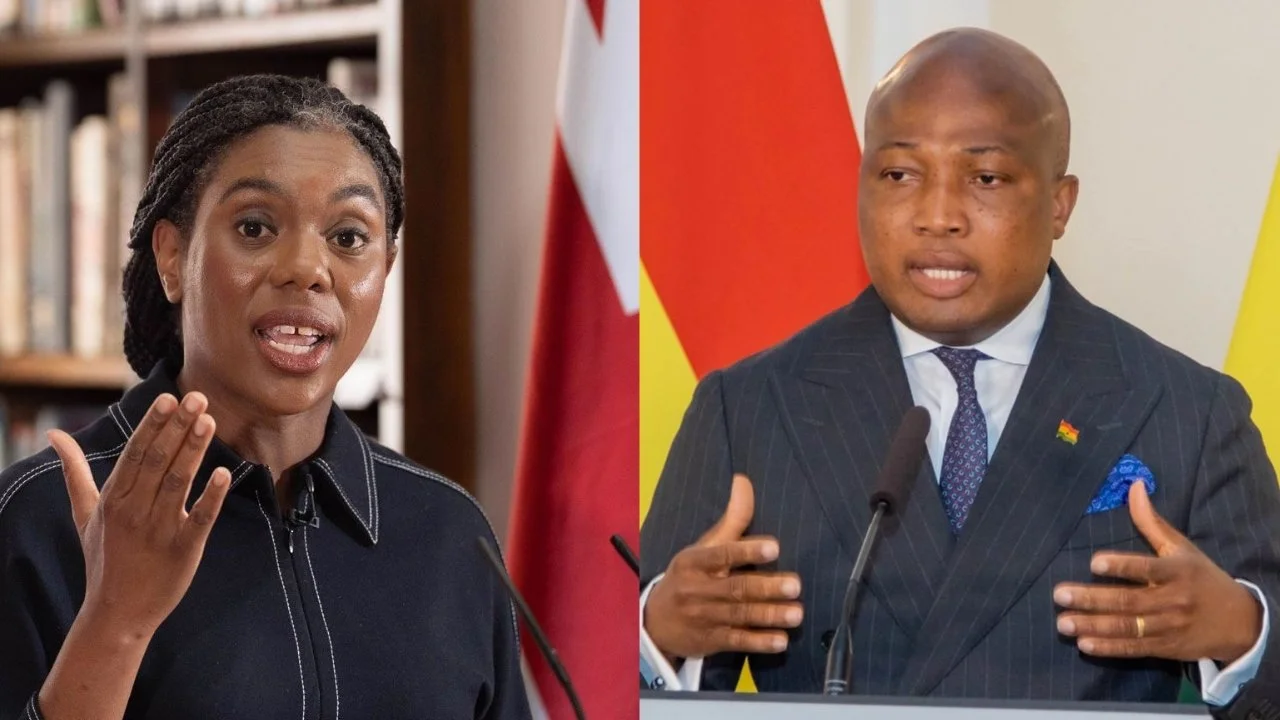
Kemi Badenoch and Ghana Foreign Minister © Channel One News
By Edward Francis Dalliah, Jr.
Ghana’s Foreign Affairs Minister, Samuel Okudzeto Ablakwa, has sharply criticised UK Conservative Party leader Kemi Badenoch following her remarks dismissing the idea that UK should not be financially accountable for the transatlantic slave trade.
The diplomatic spat comes amid heightened global debate over reparations after a recent United Nations resolution, championed by Ghana, declared the transatlantic slave trade the “gravest crime against humanity” and called for reparatory justice.
Soon after the resolution was adopted on 25th March 2025 at the United Nations General Assembly, Badenoch posted on X that the UK “shouldn’t be paying for a crime we helped eradicate.” She also criticised UK Prime Minister Keir Starmer for abstaining rather than voting against the resolution, writing: “Why didn’t Starmer’s representative vote against this? Ignorance…or cowardice?”
Her comments drew a swift response from Hon Ablakwa. In a video posted by DW, he said Badenoch’s remarks were “an opinion that is clearly not the fact.” He pointed to the historical reality that slave masters in the UK were compensated when slavery was abolished.
He added that while Badenoch expressed concern about taxpayers, she did not appear concerned about taxpayers having funded compensation for slave owners. “The enslaved themselves and their descendants were never compensated, and she doesn’t appear concerned about that. That is really, really unfortunate, regrettable and unconscionable. I do hope she will take a second look at her history notes,” he said.
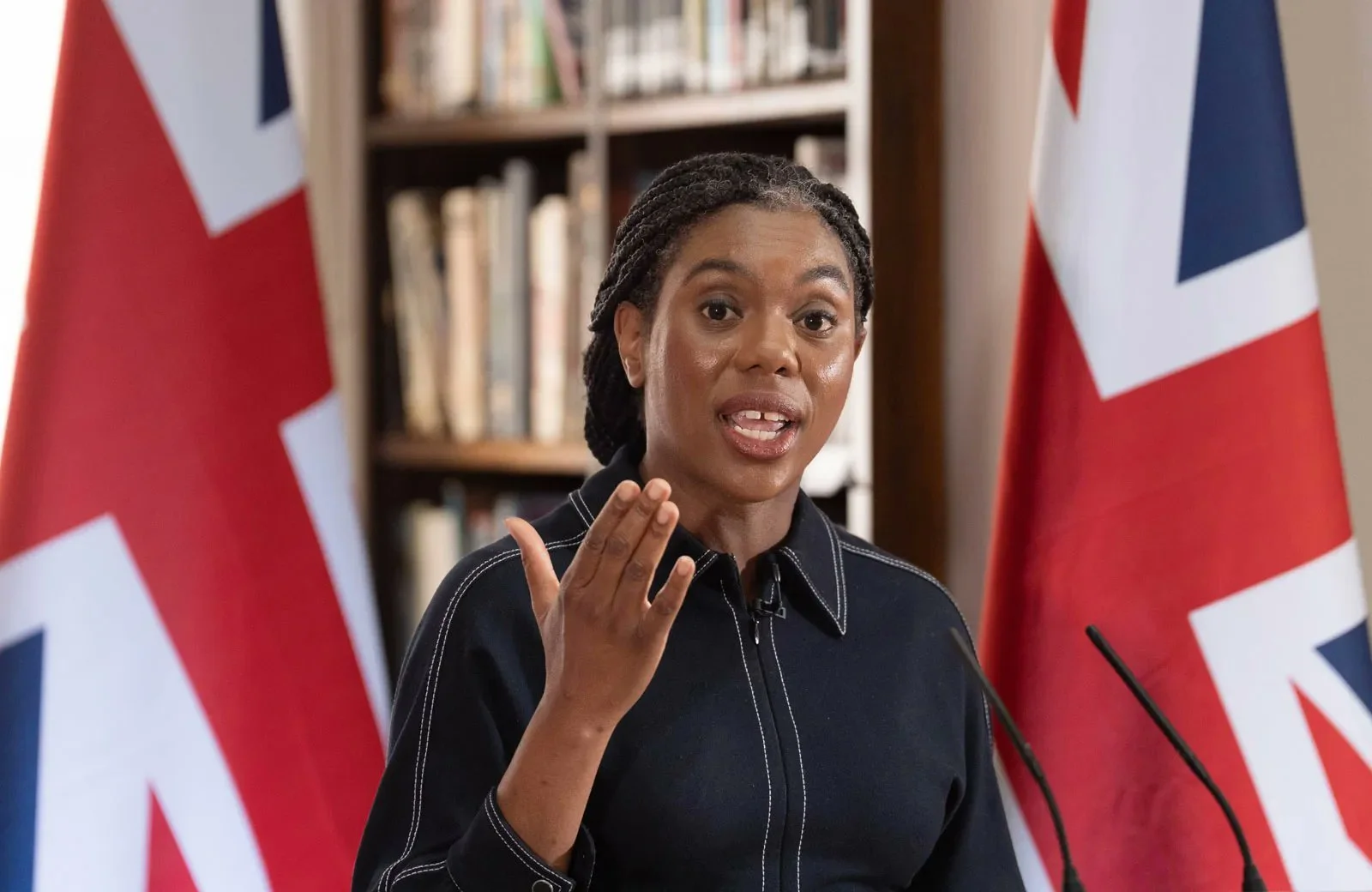
Kemi Badenoch Conservative Party Leader © Channel One TV
Badenoch’s comments continue to expose divisions between African countries and Western powers. While many African states, supported by the African Union, are calling for formal apologies and compensation, countries such as the United Kingdom have expressed reservations, particularly over the legal and financial implications of reparations.
Badenoch, who is of Nigerian descent, has been at the centre of the controversy. According to the United Nations, the resolution spearheaded by Ghana received 123 votes in favour, while Argentina, Israel, and the United States voted against, and 52 countries abstained.
For more than 400 years, millions of people were taken from Africa, placed in chains, and transported across the Atlantic to the New World, where they toiled on cotton, sugar, and coffee plantations under brutal conditions. These Africans were stripped of their basic humanity, including their names, and forced to endure generations of exploitation, effects that continue to reverberate today in the form of persistent anti-Black racism and discrimination.
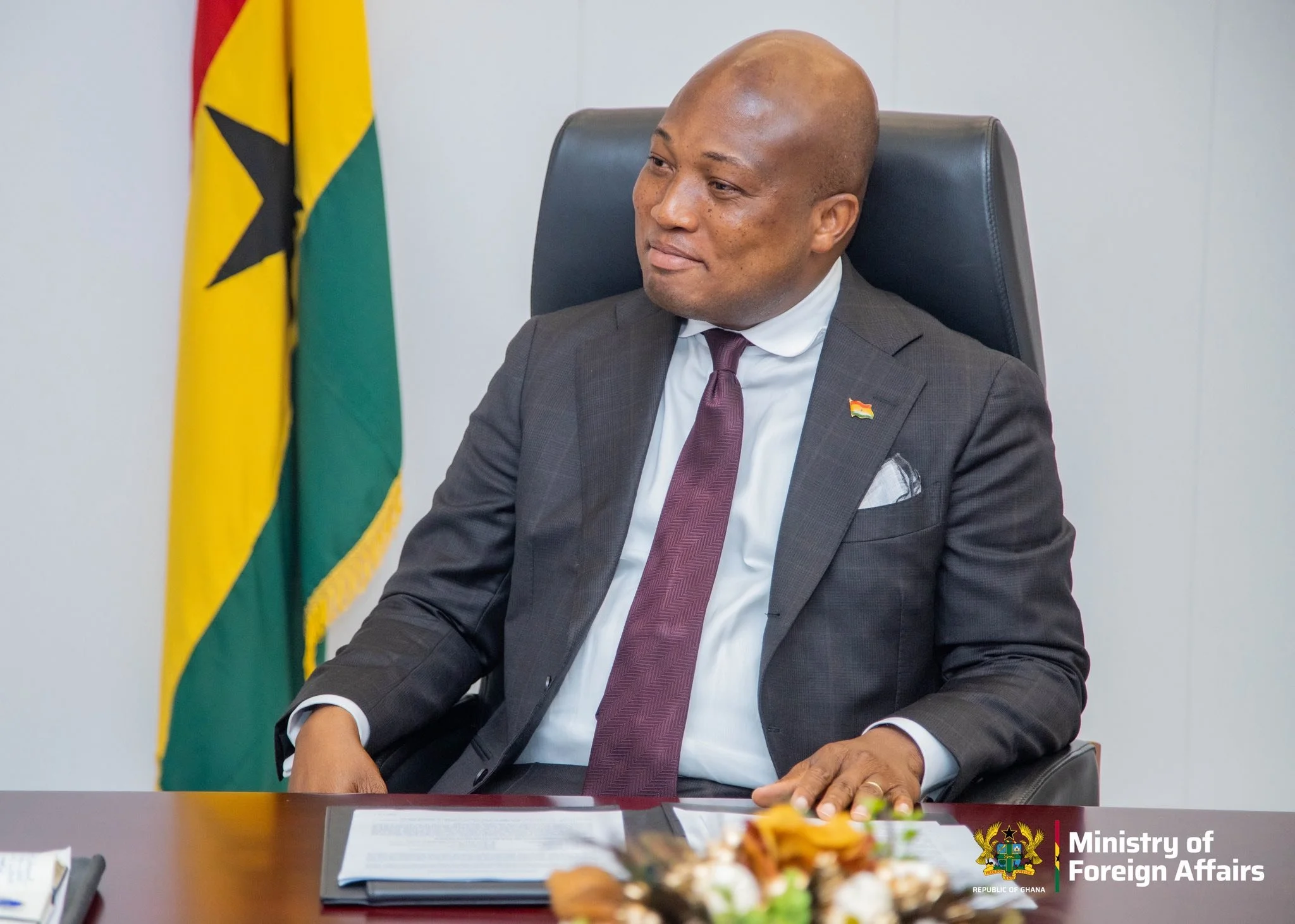
Ghana’s Foreign Affairs Minister, Samuel Okudzeto Ablakwa © Ghana Ministry of Foreign Affairs
In The Gambia, the story of Kunta Kinteh reflects how young men and women were captured and transported across the Atlantic to work in Europe and the Americas.
In a UN publication, Ghana’s President, John Dramani Mahama, speaking on behalf of the 54-member African Group ahead of the vote, said the resolution emphasised “the trafficking of enslaved Africans and racialised chattel enslavement of Africans as the gravest crime against humanity,” citing its scale, duration, systemic nature, brutality, and enduring consequences.
A publication by Askanwi on external debt, climate debt, and reparations noted that “it is a travesty that African nations are being crushed under the weight of foreign debt, while the world’s richest countries continue to evade responsibility for the climate crisis and reparations related to the slave trade and unfair economic practices.”
This perspective reinforces the argument for reparations, particularly given that slave owners were compensated following abolition, while the enslaved and their descendants were not.
The exchange between Hon Ablakwa and Badenoch underscores the persistence of unresolved historical grievances in shaping modern diplomatic relations. For Ghana and other African countries, the push for reparations is part of a broader effort to secure historical justice and address inequalities that continue to affect African nations.
