
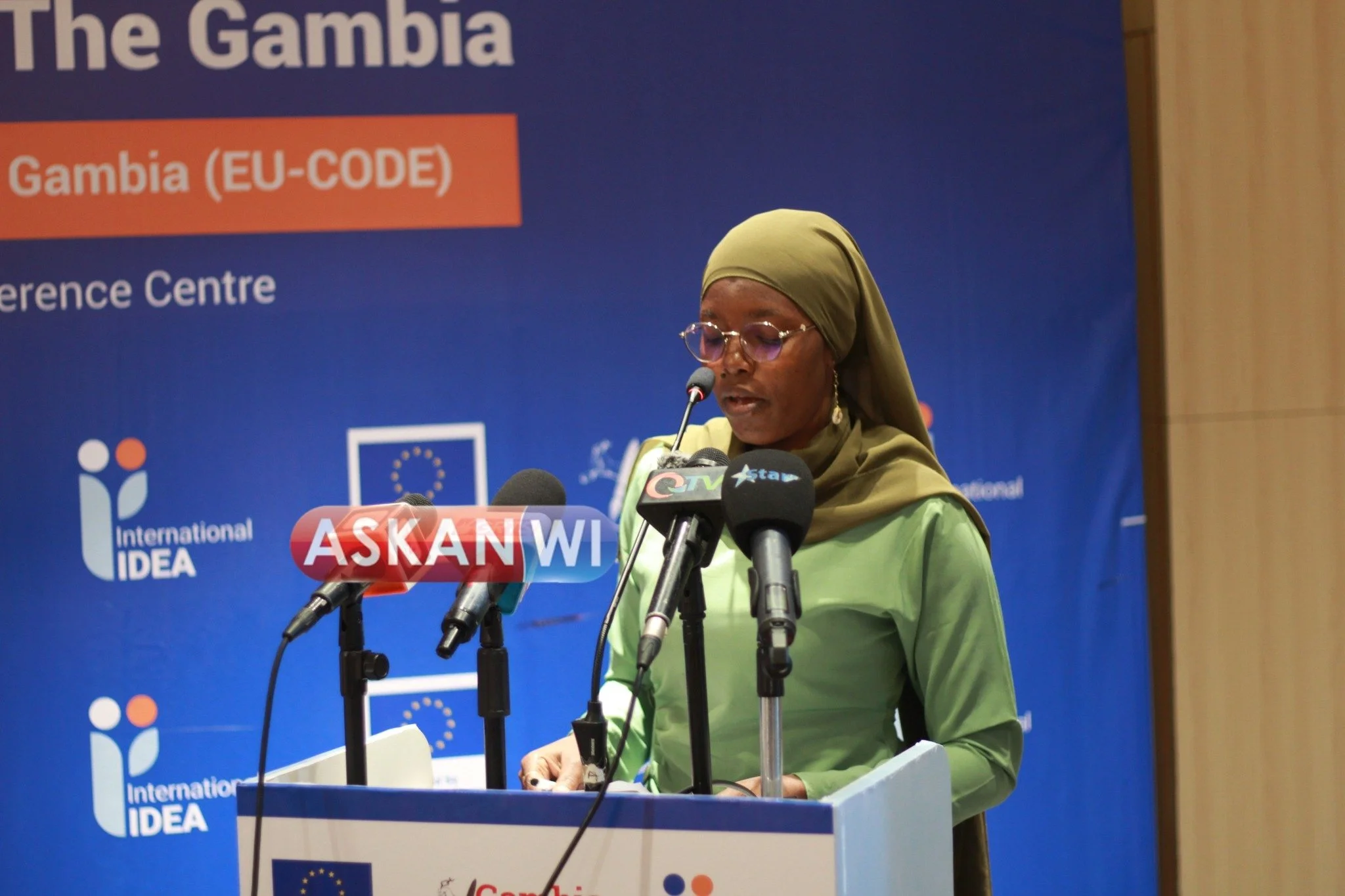
GPU President Isatou Keita © Askanwi
Gambian Media, CSOs Reject Government’s Proposal to Register Journalists, Social Media Users
By the Gambia Press Union,
Fajara, 10 April, 2026 - The Gambia Press Union (GPU) and media industry stakeholders, including regulatory and professional associations, academics, and civil society groups, have “totally rejected” a government proposal to register journalists, online media, and social media users in a resolution on Wednesday.
The new regulations, proposed by the Ministry of Information and the state-controlled agency, the Public Utilities Regulatory Authority (PURA), also include provisions that seek to moderate online content and would reverse gains made in press freedom and freedom of expression in The Gambia.
At an emergency meeting held at the GPU on 8th April, 2026, stakeholders resolve that the State-Controlled registration and accreditation regime gives unlawful and arbitrary powers to the government to decide who practices journalism or not.
“The regulations give PURA the powers to register, suspend registration or revoke registration of journalists and influential social media users,” GPU Secretary General Modou S. Joof said. “The proposed regulations on journalists’ and social media users’ registration and online media licensing fall outside PURA’s statutory powers and therefore constitute an unlawful exercise of administrative authority.”
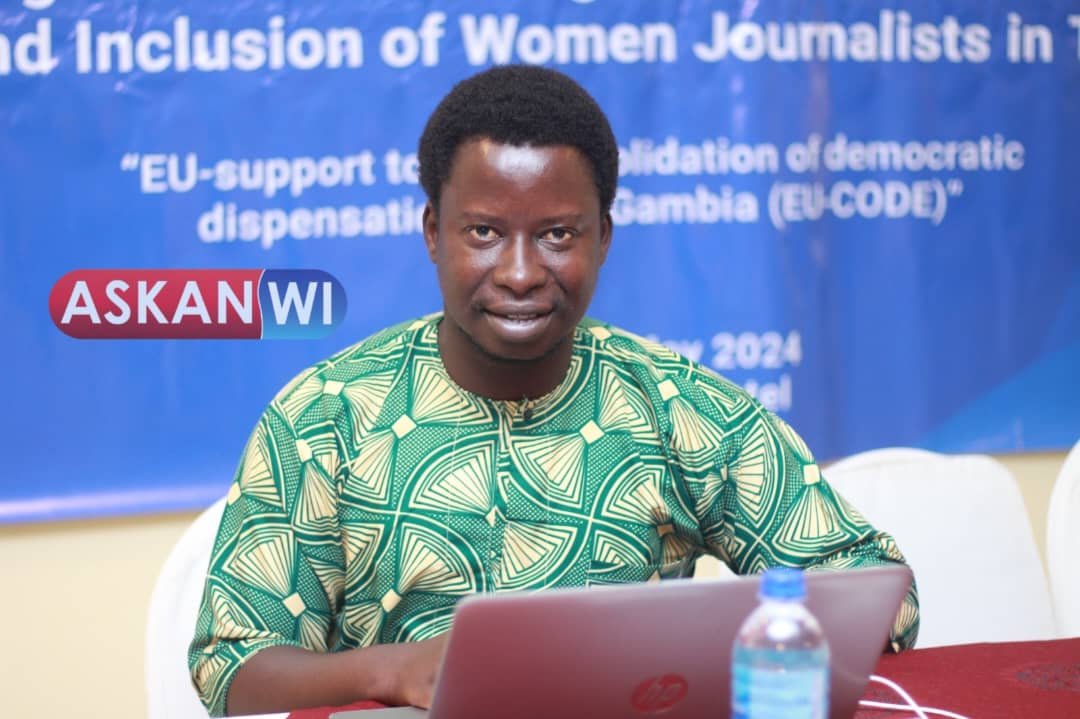
GPU’s Secretary General Modou Joof © Askanwi
According to the resolution signed and endorsed by 16 professional media associations, regulatory and professional associations, academic, and civil society groups, the proposed regulations do not only restrict freedom of expression online, but also promote state censorship, news and online content moderation, and interference with editorial independence.
The GPU, Media and CSO stakeholders have also resolved to not give any credence to PURA’s proposal by not partaking in activities that seek to enforce them.
“We hereby totally reject the proposal,” GPU President Isatou Keita said. “We cannot participate in the proposed consultations on the Broadcasting and Online Content Regulations, 2026; Broadcasting and Online Content Licensing, Registration and Authorisation Guidelines, 2026; and Journalists Registration Guidelines, 2026, since our participation would be seen to legitimise the proposed state-controlled system of accreditation and registration of journalists, online media, and social media users.”
The stakeholders also agreed that no journalist, journalists’ association, media house or social media user should register with PURA only to have their constitutional right to practice journalism, to seek employment in The Gambia or to seek, receive, and impart information, or to freely express themselves online, arbitrarily taken away from them.
The parties to the resolution also agreed that the proposed regulations will be challenged in domestic and regional courts at the appropriate time if they come into effect and are enforced.
They recommended that the government immediately abandon its plan to impose a general State system of registration and licensing of journalists, online media, and social media users.
They also proposed that the Gambia government strengthen the Media Council of The Gambia (MCG), which was setup by the GPU in line with the Declaration of Principles on Freedom of Expression and Access to Information in Africa, which states that “States shall encourage media self-regulation which shall be impartial, expeditious, cost-effective, and promote high standards in the media”.
Conferring absolute authority on a state-controlled institution like PURA, which is prone to political and executive influence, is inconsistent with Principle 17 of the Declaration, online but which states that “a public regulatory authority that exercises powers in the areas of broadcast, telecommunications or internet infrastructure shall be independent and adequately protected against interference of a political, commercial or other nature.”
