
Journalists Welcome GPU’s Eye-Opening Hazardous Environment Awareness Training
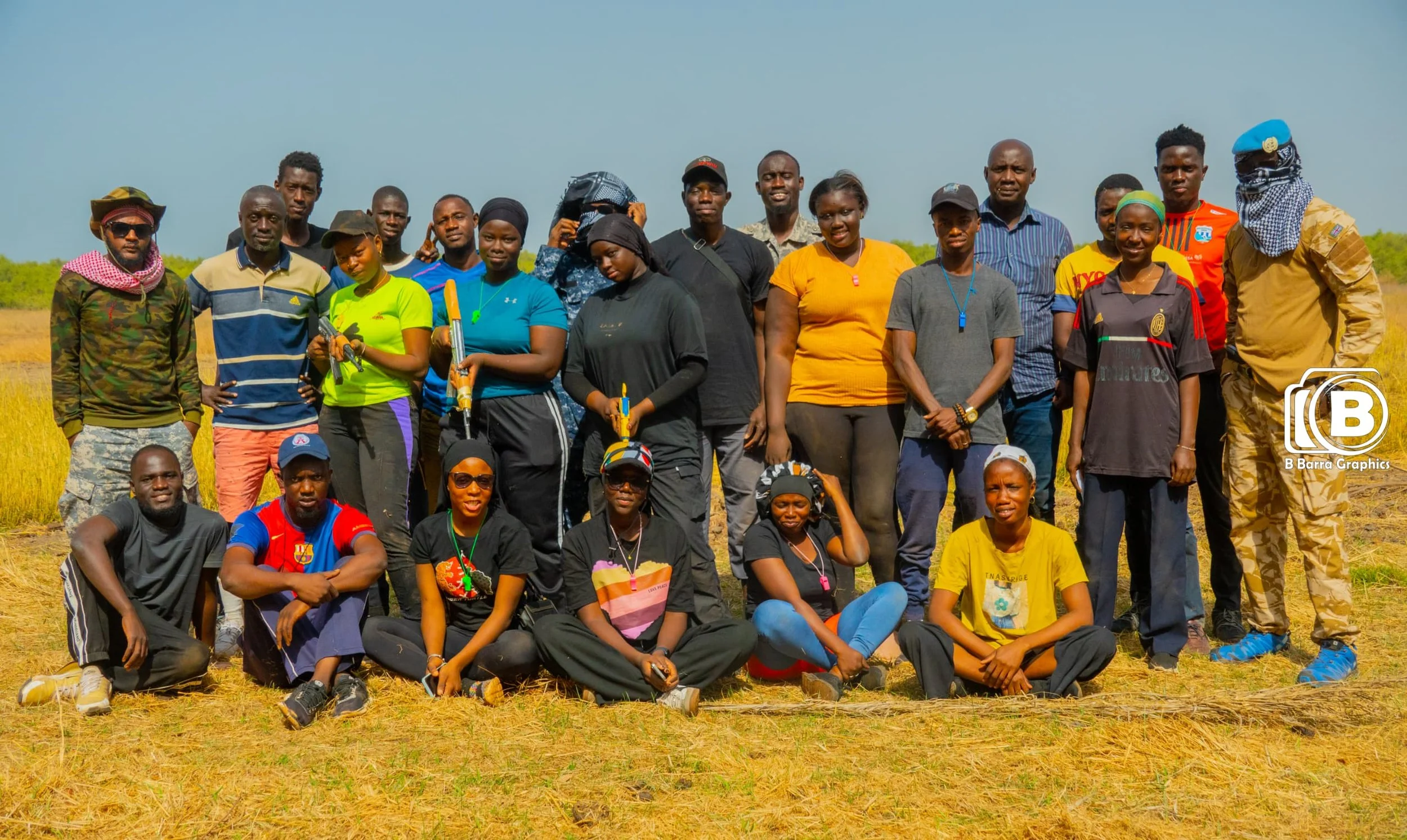
Journalists at Training © B Barra Graphics
By Edward Francis Dalliah, Jr.
As risks against journalists persist in the country, participants of the recent Gambia Press Union’s (GPU) Hazardous Environment Awareness Training (HEAT) have revealed that the programme has become a critical lifeline, equipping them with skills that could mean the difference between safety and serious harm.
Held in Jarra Jenio, Lower River Region (LRR), from 7th to 11th April 2026, the programme brought together 21 journalists from print, broadcast, and online media to prepare for the growing dangers associated with field reporting.
Speaking after the training, Senior National Correspondent for the Alkamba Times, Alieu Ceesay, described the experience as “more than just training”, calling it “a life experience”. He said the scenarios covered reflect the realities journalists are already encountering on the ground.
In recent years, journalists have faced tear gas and other threats while covering public events, including protests that escalate into violence, experiences Ceesay himself has endured. These risks were underscored by GPU President Ms Isatou Keita during the recent commemoration of World Press Freedom Day on 3rd May 2026.
She revealed that “in May 2025, journalists Sheriff Conteh of In-depth Media and Alieu Ceesay of The Alkamba Times were arrested while covering a peaceful protest in Banjul over the government’s handling of a former president’s assets. During the same protest, photojournalist Matarr Jassey of The Fatu Network was roughed up by police”.
These incidents highlight the persistent dangers journalists face in the line of duty. The Alkamba Times journalist told Askanwi that “when covering protests, one of the most common things is the use of tear gas to disperse crowds”. However, he stressed that the training has now equipped him with practical strategies to stay safe in such situations.
Another participant from Gambian Talents TV (GTTV), Modou Lamin Jobe, described the training as “very fruitful”, particularly in preparing journalists for how to respond “when trapped in hazardous environments”. He added that the training introduced him to critical safety practices he ‘had never encountered in his career’.
A reporter from the Standard Newspaper, Arret Jatta, also described the training as “one of a kind”, noting that it mirrors the real challenges journalists face, from protests to high-pressure press conferences.
Historical records further illustrate the risks. Volume 7 of the now-defunct Truth, Reconciliation and Reparations Commission (TRRC) documented numerous incidents exposing journalists to hazardous environments, including the 2004 assassination of Deyda Hydara, co-founder of The Point Newspaper and a former GPU president.
While conditions have improved under the current administration, incidents of violence against journalists continue to be reported. In 2017, Foroyaa journalist Kebba Jeffang was attacked by militants of the United Democratic Party (UDP) during a joint press conference at the party’s Manjai Kunda bureau. In 2019, two journalists were reportedly attacked by supporters of the Alliance for Patriotic Reorientation and Construction (APRC) at the High Court in Banjul.
More recently, Jollof News Online Editor Momodou Justice Darboe was allegedly assaulted by police officers within the premises of the Banjul Magistrates’ Court after taking photographs of two accused persons outside the courtroom.
GPU Secretary General Modou Joof explained to Askanwi that the HEAT programme is designed to prepare journalists for “extreme situations that they might find themselves in during the course of their work”.
Funded by the National Endowment for Democracy (NED), the training covered first aid and trauma management, travel safety in hostile zones, negotiation skills, surviving attacks, and coping with arrest or detention.
Joof revealed that the GPU has trained 104 journalists so far over the years and hopes to expand the programme, if resources are available.
With tensions rising ahead of the presidential election and protests becoming more frequent, the latest group of trained journalists may now be better prepared, but the dangers they face remain a pressing concern.
