
National Land Policy Steering Committee Launched to Strengthen Land Governance
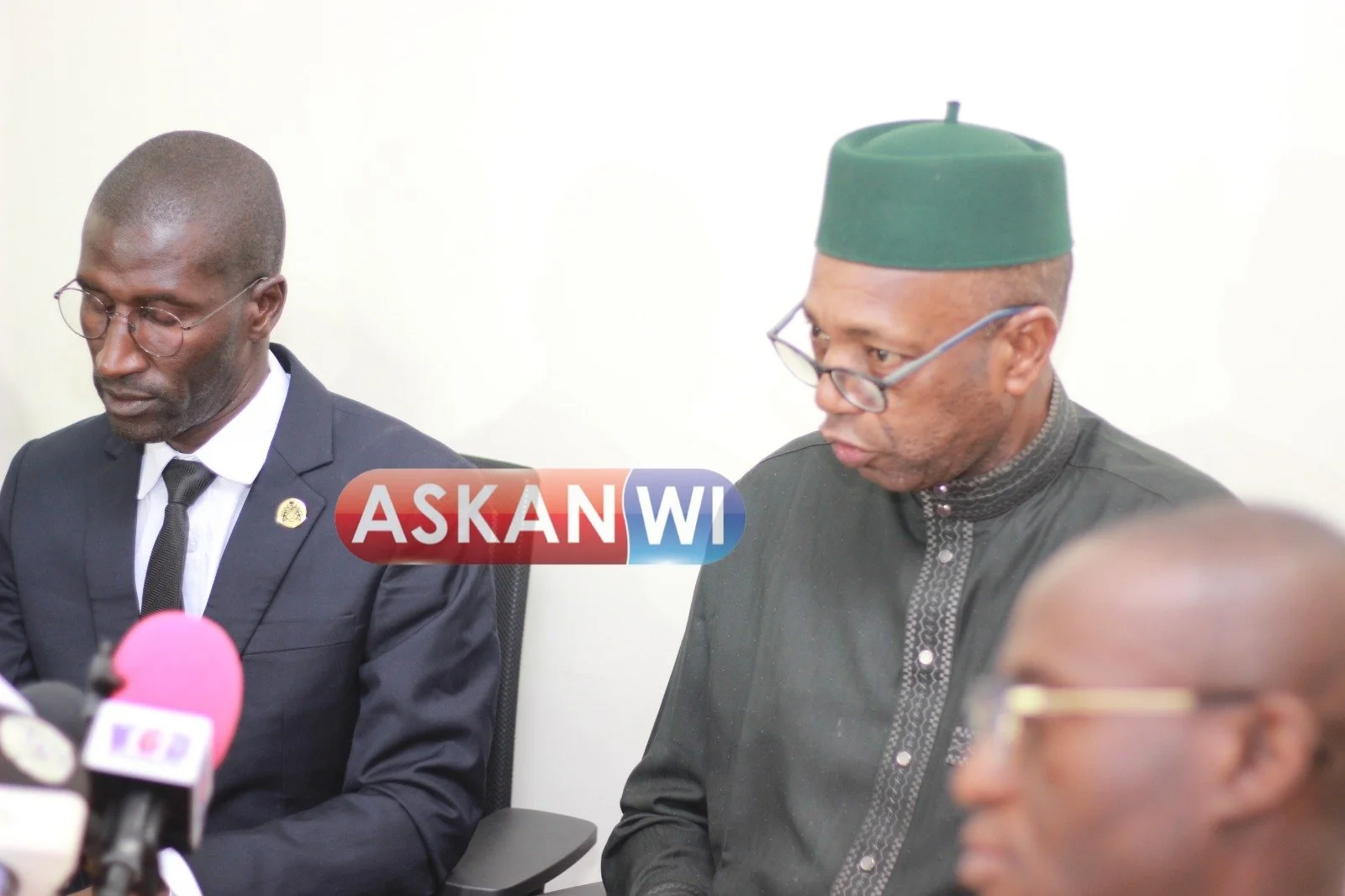
Hon Hamat Bah at Jan 2026 Presser © Askanwi Media
By Michaella Faith Wright
The Government has launched the National Land Policy Steering Committee to oversee and support the implementation of the country’s National Land Policy nearly ten months after it was launched.
The Steering Committee was launched on Monday, 28th September 2026, as the government seeks to strengthen land governance, improve land administration, and address longstanding challenges surrounding land ownership and disputes.
The National Land Policy was launched by President Adama Barrow in December 2025, with the government stating that its implementation has begun in January 2026. However, our review of the policy shows that its implementation was expected to follow a detailed framework, including the establishment of a National Land Policy Coordination and Monitoring Unit within the Ministry of Lands.
According to the policy, it “will be implemented over a period of ten years (2026–2035) and will be guided by a detailed implementation plan with estimated costs.” The policy further states that the implementation “plan will outline short-, medium-, and long-term actions, with the short term covering one to three years, the medium term four to six years, and the long term seven to ten years.”
It also requires the Ministry of Lands, “in consultation with other sectorial agencies and development partners,” to establish a framework for implementing the policy. As part of that framework, the policy calls for the establishment of “a National Land Policy Coordination and Monitoring Unit to support the implementation of this National Land Policy.”
The launch of the Steering Committee therefore comes against the backdrop of questions over the implementation process, particularly whether the structures outlined in the policy were established when implementation was said to have begun in January 2026.
Speaking at the launch, private legal practitioner and former Gambia Bar Association President Salieu Taal said the policy was developed through a broad consultative process involving lawyers, security agencies and other stakeholders. “It was truly a multi-stakeholder process, and I believe that this contributed to the quality of the document because different perspectives and interests were considered,” he said. Taal also highlighted challenges surrounding customary land ownership, noting that the absence of a comprehensive land registration system makes it difficult to establish ownership and contributes to land disputes.
He called for clear procedures, digitisation and improved access to justice, particularly for people who cannot afford legal representation.
Meanwhile, Dr. Samba Sow, Director of Planning, said the government is investing in reforms, including the development of a National Land Information System and the digitization of land records. He said the system is expected to undergo testing before active use begins in 2027.
Additionally, Global Properties General Manager Nyillan Fye Frazer welcomed the policy, saying it could improve transparency, predictability, and confidence in the land sector. She said the private sector is ready to partner with the government to support affordable housing and climate-resilient development.
