
PURA Trains Stakeholders on Electricity Theft and Infrastructure Protection
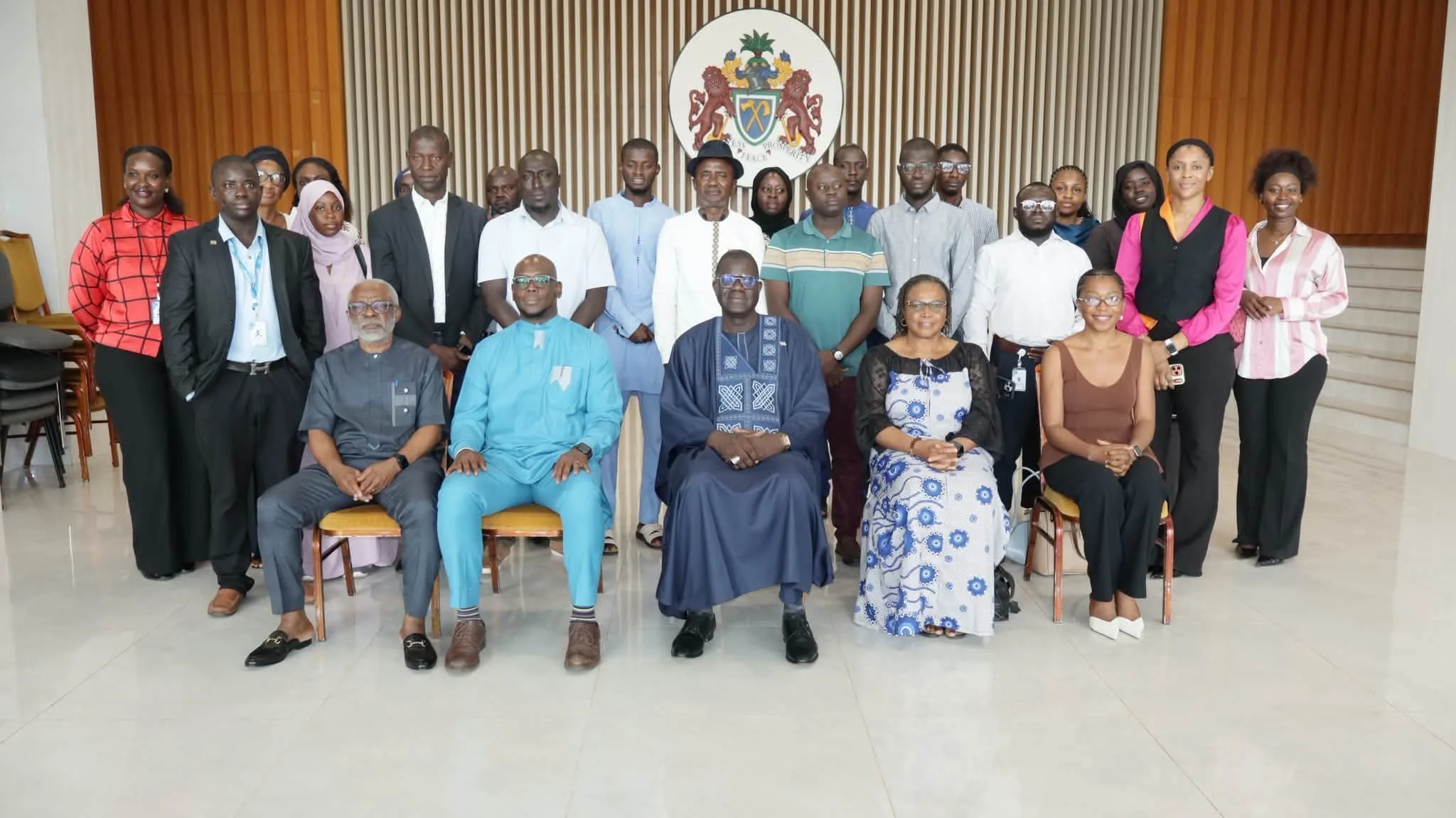
PURA Stakeholder Engagement Group Photo © PURA
By Michaella Faith Wright
The Public Utilities Regulatory Authority (PURA) has concluded a two-day capacity-building workshop aimed at strengthening efforts to combat electricity theft and protect critical electricity infrastructure in The Gambia.
The workshop brought together key stakeholders, including government institutions, the utility, law enforcement and justice institutions, civil society organisations, consultants, technical partners, and members of the media, to examine the Draft Electricity Anti-Theft and Infrastructure Protection Regulation.
Speaking at the opening ceremony on Tuesday, 8th September 2026, PURA Director General Dr. Njogu L. Bah said the regulation was developed to provide a clearer framework for preventing, detecting, investigating, and enforcing cases of electricity theft and infrastructure vandalism.
He stressed that electricity theft, illegal connections, meter tampering, and vandalism have consequences for the entire electricity system, noting that such practices contribute to losses, increase costs, and undermine the reliability of electricity services.
Last year, the National Water and Electricity Company (NAWEC) discovered more than 25 illegal connections at Batokunku near former President Yahya Jammeh’s garden. More recently, the company’s PRO, Mr. Buba Badjie, appearing on Kerr Fatou’s The Grand Bantaba programme, revealed that an estimated 30 to 40% of electricity entering the grid goes unpaid for due to theft.
Dr. Bah said, “Regulatory accountability must therefore work both ways: the utility must perform, but the electricity supplied and the infrastructure supporting that service must also be protected.”
Representing the Central Project Coordinating Unit and the Ministry of Finance and Economic Affairs, CPCU-GIP Momodou Sengore described the workshop as the final substantive activity under the consultancy for developing the regulation.
He said the process had been “thorough, consultative, and deliberate,” involving stakeholder consultations, a Technical Working Group, and a validation workshop.
Sengore urged participants to actively engage with the draft regulation, saying effective implementation would depend on institutional coordination, knowledge, and capacity.
The workshop is supported by the World Bank under the Gambia Infrastructure Project.
