
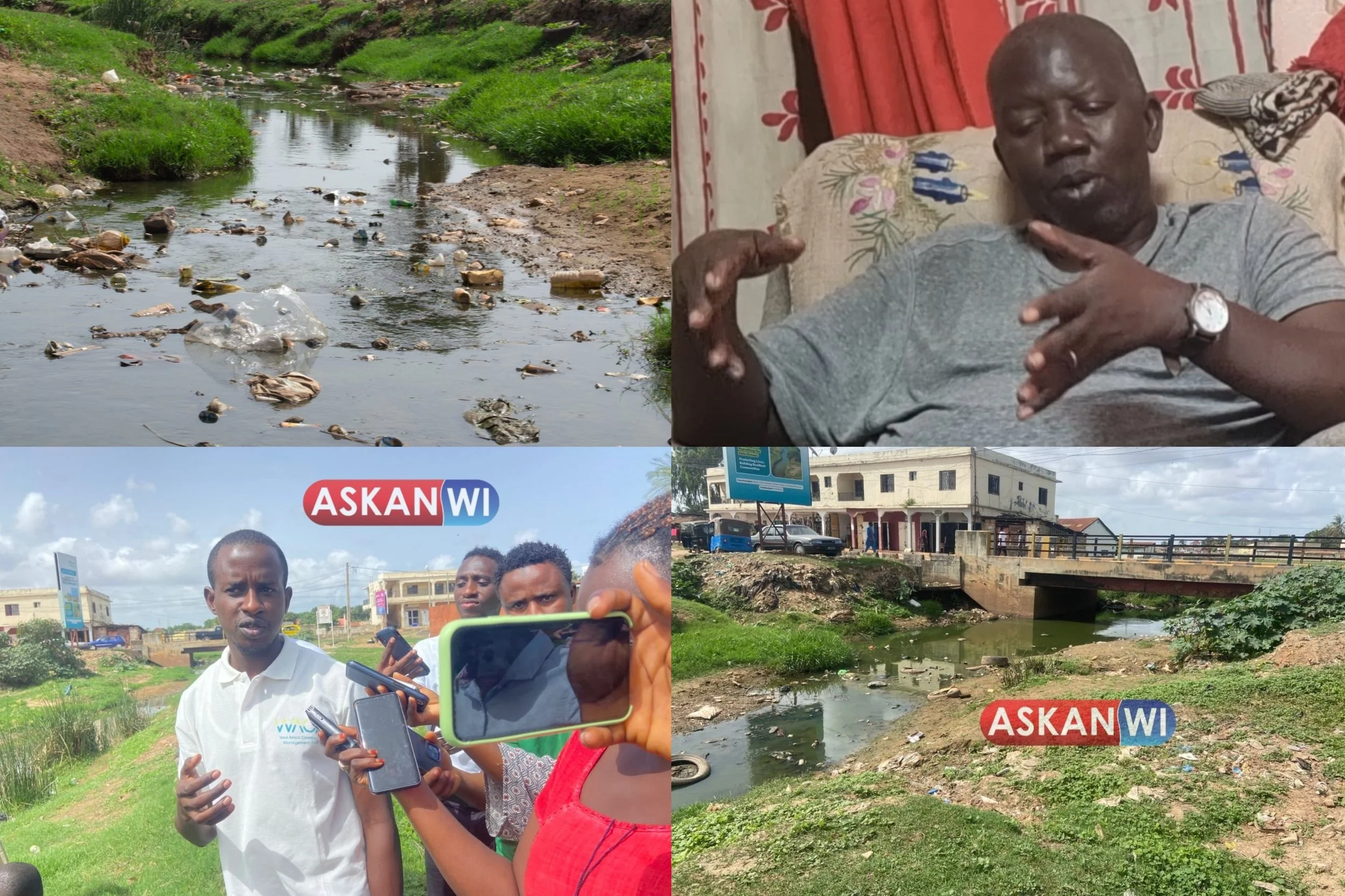
WACA Kotu Stream Cover Photo © Askanwi
By Edward Francis Dalliah, Jr.
After years of watching the Kotu Stream decline under pollution, encroachment, and seasonal flooding, residents of Dippa Kunda say they are now looking forward to meaningful change as a World Bank-funded project to restore the stream is underway. Together with the acting Alkalo, Sourahata Sohna, they believe the long-neglected waterway may finally be restored to the clean, free-flowing stream it once was.
In an exclusive interview, the acting Alkalo expressed strong optimism that the West Africa Coastal Areas Resilience Investment Project (WACA) could help restore the Kotu Stream to its former healthy and vibrant state. The stream, which runs through eleven densely populated communities, has long suffered from encroachment, pollution, and illegal dumping. Nonetheless, both the traditional leader and residents of Dippa Kunda believe that WACA’s intervention is well-equipped to reverse the damage.
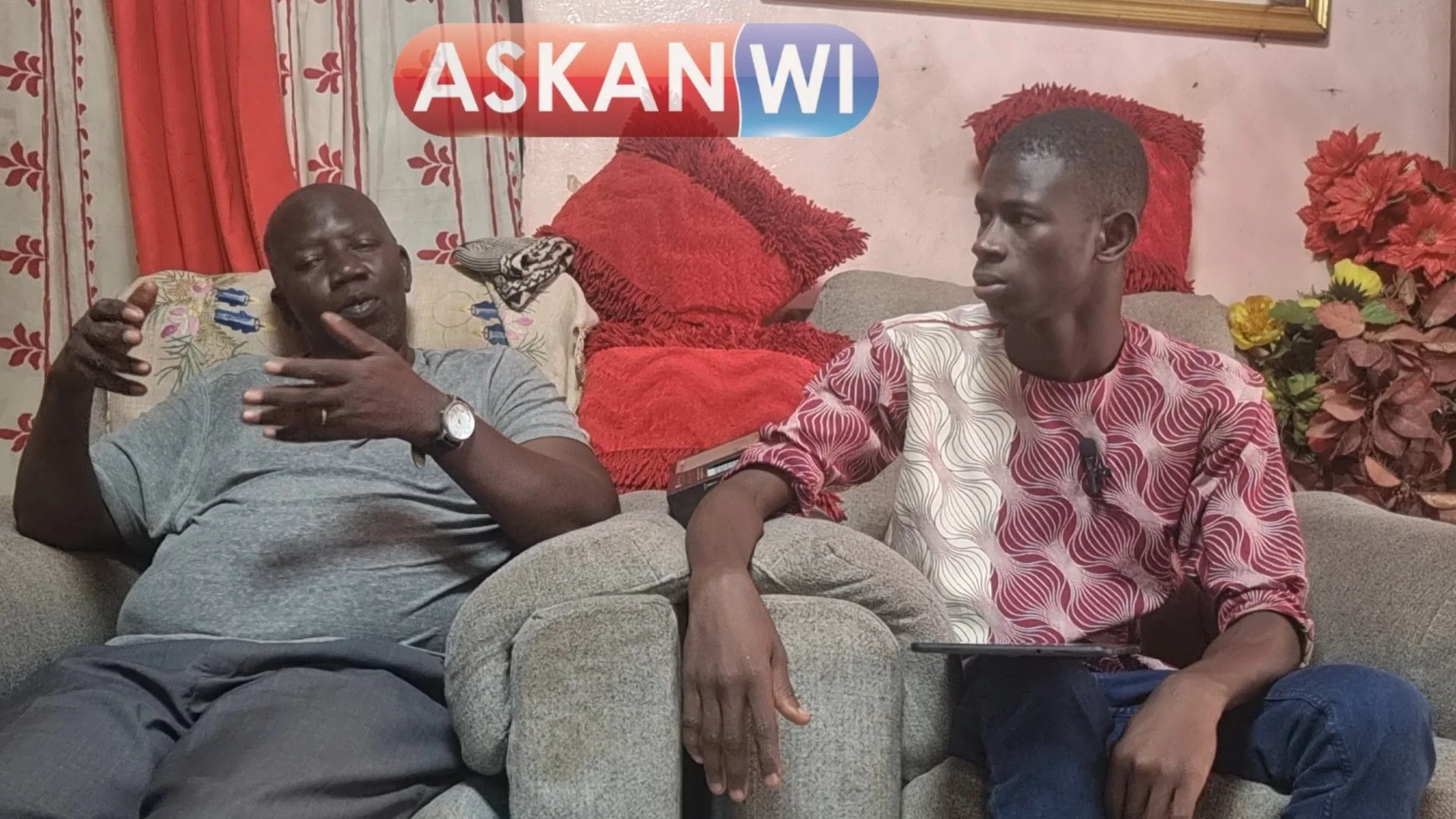
Alkalo Sohna in grey t shirt © Askanwi
Mr Sohna rolled back the years, recounting when the Kotu Stream was a clean and reliable source of water for domestic and community use. When he was young, he recalled, “the stream was clear and free-flowing,” and it played a central role in the daily life of Dippa Kunda residents. He added that the water was once so transparent that “you could stand and see fish swimming”, as well as other aquatic animals like “tortoises”.
However, he said the situation has changed drastically due to “population density, settlement at the waterway, waste dumping, and the tie-and-dye production.” These activities, the Alkalo pointed out, have contributed to ‘severe damage to the stream, reducing its ability to drain off runoff water during the rainy season, causing flooding.’ But he added with relief, “Thank God WACA has intervened, and the flooding has reduced, and it is no more in existence at my side because of the regular cleaning [of the stream] before the rainy season, which enables the water to flow.”
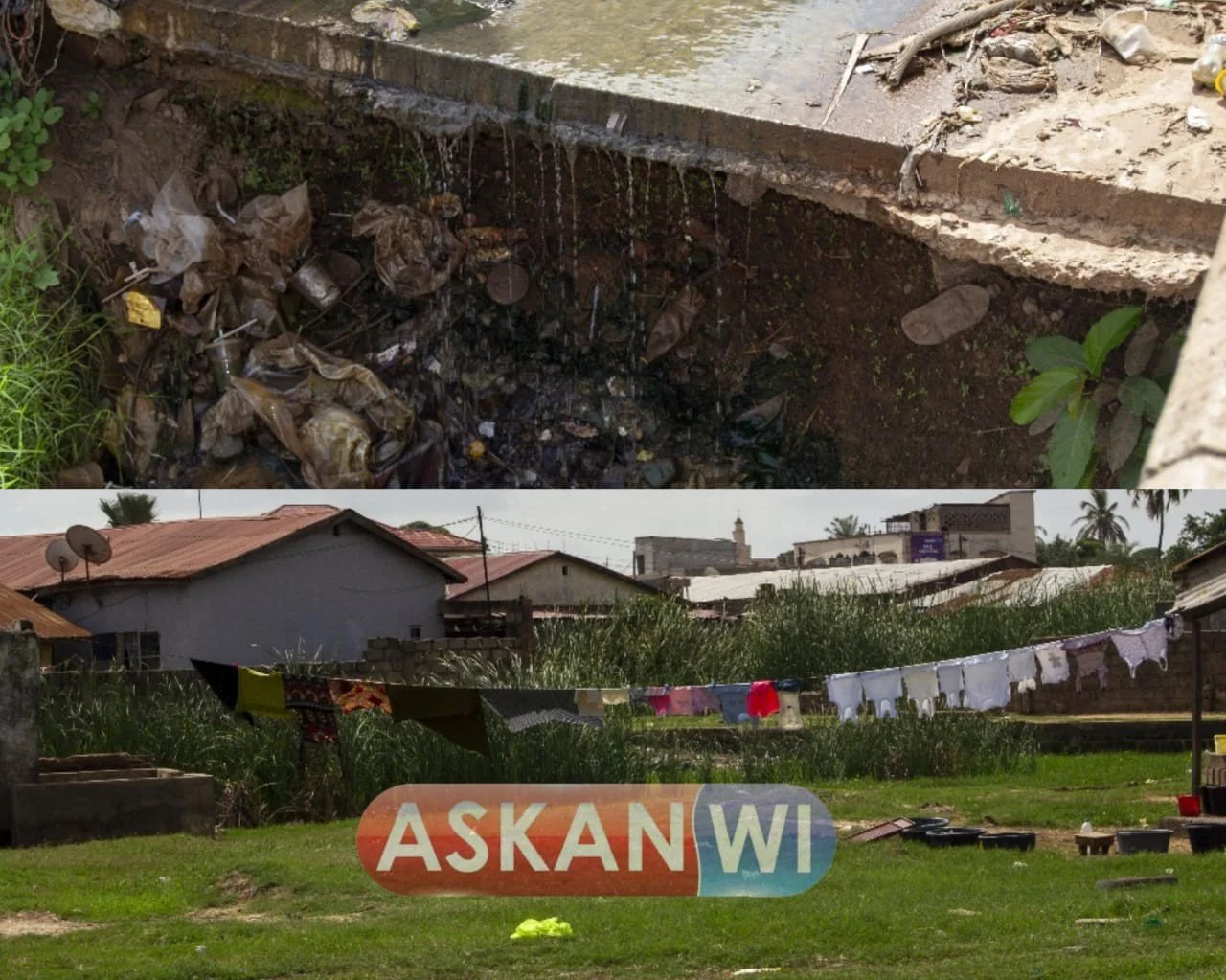
Kotu Stream Infrastructure and Residents’ © Askanwi
Residents interviewed by our reporter shared similar concerns, emphasising that illegal dumping has become a persistent environmental challenge. However, they expressed hope that the WACA project can change the narrative and restore the stream to a cleaner and more functional condition.
One Mariama Ceesay told our reporter that with the WACA project, she “believes things could change, and the stream will be more decent than how it is currently.” Adding her voice, resident Binta Bah said she “heard about the WACA project recently and is hopeful that it could make the stream better.”
The WACA project is part of a broader regional effort to enhance climate resilience, prevent coastal erosion, reduce flooding, and promote sustainable waste management across West African coastal nations. In The Gambia, the project focuses on safeguarding lives, property, and the environment in vulnerable communities along the Kotu Stream. It aims to restore the stream to its former or near-former state, ensuring natural water flow and mitigating flood risks.
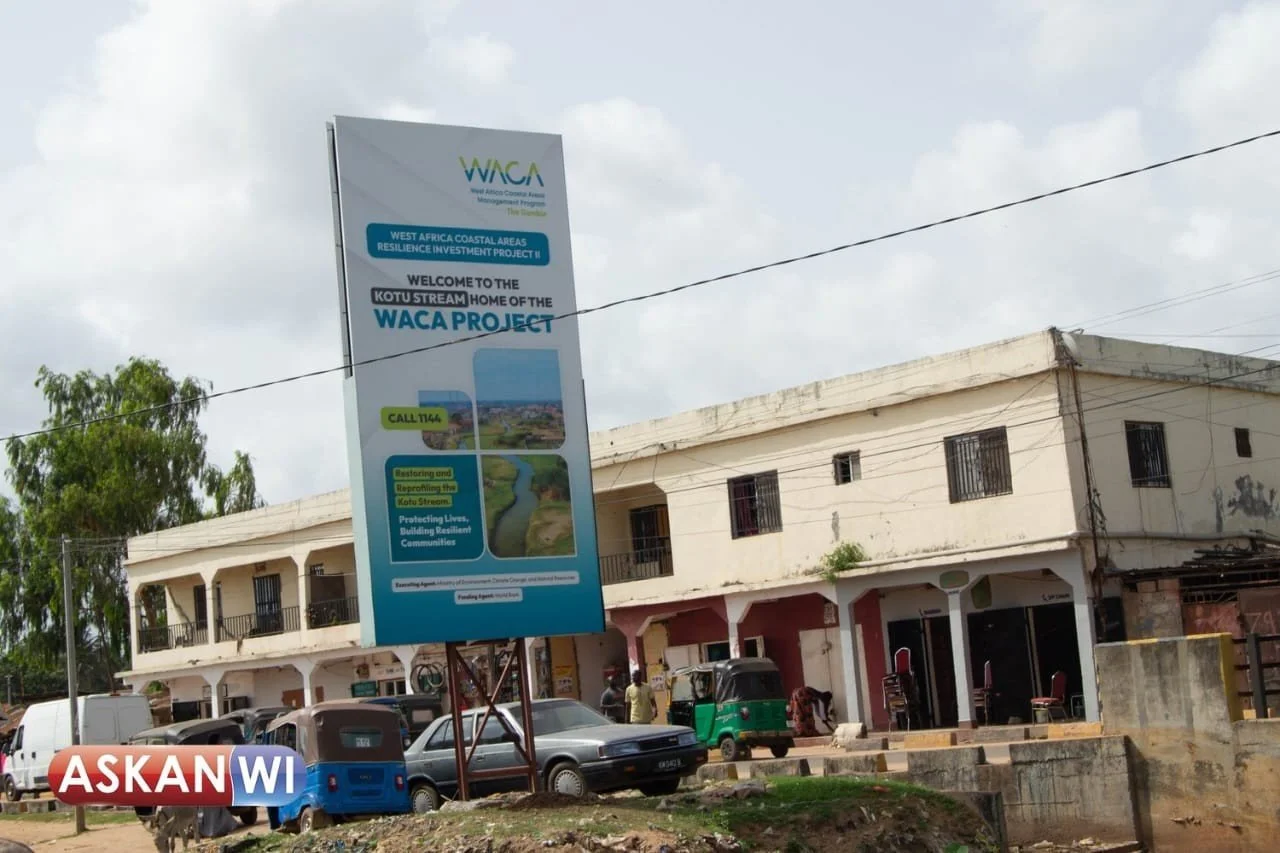
WACA Project Billboard © Askanwi
As part of the initiative, The Gambia has been allocated $45 million under Phase Two of the West Africa Coastal Areas Resilience Investment Project (2023–2027). This national component targets flood-prone zones, with a particular focus on the Kotu Stream, a critical water channel stretching 11.2 kilometers from Nema Kunku to the Atlantic Ocean and covering 1,881 hectares.
Responding to questions about the planned restoration, WACA Communication Specialist Mr Abdoulie Sey explained that the project intends to “restore and reprofile the Kotu Stream”, enabling it to function again as a natural drainage system. He added, “What WACA seeks to do is to restore the stream to its historical capacity and reprofile it to make it modern and accessible with recreational facilities.” Sey told our reporter they “are still working on the design”, which will determine how the reprofiling will be.
With almost two years left in the project’s timeline, several interventions have already been carried out, including pre-rainy season cleaning to mitigate flooding. However, the major step, which is the reprofiling of the stream, still awaits the completion of the final design.
