
Gardeners Along Kotu Stream Fear Losing Their Livelihoods From Environmental Degradation
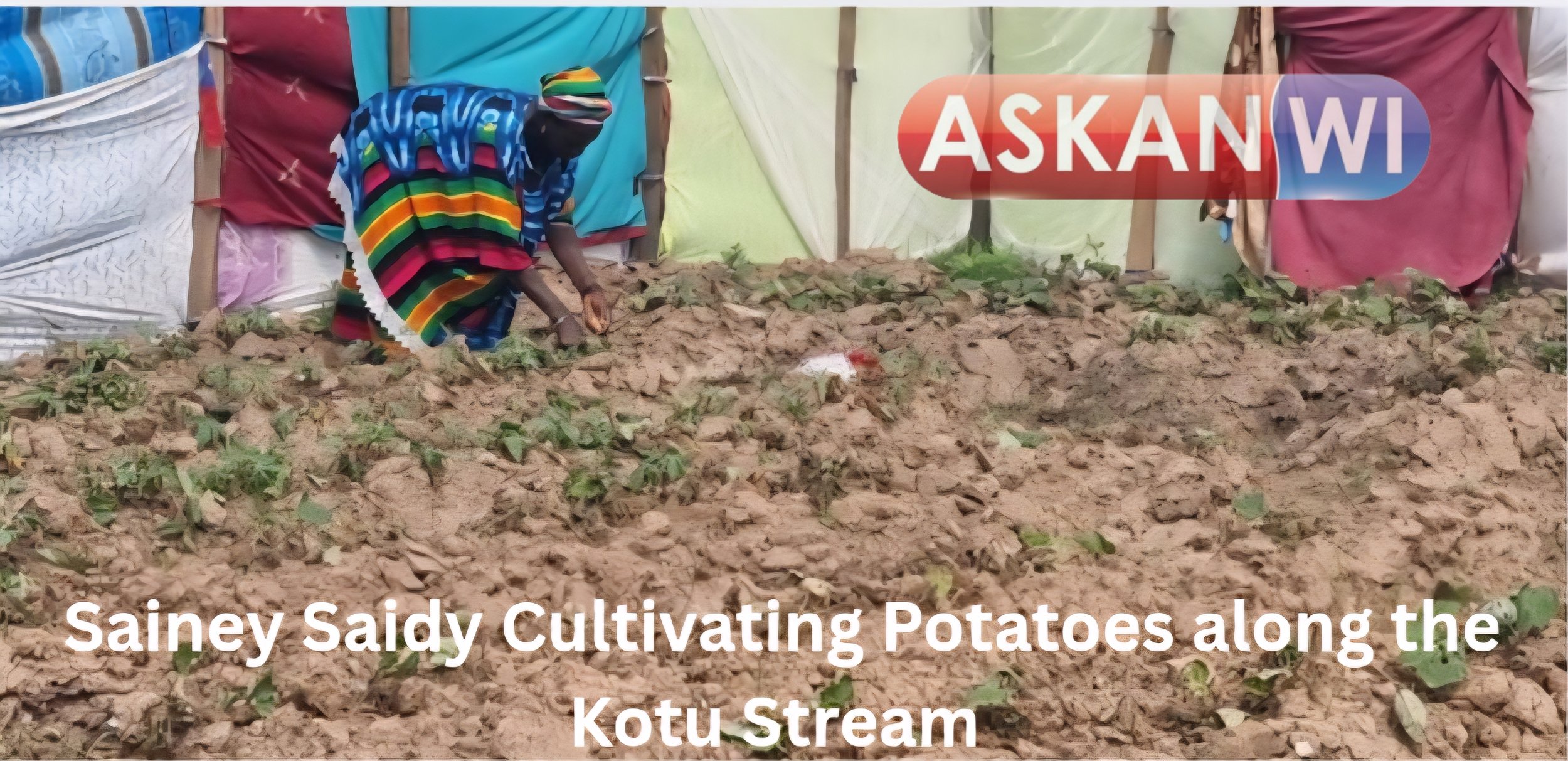
Sainey Saidy farmer along Kotu Stream © Askanwi
By Edward Francis Dalliah, Jnr
Every morning as the sun rises, Sainey Saidy, Haddy Mendy, Alberr Jatta, and dozens of other gardeners walk quietly toward their rice and vegetable beds along the Kotu Stream between Dippa Kunda and Latrikunda. With watering cans and hoes in hand, they begin their daily work, clearing, planting, watering, and harvesting the crops that sustain their families.
But now, their routine is overshadowed by growing fear. The government, through the West Africa Coastal Areas Resilience Investment Project (WACA), has announced plans to restore the Kotu Stream, and the gardeners believe this may signal the end of the livelihood they have depended on for more than a decade. WACA is a World Bank-funded project for The Gambia government that is implemented by the Ministry of Environment, Climate Change and Natural Resources (MECCNAR).
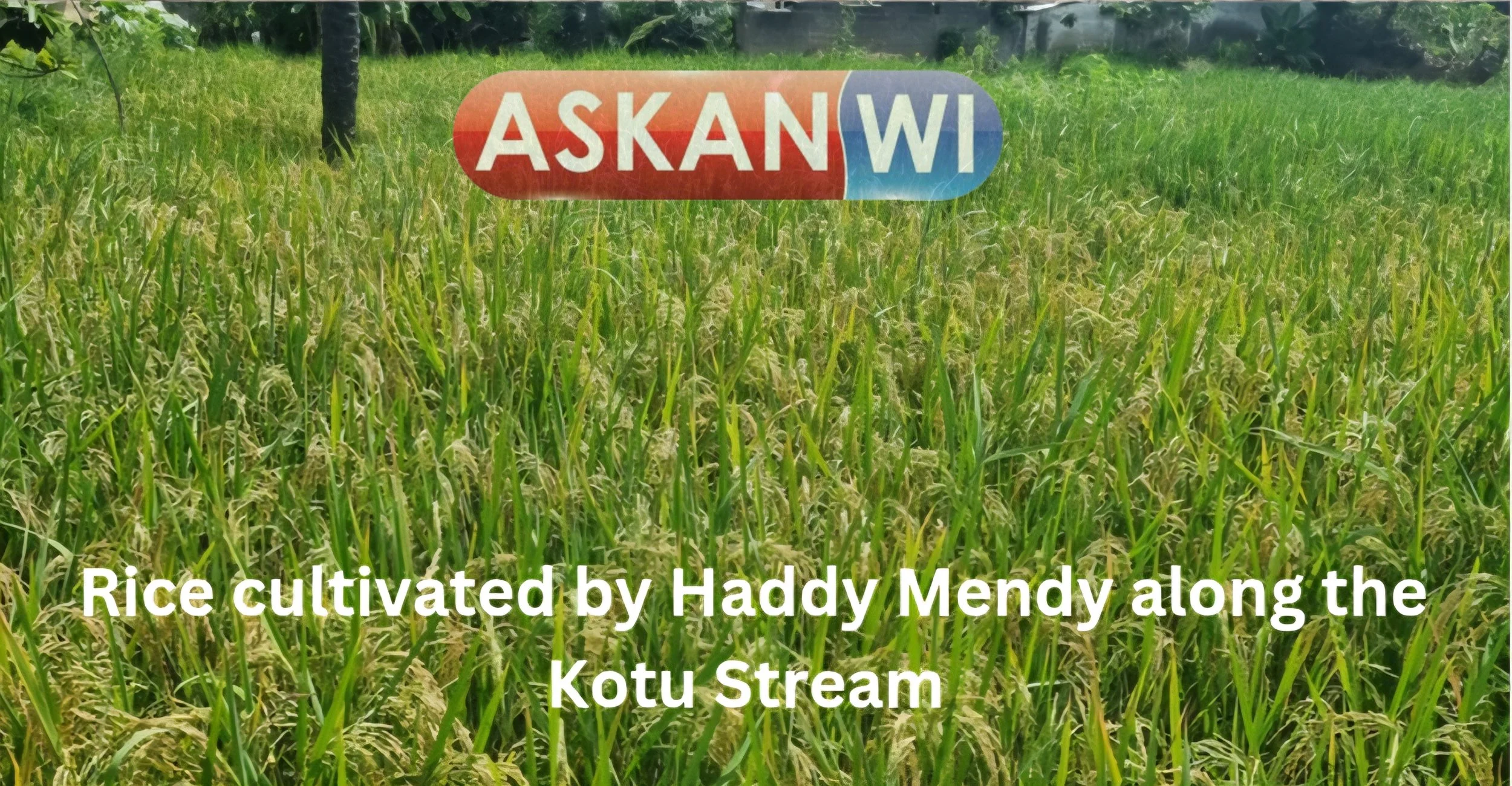
Haddy Mendy, a gardener along the stream, told our reporter that she has been “cultivating rice and potatoes along the stream for more than a decade, and what [she] produces is what [she] normally sells, using the money for the upkeep of the family.” She noted that her family “has been benefiting from the rice [she] cultivates, as the price of imported rice continues to be expensive.”
For years, the land along the Kotu Stream has supported hundreds of gardeners, mostly women, from communities such as Latrikunda, Manjai, and Dippa Kunda. The moist soil and direct access to water made the area ideal for small-scale farming long before urban expansion swallowed much of the wetland and before illegal dumping polluted the once clean water.
In an exclusive interview with the acting Alkalo of Dippa Kunda, Sourahata Sohna, he recounted that gardening activities along the stream, particularly rice cultivation, were common 50 years ago from Dippa Kunda toward Kotu. “At the side of the stream, left and right, it was all vegetation, and rice and other vegetables were usually cultivated,” he said. However, he noted that urbanisation, which brought about new settlements, has negatively affected the stream, along with ‘waste disposal and chemical dumping from tie-dye activities’.
The WACA project, besides constructing physical infrastructure to minimise risks of flooding and erosion, will also offer social development and economic recovery support to address potential losses in the intervention areas. This support includes entrepreneurial assistance to artisanal businesses, such as gardeners, and compensation for land loss. However, while many welcome the ecological improvements, farmers feel uneasy and apprehensive about the possible loss of their gardens and livelihoods due to the project.
Alberr Jatta, who spoke to our reporter, said he is aware of the WACA restoration project, which he described as “a good initiative that could mitigate floods but could also affect my garden.” He noted that ‘if I am compensated, it could at least help alleviate my concerns.’
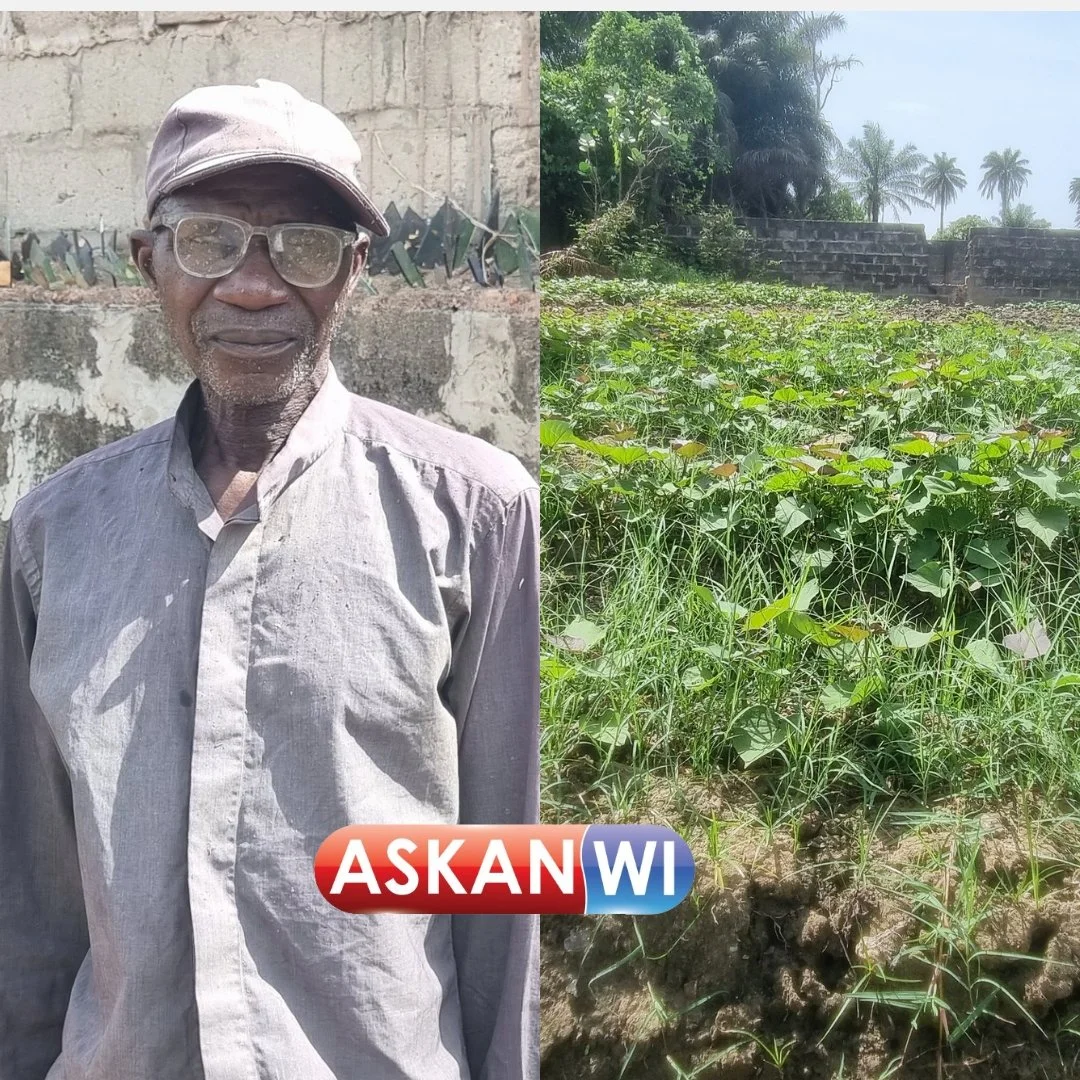
Alber Jatta alongside his garden © Askanwi
His fear is shared by many others who have cultivated small plots along the stream for more than a decade. Haddy Jatta pointed out that she “has heard whispers about the WACA project possibly clearing all human activity along the stream, but no relocation plan has been communicated yet.” She told Askanwi that she “believes the project could affect [her] rice field due to its closeness to the stream’s waterway.”
The WACA restoration project aims to rehabilitate the degraded stream that runs across 11 communities by restoring natural water flow, preventing flooding, and protecting the environment from illegal dumping. When contacted for further details, WACA Communication Specialist Mr. Abdoulie Sey explained what the project entails and what it means for communities living along the Kotu Stream.
Responding to questions about the planned restoration activities, he noted that the project seeks to restore and reprofile the Kotu Stream to return it to its historical capacity as a natural drainage system. “[The Kotu Stream] had, for generations, served as a natural and vibrant drainage system that shielded communities from flooding,” Sey said. “But due to encroachment and littering, the stream has lost its capacity to carry runoff water when it rains, leading to flooding of adjacent communities.”
He added that the project aims not only to restore the stream but also to modernise it and make it accessible with recreational facilities. “Our ultimate goal is to protect the over 200,000 people living along the Kotu Stream from flooding and pollution,” he said.
On whether the gardens and rice fields currently occupying the streambanks will be affected, Sey said it is too early to tell. “It’s too soon to say, as we’re still working on the design. The final detailed engineering design will indicate the areas that will be affected,” he told our reporter.
However, he assured that regardless of the final design, gardeners and small businesses along the stream will be supported. “Most of the gardens you saw will receive technical and financial support to improve their production capacity,” he said. Sey added that the project includes a dedicated “livelihoods component” aimed at supporting communities in the intervention area, including producer and farmer groups. “So, supporting the gardeners and small businesses along the Kotu Stream is a top priority for the WACA project,” he assured our reporter.
Historically, the Kotu Stream served as a habitat for aquatic life, a natural water flow, and a hub for gardening. With the WACA project nearing implementation, many await clarity, balancing hope for restoration with fear of displacement.
