
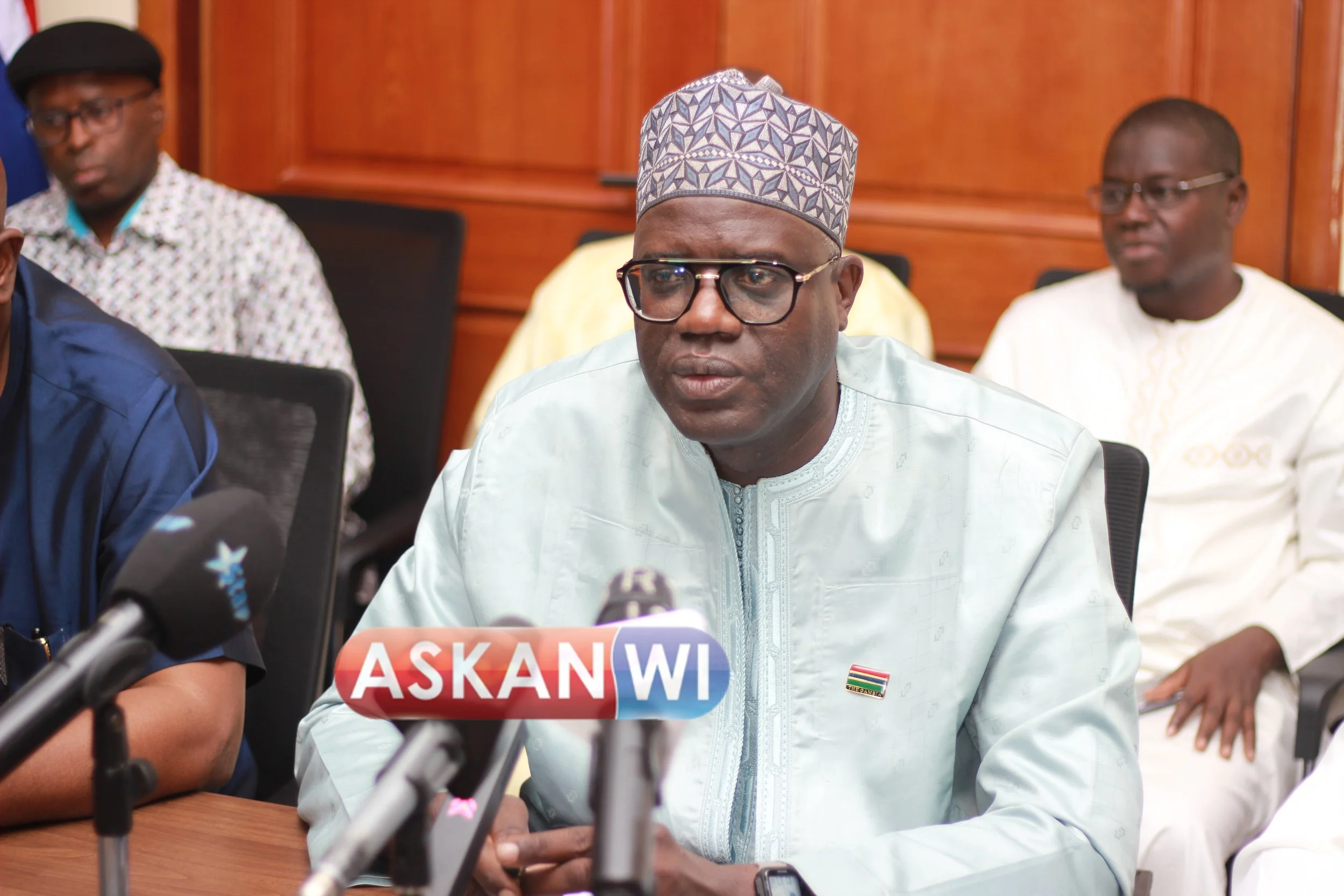
PURA’s Director General Dr Njogou Bah © Askanwi
By Edward Dalliah, Jr.
The Gambia Telecommunications Cellular Company Limited (GAMCEL)'s financial difficulties have emerged as a key reason the state-owned telecommunications operator was excluded from the first phase of the country’s migration from seven-digit to nine-digit telephone numbers, despite initial explanations that the delay was primarily due to “timing and technical readiness”.
The Public Utilities Regulatory Authority (PURA), during a press conference on Friday, 4th September 2026, announced that the company is left out because “of timing and technical readiness” and will join the national numbering migration in a second phase within six months.
Speaking to journalists at PURA’s headquarters, Director General Dr. Njogou Bah initially said GAMCEL “is not being left behind, nor is it being excluded from the National Numbering Plan migration”.
He explained that GAMCEL “will join the migration in a second phase”, adding that the first phase involved operators that were “technically ready to undertake the migration at this stage”.
According to him, PURA will continue working with the company to ensure that the necessary technical, operational and customer-readiness requirements are addressed.
However, during the question-and-answer session, our reporter asked whether GAMCEL’s recent sale of an 80% stake to YCELL could also be linked to its exclusion; this shifted the explanation from technical readiness to the company’s financial difficulties.
PURA Deputy Director Solo Sima, who moderated the press conference, initially intervened, saying the Director General had already addressed the issue and that it was “about timing and technical readiness.” But our reporter pressed further, arguing that the explanation did not fully address why GAMCEL was unable to participate in the first phase.
Dr. Bah then acknowledged that the company’s financial position was a significant factor. He told journalists that “GAMCEL, as we know, has been undergoing some problems financially to be able to come to par with what is required in terms of equipment and materials. So that is the reason”.
The revelation is significant because the migration is not a cost-free regulatory exercise. Nicolas Jatta, the consultant who led the process, disclosed that the operators themselves are responsible for financing the migration.
He stressed that the process “is not a cheap exercise; [it] costs operators over $1 million, which in today’s currency is about D75 million”. Dr. Bah confirmed that the mobile operators bear the cost of the migration, while PURA finances its own nationwide sensitisation campaign, which he described as “a public good service”.
The disclosures therefore suggest that GAMCEL’s absence from the first phase is linked not only to technical preparedness but also to its ability to finance the equipment, materials and other requirements necessary to complete the transition.
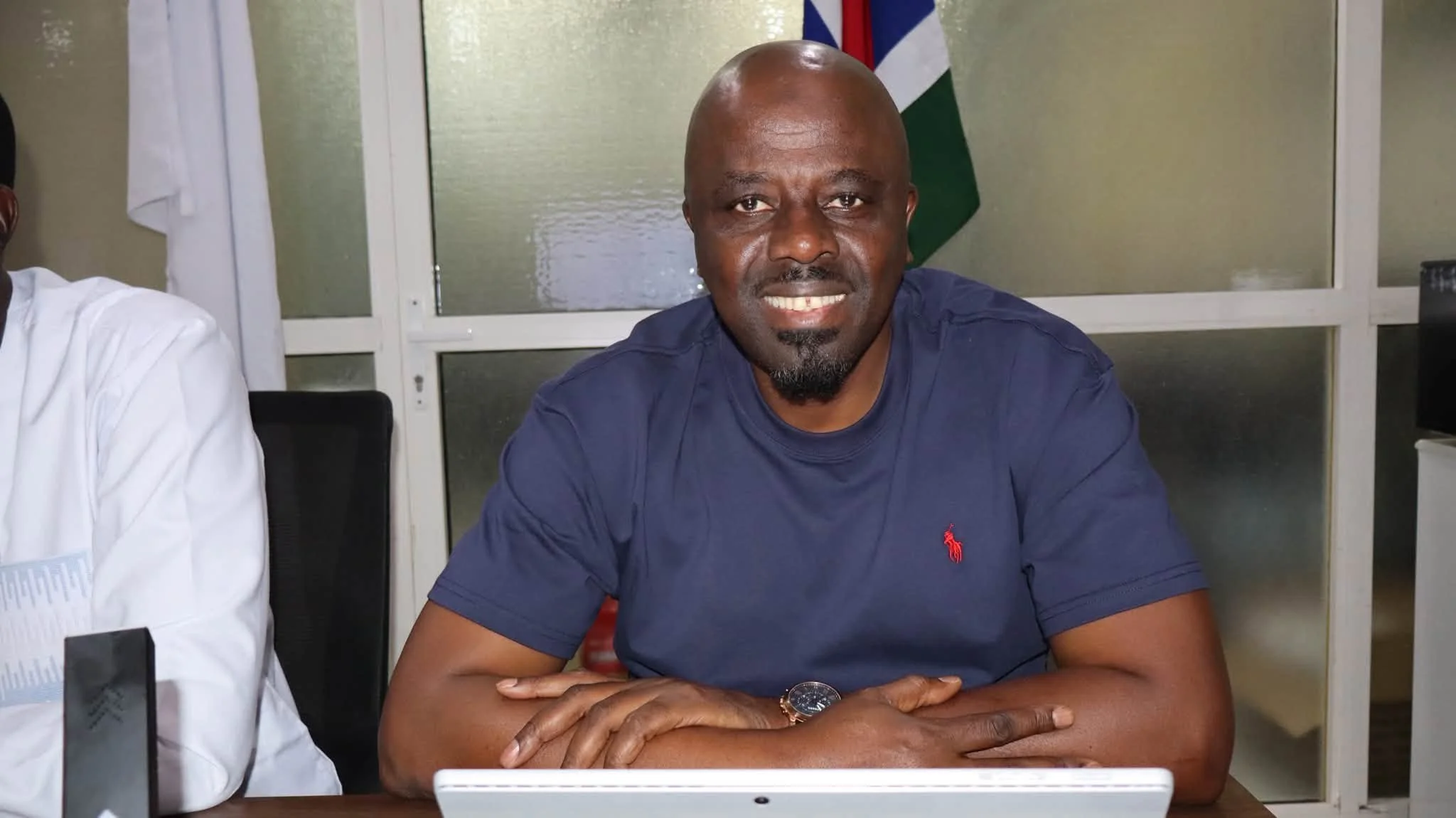
PURA’s Solo Sima © PURA Facebook
GAMCEL’s financial crisis
The development comes against the backdrop of GAMCEL’s long-standing financial and operational difficulties, which have led the government to pursue private investment in the state-owned company.
PURA’s 2024 Annual Report, seen by Askanwi, revealed that Gamcel holds only 2% market share, highlighting its limited presence and minimal competitiveness compared to other operators.
Additionally, the report highlighted that the company “had not paid [its] Numbering Fees for 2022, 2023 and 2024,” meaning that it owed PURA money.
Numbering fees are regulatory charges paid by mobile operators for the allocation, reservation, and ongoing use of telephone numbers. The report stated that “the amount chargeable as per the Numbering Plan Regulation is up to D5.00 per number; however, the Authority this year [2024] charged each Operator D1.50 per number assigned”.
Askanwi’s previous publication on the company’s crises highlighted that it jointly owes D49.2 million with The Gambia Telecommunications Company its parent company to Social Security and Housing Finance Corporation.
Additionally, at one point in early 2025, the government was forced to pay the company’s staff salaries after they protested in December 2024 over delayed payment, revealing a deeper financial struggle pushing government to enter into a Public-Private Partnership.
YCELL’s Takeover
The government in July 2026 through the Ministry of Communication and Digital Economy announced the signing an agreement with YCELL. In a Facebook post, the Ministry revealed that YCELL would acquire 80% shares of GAMCEL and bring “financial and technical expertise” to modernise the state-owned enterprise network infrastructure and transform its business operations.
The Ministry further disclosed that YCELL had committed to invest D6.1 billion in a comprehensive infrastructure and network modernisation programme aimed at delivering “world-class telecommunications services” across The Gambia.
Askanwi’s investigation indicates that YCell appears to be a newly established entity linked to the Yonna Group and the timing of the investment is particularly relevant to GAMCEL’s current predicament.
However, YCELL agreement was signed only about two months before the first phase of the national numbering migration, meaning GAMCEL entered the migration period while undergoing a major ownership and restructuring process.
Additionally, it remains unclear whether the cost of GAMCEL’s eventual migration to the nine-digit system will be covered under YCell’s D6.1 billion infrastructure investment commitment as PURA gave the company six months for the migration process.
GAMCEL Given Six Months to Catch Up
The immediate question now is how quickly GAMCEL can overcome the financial and technical barriers to join the new numbering system. Our reporter asked when the company would enter the second phase, Dr. Bah said “We expect within a six-month period.” This puts the expected deadline around the end of February 2027.
The timeline is significant as the country moves away from the old seven-digit numbering system to the new nine-digit format. Although Askanwi attempted to ask what measures PURA would take if GAMCEL failed to meet the six-month timeline, but our reporter was not given an opportunity to ask the follow-up question.
For now, GAMCEL remains the only mobile operator outside the first phase of the migration. Askanwi will continue to monitor GAMCEL’s second-phase migration and the implementation of YCell’s infrastructure investment commitments.
