
‘Never Again, But Still Happening’: The Gambia’s Post-TRRC Struggle Against Torture

A Documentary on “Torture in Post-TRRC Gambia” © Askanwi Media
By Edward Dalliah, Jr.
The Truth, Reconciliation and Reparations Commission (TRRC) documented harrowing accounts of torture and abuse committed during Yahya Jammeh’s 22-year rule and left The Gambia with a solemn promise: “Never Again”.
But for survivors like Hon Madi Ceesay, the horrors documented by the Commission are not merely chapters of the country’s past. They are experiences that continue to live with them, physically, psychologically, and painfully.
When Hon. Ceesay visited his late son after his release from detention, he expected to see a relieved young man. Instead, his son showed him his broken teeth.
“Dad, you see what they have done to me?” he recalled his late son asking. For Hon. Ceesay, who now chairs the Parliamentary Human Rights and Constitutional Matters Committee, the encounter remains one of the most painful reminders of the torture and abuse associated with Jammeh’s rule.
Watch the documentary in the link below.
And now, nearly a decade after Jammeh left power and three years after The Gambia enacted legislation to prevent and prohibit torture, a difficult question remains: has the country truly moved beyond the torture it promised would never happen again?
A documentary by Askanwi Media “Torture in Post-TRRC Gambia” examines that question, bringing together survivors of torture from both the Jammeh and Adama Barrow eras, human rights advocates, legal practitioners, parliamentarians and government officials.
Their accounts reveal a troubling contradiction in the post-TRRC Gambia. While the country has embraced the “Never Again” mantra and enacted the Prevention and Prohibition of Torture Act in 2023, allegations of torture and cruel, inhuman and degrading treatment continue to surface.
The abuses documented today, however, do not necessarily compare in scale or systematic nature with those exposed by the TRRC.
But human rights officials, including National Human Rights Commission (NHRC) Chairperson Emmanuel Joof and Basse Magistrate Peter Chea, warn that the persistence of torture, regardless of its scale, remains a serious concern in a country that has pledged never to repeat the abuses of its past.
In the documentary, Magistrate Chea says, “Torture is almost endemic in The Gambia”. He points to incidents in which police officers have allegedly arrested people in cruel ways, including dropping them behind vehicles, handcuffing them, and beating them, conduct he says can fall within the scope of the country’s anti-torture legislation.
But the most striking question is not simply whether allegations continue. It is whether anyone has been held accountable.
“Unfortunately, we have had no recorded case in The Gambia, as I speak, to the best of my knowledge, where any one person has been taken to court on the offence of torture,” Magistrate Chea says.
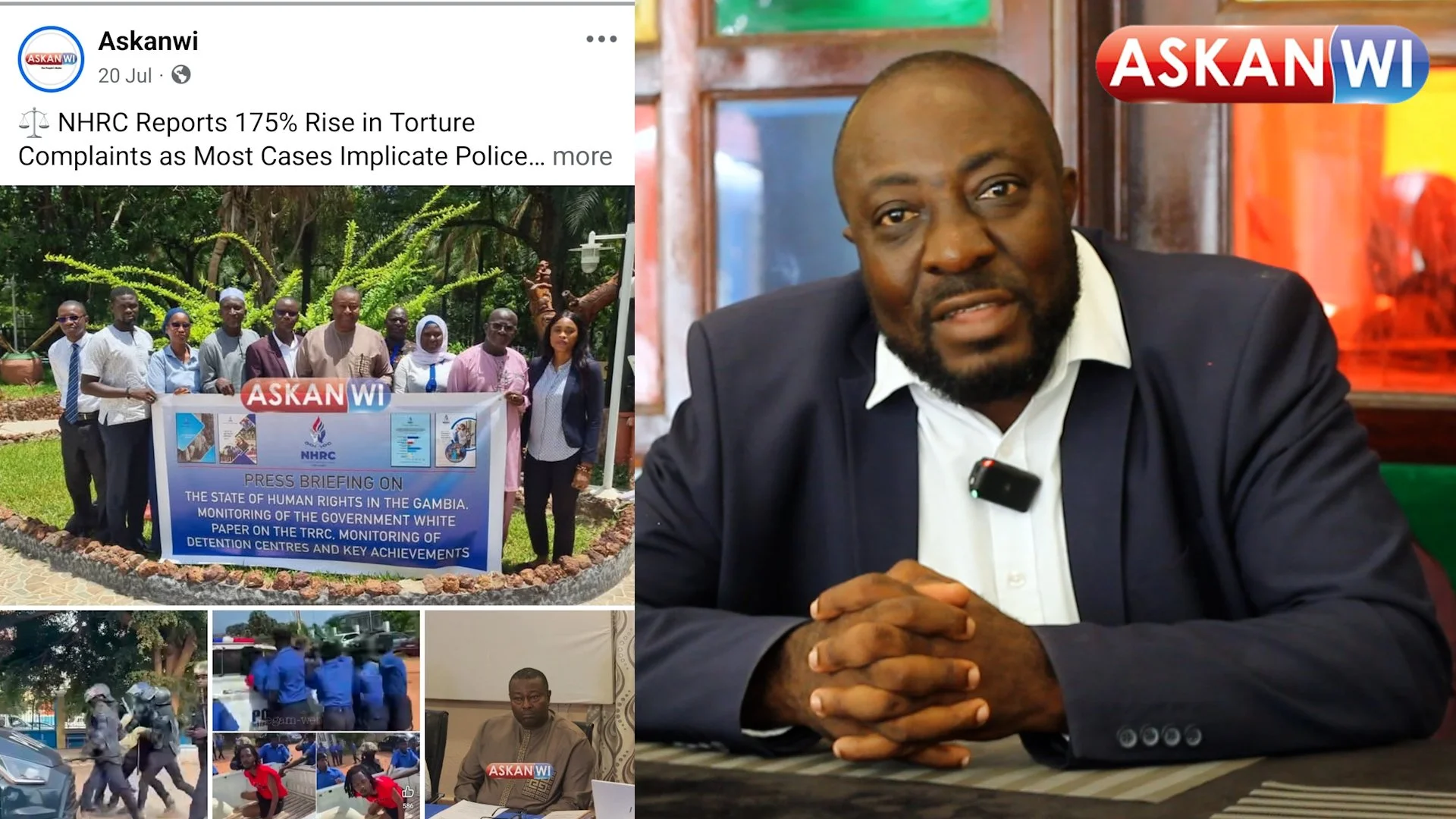
Magistrate Peter Chea © Askanwi Media Documentary
Three years after the anti-torture law came into force, the absence of known prosecutions raises questions about the effectiveness of the legislation and the institutions responsible for enforcing it.
NHRC Chair Joof says alleged torture and ill-treatment remain particularly concerning in the policing of public assemblies. “We still have reports,” Joof says, noting that cases involving alleged torture and inhumane or degrading treatment have reached the Commission.
These allegations are not confined to the archives of the TRRC. They are also reflected in experiences reported in the new Gambia, where the “Never Again” mantra was supposed to mark a decisive break from the past.
In late 2025, activist Alieu “Immortal X” Bah, a key member of Gambia Against Looted Assets (GALA), was filmed being thrown into a police pickup during a public assembly outside the National Audit Office. He also alleged that officers slammed his head against a vehicle door during another arrest. Reflecting on his experience with the police, Bah says: “I don't know what that is, if it's not torture.”
Another activist, Ali “Killa Ace” Cham, the President of Team Gom Sa Bopa, recounts an arrest during which he alleges that officers destroyed his phone, broke his glasses and tore a necklace from his neck while he and his colleague were being transported in a police van following a public assembly outside the Public Utilities Regulatory Authority.
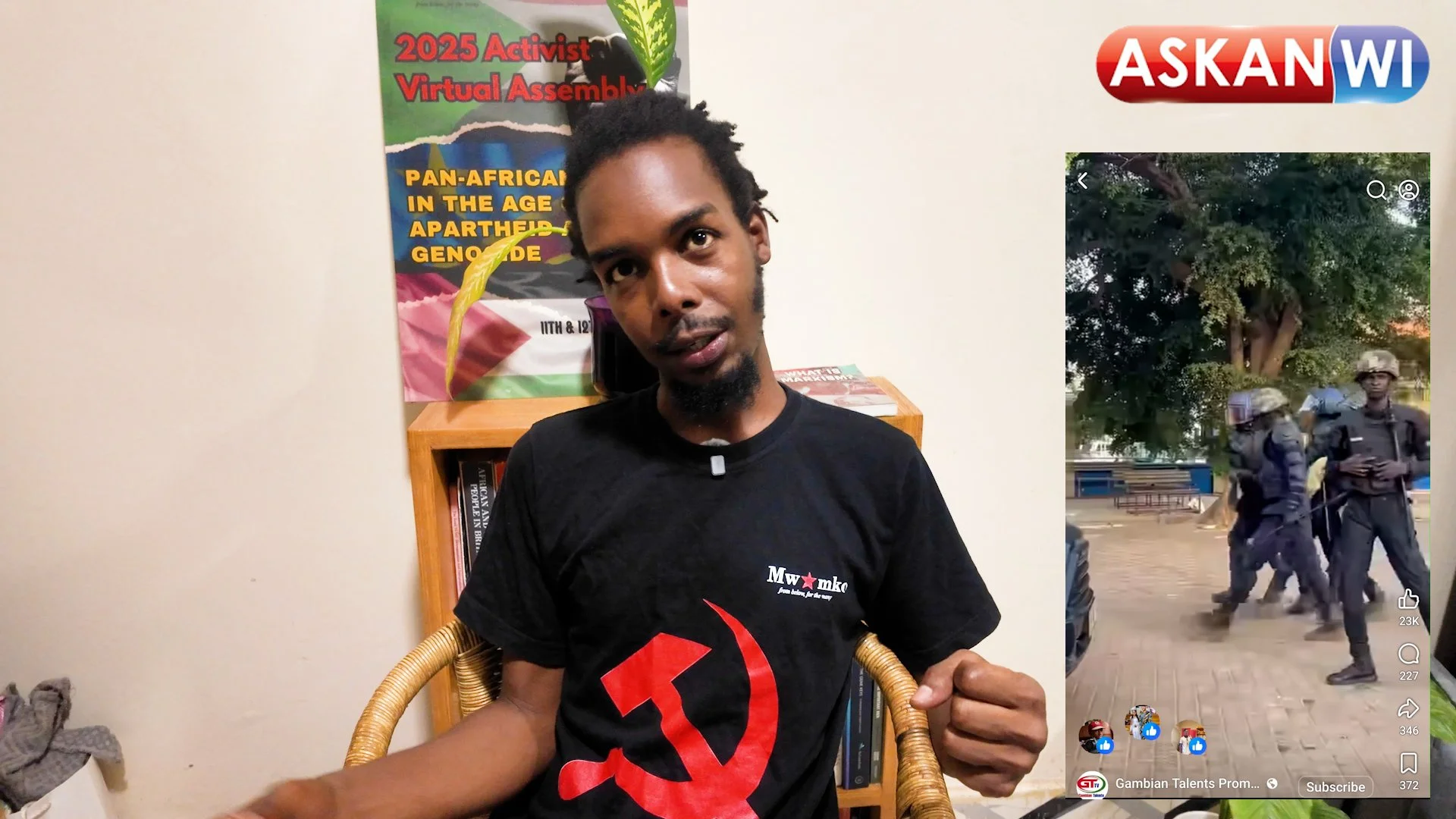
Alieu “Immortal X” Bah being dragged by Police © Askanwi Media Documentary
For human rights advocates, such incidents expose a gap between the law on paper and its implementation in practice. The government, through the Deputy Director of Public Prosecutions, says it recognises the need to move from commitment to implementation. But human rights advocate Madi Jorbateh of the Edward Francis Small Centre for Rights and Justice questions why three years have passed without concrete action.
Even though the Anti-Torture Act is in place, one of the major outstanding steps is the ratification of the Optional Protocol to the Convention Against Torture, known as OPCAT.
Priscilla Yagu Ceesay of the Women Association for Women and Victims Empowerment and Hon. Madi Ceesay are among those calling for the ratification of the OPCAT, saying that it would strengthen mechanisms for preventing torture.
They explain that ratification would require the establishment of “a National Preventive Mechanism capable of independently monitoring places of detention and identifying conditions that could lead to torture and ill-treatment before they occur”.
The debate, therefore, is no longer simply about what happened under Jammeh. It is about whether the post-TRRC Gambia has built the institutions, accountability mechanisms and political will necessary to ensure that torture never happens again.
The TRRC gave the country a solemn promise: “Never Again”, but three years after the anti-torture law, that promise faces a test in the present, not just in how the country remembers its past but in how it responds to allegations of abuse today.
The documentary was supported by WAVE, who are pioneering the parliamentary ratification of the OPCAT in The Gambia. Watch the documentary in the link. https://youtu.be/RijH5MOwvjc?si=J4--BAs1r5Xwv3ci
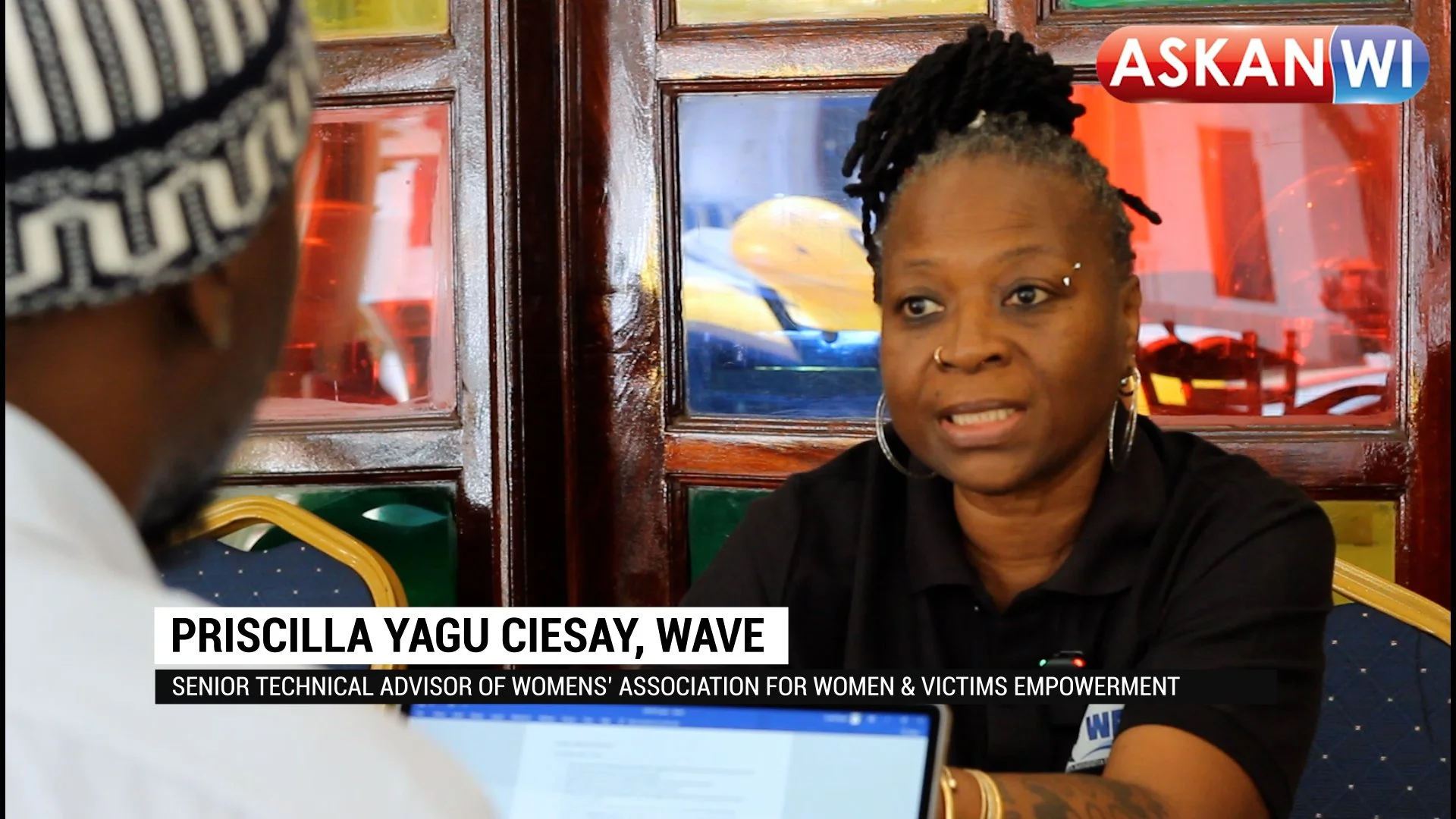
Priscilla Yagu Ciesay WAVE Senior Technical Advisor © Askanwi Media Documentary
