
Vehicle Breakdown Forces Adjournment Request Sparking Constitutional Clash
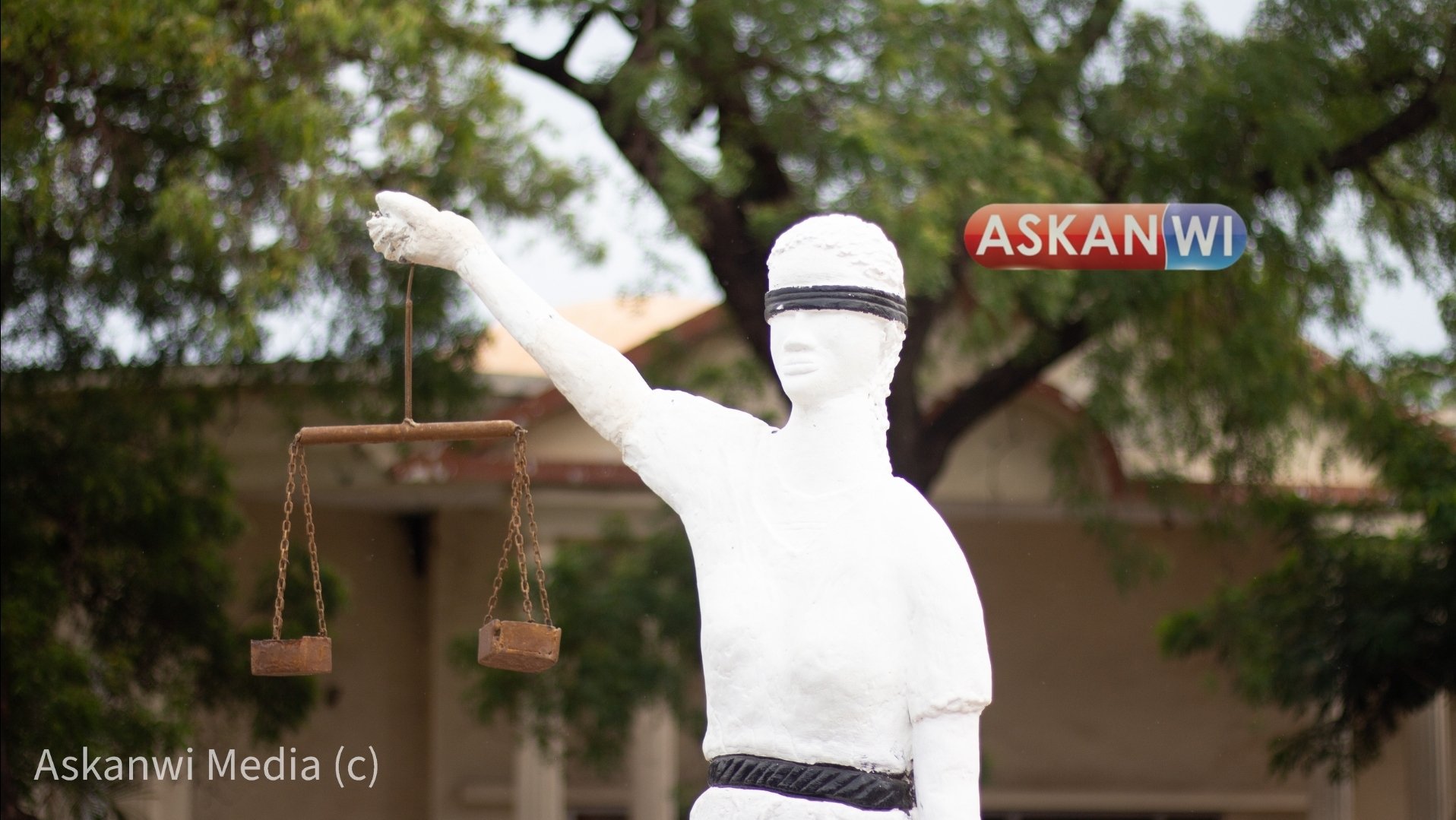
Lady Justice at the Banjul © Askanwi
By Fatoumata Jaiteh,
An adjournment application at the Kanifing Magistrate’s Court on Wednesday, 4th March 2026, turned into a pointed constitutional debate, as the defence in the case of Manjang Cham vs Inspector General of Police (IGP) accused the state of trampling on the accused’s fundamental rights.
The matter, presided over by Magistrate A. Manneh, was called on 4th March 2026; however, neither the accused, Manjang Cham, nor the police commissioner handling the case was present in court.
Prosecution Cites Vehicle Breakdown
According to the prosecution, the vehicle scheduled to transport Cham from Mile 2 Central Prison to the Kanifing Magistrate’s Court suffered a “major breakdown”, preventing the accused from appearing in court.
In addition, the police commissioner responsible for the case was also absent. On those grounds, the prosecution applied for an adjournment, emphasising that this was the first time such a request had been made since the trial began.
The defence strongly objected to the adjournment, arguing that the accused’s constitutional rights had been “grossly violated” under Section 24 of the 1997 Constitution of The Gambia.
Section 24 guarantees several fundamental rights to persons charged with a criminal offence. Chief among them is the right to a fair hearing within a reasonable time by an independent and impartial court. It also safeguards the presumption of innocence, the right to be informed promptly and in detail of the nature of the charge, the right to adequate time and facilities to prepare a defence, and the right to be present during one’s trial.
The defence reminded the court that Cham remains presumed innocent until proven guilty, as enshrined in the Constitution.
Counsel further argued that while the prosecution sought an adjournment, the accused continued to “languish” at Mile 2 Central Prison and had no control over his production in court.
“He cannot bring himself to court," defence counsel submitted, questioning the credibility of the prosecution’s explanation. “I was made to understand that even this morning prisoners were brought from Mile 2 to Kanifing. Why not the accused?”
The defence therefore urged the court to strike out the matter on the next adjourned date should the prosecution fail to proceed.
In her ruling, Magistrate A. Manneh acknowledged the defence’s concerns but noted that this was the first time the prosecution had sought an adjournment in the matter.
She held that the court would grant the prosecution “the benefit of the doubt” and adjourned the case to the 11th of March, 2026.
The defence’s reliance on Section 24 signals an increasing willingness by counsel to invoke constitutional safeguards when state action or inaction appears to hinder an accused person’s right to a fair and timely hearing.
As the case resumes on the next adjourned date, attention will likely focus not only on the substantive charges but also on whether the state can ensure the accused’s consistent production in court—an issue that has now become central to the proceedings.
