
‘Convince Us Why We Shouldn’t Lead a United Front,’ Asks UDP’s Darboe
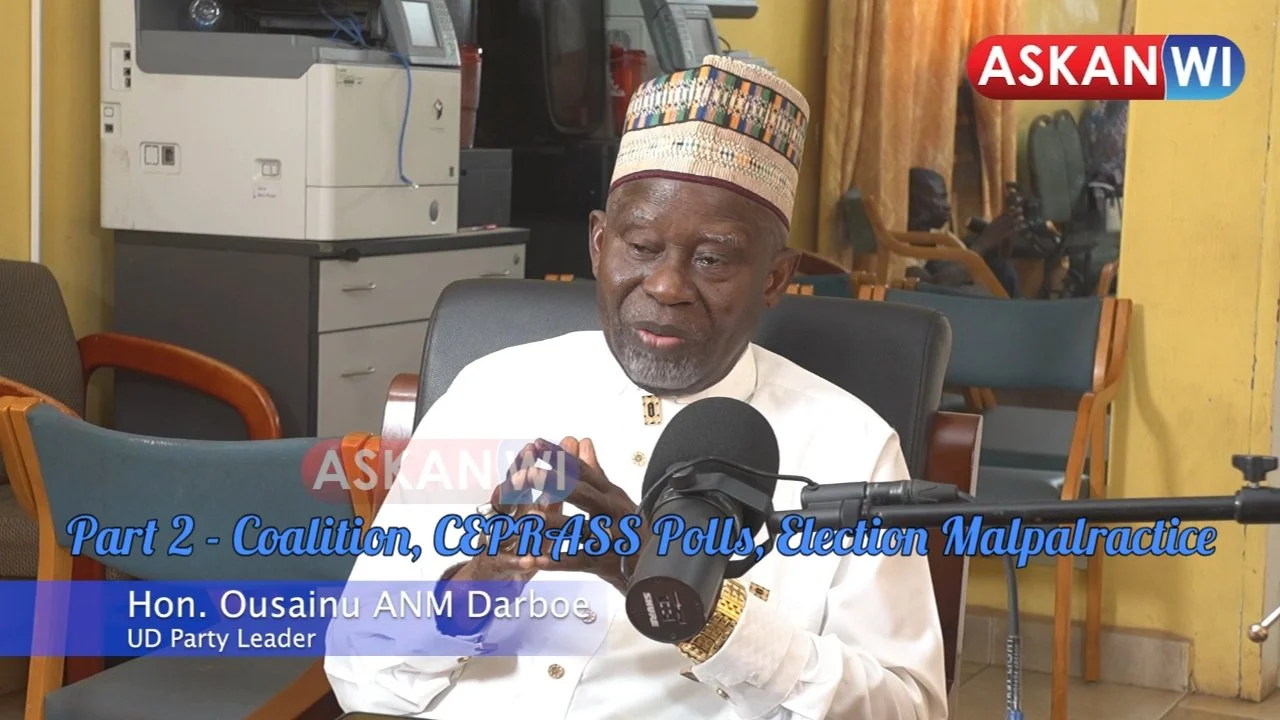
Hon Ousainu Darboe Talks to Askanwi
By Edward Francis Dalliah Jnr,
The United Democratic Party (UDP) leader and presidential flag bearer, Hon. Ousainu Darboe, has challenged critics to convince him why his party should not lead the opposition coalition ahead of the December 2026 presidential election.
“Others have their position. Convince me why UDP should not lead the coalition,” asked Darboe. “If you convince me why UDP should not lead the coalition, then naturally the UDP flag bearer will not be leading the coalition,” he added.
Darboe made the remarks during an exclusive interview with Askanwi at his residence on Wednesday, 11th February 2025, when pressed on the UDP going into opposition coalition talks with other party leaders to build consensus on selecting a coalition leader.
Darboe’s position comes amid renewed debate over opposition unity following the latest CepRass opinion poll, which suggests that a fragmented opposition would struggle to defeat incumbent President Adama Barrow in December. According to the poll, the ruling National People’s Party (NPP) is “most likely to win” with 46% of respondents’, while 20% indicated support for the UDP. Other opposition parties collectively polled 14%, with 18% of respondents undecided.
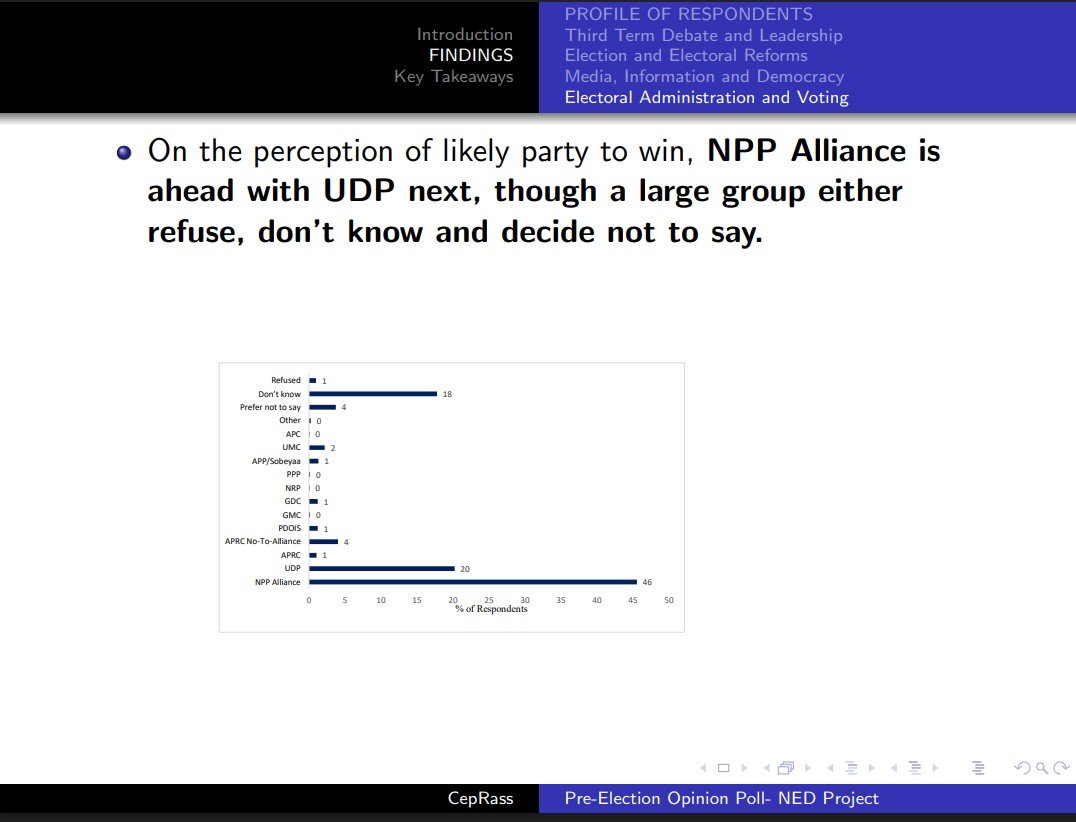
Likely Party to Win © CepRass 2026
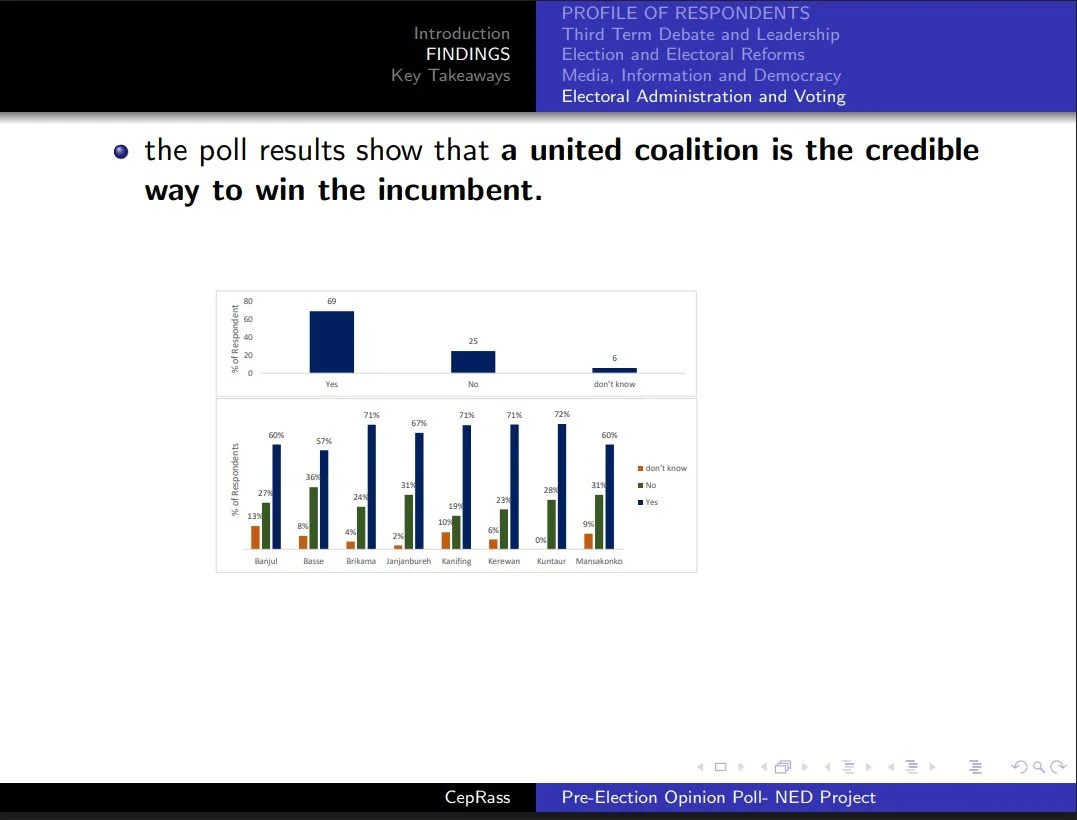
United Coalition is the credible way to win the incumbent © CepRass 2026
Although the CepRass poll highlighted the strong position of the incumbent, the poll also suggested that a United Opposition Coalition was a credible avenue to defeat the incumbent NPP. Almost 70% of respondents believe that the United Coalition could defeat the incumbent, with only 25% believing that a United Coalition could not defeat the incumbent.
The CepRass poll also suggests that an opposition coalition led by the UDP gained more public support in contrast to other opposition-led coalitions. The chart below shows that 35% of respondents would rather vote for a UDP-led coalition, followed by APRC with 11% and PDOIS with 8%.
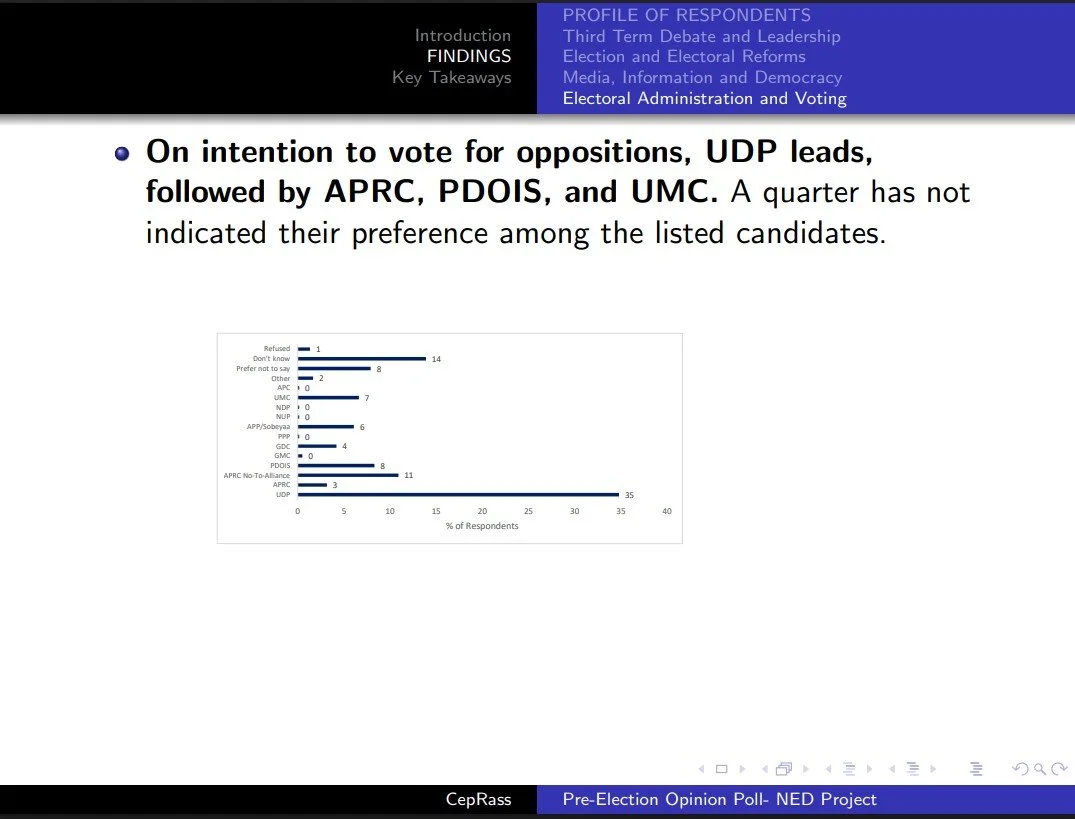
Intention to vote for the opposition © CepRass 2026 Poll
Based on these projections, analysts argue that a united opposition front could mathematically alter the electoral equation. Some opposition figures have therefore proposed that, if a coalition is formed, leadership should be negotiated openly among party leaders rather than automatically ceded to the UDP.
However, Darboe maintained that the UDP’s political weight and electoral history justify its claim to lead any alliance. The UDP is widely regarded as The Gambia’s main opposition party and has contested every presidential election since 1996 apart from the 2016 elections, which they contested via a coalition.
Although the UDP has not secured a presidential victory, it has consistently finished second in all presidential elections it contested, making it a dominant opposition force. In addition to this, the UDP has significant seats in Parliament and has performed well in local government elections, where it won more popular votes than the NPP on its own.
To win elections in The Gambia doesn’t require a simple majority, meaning that the winner of the elections doesn’t need more than 50% of the popular votes. A single vote more than the next candidate is all it takes to win, making a fragmented opposition an easy victory for the incumbent. Now, with about 9 months to the election, it remains unclear if opposition leaders can hold successful coalition talks and present one unified opposition coalition against President Barrow’s coalition in December 2026.
