
Sanna Manjang Murder Trial: Investigator Admits Accused Was Not Present During Kanilai Visit
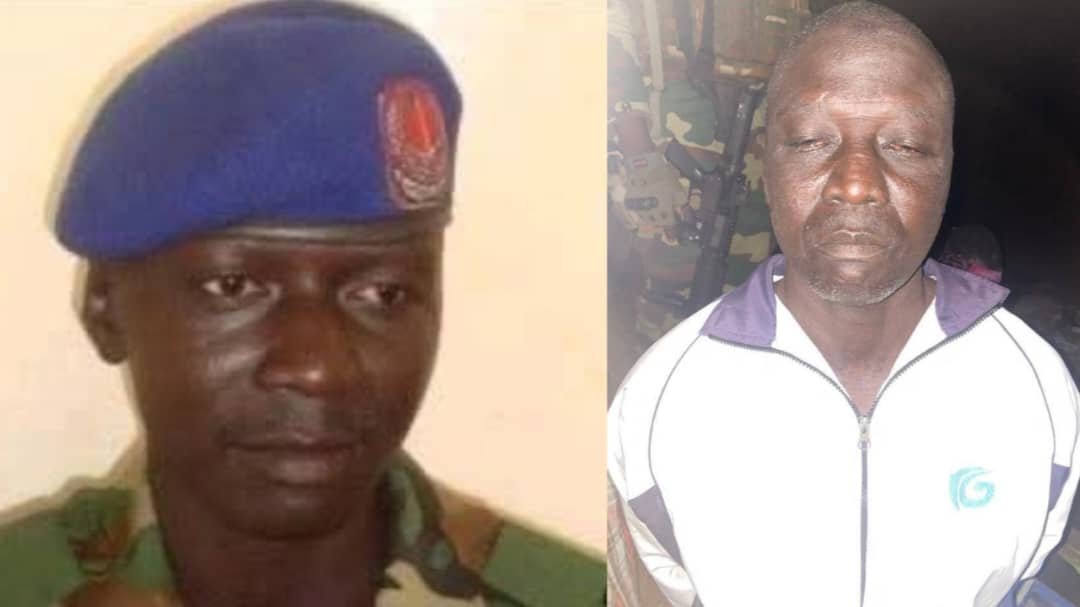
Sanna Manjang former Jungler Commander
By Fatoumata Jaiteh
The trial of Sanna Manjang continued on Tuesday, 24 February 2026, at the High Court in Banjul, with dramatic exchanges unfolding as the second prosecution witness took the stand in a case that has drawn national attention over alleged killings linked to Kanilai.
The case was presided over by Justice Sibi K. Jobarteh.
Sanna Manjang stood quietly in the dock and listened as Prosecution Witness Two (PW2), Police Officer Samba Sowe of the Kairaba Police Station, delivered testimony that both advanced the State’s case and opened new lines of attack for the defence.
PW2 opted to testify in English and was duly sworn in. Sowe introduced himself as a resident of Brikama and an investigator stationed at Kairaba Police Station. He told the court that in November 2025, he was directed by his supervisor, Demba Bah, to join an investigation panel probing the alleged killings of Kajali Jammeh, Bai Dam, and Samba Wurry.
According to Sowe, his primary task was to obtain cautionary and voluntary statements from the accused. “I was part of a team that visited the accused at Mile 2 Central Prison to take cautionary and voluntary statements,” he testified, referring to a visit on 20th January 2026.
He further revealed that on 17th January 2026, he was part of a panel that travelled with Essa Keita to Kanilai, then the residence of former President Yahya Jammeh, to inspect what prosecutors allege was a crime scene.
In Kanilai, Sowe said Keita led investigators to a garden referred to as “Woni,” which he described as an alleged detention centre.
He described observing “two rooms and a parlour” at the garden, adding that Keita claimed he had been detained in one of the rooms. The witness also pointed out a tap at the location, noting, “Keita took us to the place where the tap was, but the tap has now been moved to the right.” Photographs of the site were taken by Sub-Inspector Jammeh, he said.
But the very existence and function of the “Woni” garden became a flashpoint during cross-examination. Defence counsel challenged the narrative forcefully: “I am putting it to you that there is no garden in Kanilai called Woni.” The defence further asserted that the structure being referred to was merely a guardroom used by security officers, not a detention centre.
Sowe pushed back, insisting the same guardroom “was used as a detention centre during the Jammeh era”. He added that not only Essa Keita but also officers found in Kanilai attested to that claim. However, defence counsel countered sharply: “You were only told by Essa.” However, the witness maintained his position: “It was used as a detention centre.”
On the matter of statements from the accused, Sowe testified that he followed due process. “I called an independent witness,” he said, referring to efforts to obtain a voluntary statement on 8th January 2026.
However, he admitted that during that process, the accused declined to cooperate without legal representation. “The accused said he was not going to give any statement without the presence of his legal representative,” he told the court
Despite this, Sowe confirmed that investigators ultimately obtained two voluntary statements. When asked how he would identify them, he responded, “My name, rank and my signature.” The statements were shown to him in court and subsequently tendered into evidence.
In a significant moment during cross-examination, defence counsel pressed Sowe on whether the accused had accompanied investigators to Kanilai. “I’m putting it to you that you know very well that when going to Kanilai, you didn’t go with the accused, and you fail to mention that to the court,” counsel stated, adding, “You have never even invited the accused to go with you to Kanilai.”
After a brief silence, Sowe answered in the affirmative, effectively confirming that Manjang was neither present during the visit nor invited. The admission could prove pivotal, as the defence appears to be building a case around investigative gaps and reliance on third-party accounts.
When asked about the composition of the investigation panel, Sowe said he could not recall all members but mentioned “BSC Momo Sowe, a police commissioner; myself; two directors from the State Intelligence Service; a major; and a staff sergeant from the Gambia National Army.”
The defence then shifted to the alleged victims. Regarding Kajali Jammeh, counsel put it to the witness that he had never seen a body or grave identified as Kajali’s. The witness answered, “Yes.”
The same line of questioning was applied to Samba Wurry, and again Sowe responded in the affirmative. The defence also asked whether he had ever seen the accused before this case. “I have been seeing the accused before this case,” Sowe replied.
The proceedings saw narratives over what transpired in Kanilai and how the investigation was conducted. While the prosecution seeks to anchor its case on investigative findings and statements, the defence is aggressively challenging the credibility of the process, the physical evidence, and the very existence of key locations described by witnesses.
The case has been adjourned to 10th March 2026 at 12th noon for continuation of proceedings.
