
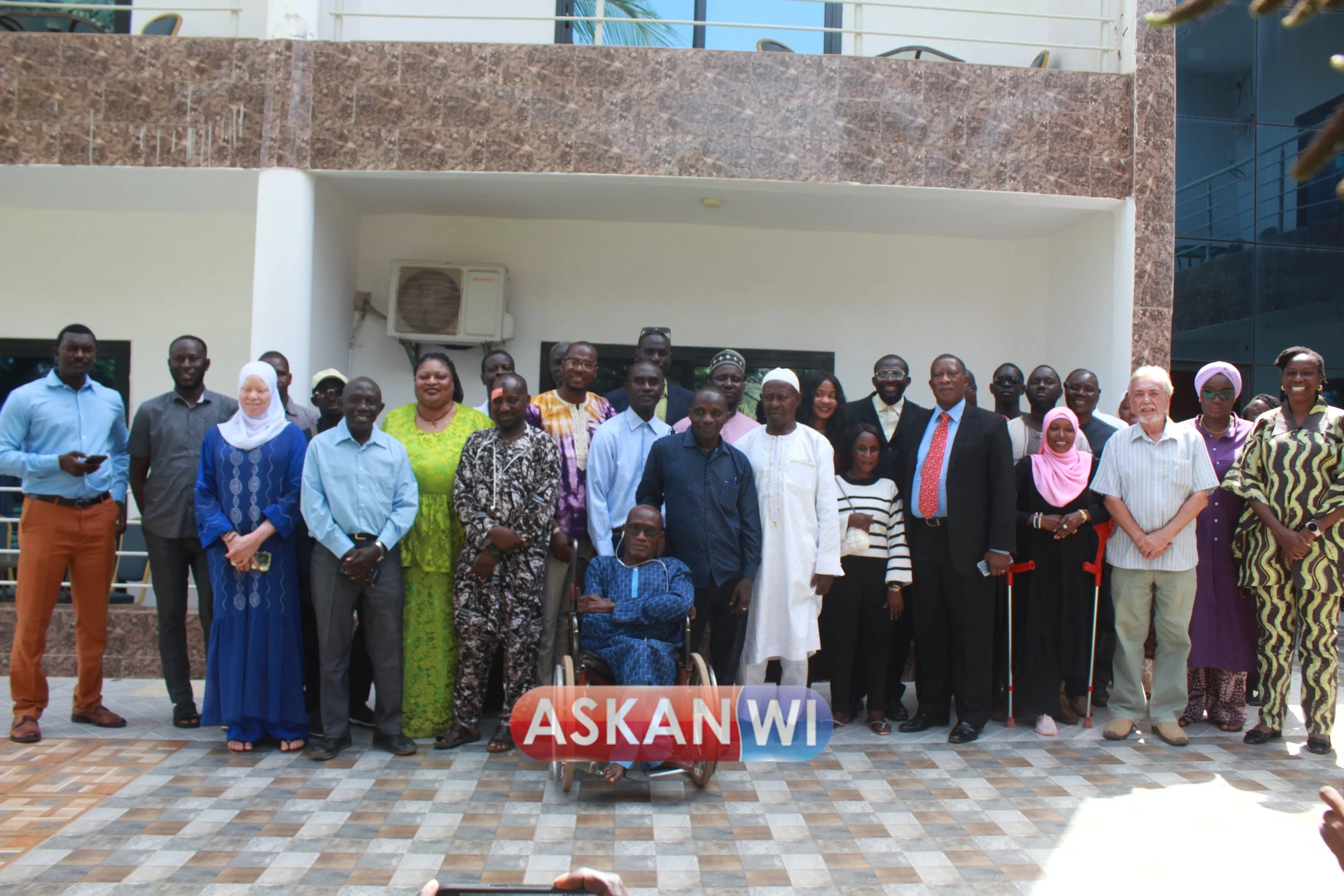
Group Photo ECOWAS Event © Askanwi
By Edward Francis Dalliah, Jr.
For years, many children living with disabilities in the country have been kept out of classrooms, excluded from opportunities, and judged by their limitations rather than their potential.
However, a renewed sense of hope has emerged through the Economic Community of West African States (ECOWAS), under its programme for the provision of assistive devices to children with disabilities. The initiative forms part of a broader regional effort to strengthen inclusion and reduce vulnerability.
During a recent stakeholder engagement held at Metzy Hotel on Tuesday, 20th April 2026, the regional body noted that, globally, access to assistive devices for children with disabilities remains limited.
The ECOWAS Principal Programme Officer, Dr Alves A’lmada Jorge, told stakeholders that “the African continent is home to at least 80 million people with disabilities.” He added, “In West Africa, their number is estimated at 50 million, as Nigeria alone has 35 million people with disabilities, and in The Gambia, approximately 7.9 percent of persons aged 15 and above experience some form of disability, totalling over 208 thousand of its population.”
Children with disabilities in the Gambia continue to face challenges such as discrimination and marginalisation in society. Although the 1997 Constitution, the Persons with Disabilities Act 2021, and other human rights legislation advocate for their rights, the implementation of these laws remains inadequate.
Dr. Jorge pointed out that “stigma and discrimination are major causes of social and professional non-inclusion and marginalization.” Reinforcing this concern, the President of the Gambia Federation of the Disabled, Magistrate Muhammed Krubally, noted that “if you look at The Gambia, it is realised that children with disabilities are either isolated or ignored.”
He further revealed that most children living “with disabilities do not go to school because they are being judged on the basis of their disabilities, that it would be worthless or useless to take them to school.”
However, he said the ECOWAS Programme “marks a significant milestone in the history of persons with disabilities in The Gambia, specifically for children with disabilities, as it presents an opportunity for these vulnerable children.”
Magistrate Krubally added that “when children have these accessible devices, it will ensure that they are able to compete with their counterparts in classrooms. It will also ensure accessibility to the physical environment of schools as well as classrooms.”
Speaking on behalf of the Ministry of Gender, Children and Social Welfare, Mr Alaya Barra said, “this initiative comes at a critical time when our collective commitment to inclusivity, equity, and social justice must translate into tangible outcomes for children with disabilities.”
He noted that “access to appropriate assistive devices is not merely a service; it is a fundamental enabler of dignity, independence, participation, and equal opportunity for children to realise their full potential.”
Mr Barra acknowledged the government’s efforts in safeguarding the rights of persons with disabilities, stating that “the government remains steadfast in its commitment to promoting and protecting the rights of persons with disabilities, guided by national frameworks such as the Persons with Disabilities Act, 2021, which provides a comprehensive legal foundation for safeguarding their rights, welfare, and inclusion.”
However, he admitted that “despite these efforts, children with disabilities continue to face multiple barriers, including limited access to assistive technologies, which affects their education, mobility, communication, and overall wellbeing.”
He further stressed that “this ECOWAS-led programme is therefore both timely and strategic. It provides a regional platform for strengthening collaboration, sharing best practices, and ensuring that no child is left behind.”
The Gambia is part of the second phase of the programme alongside Senegal and Guinea, which will be implemented in 2026. The approved budget for its implementation is $300,000.
The first phase of the initiative was implemented in 2024 in Togo and Nigeria. Following recommendations from ministers responsible for disability inclusion at their inaugural meeting in Nigeria in June 2024, the Commission approved this second phase.
