
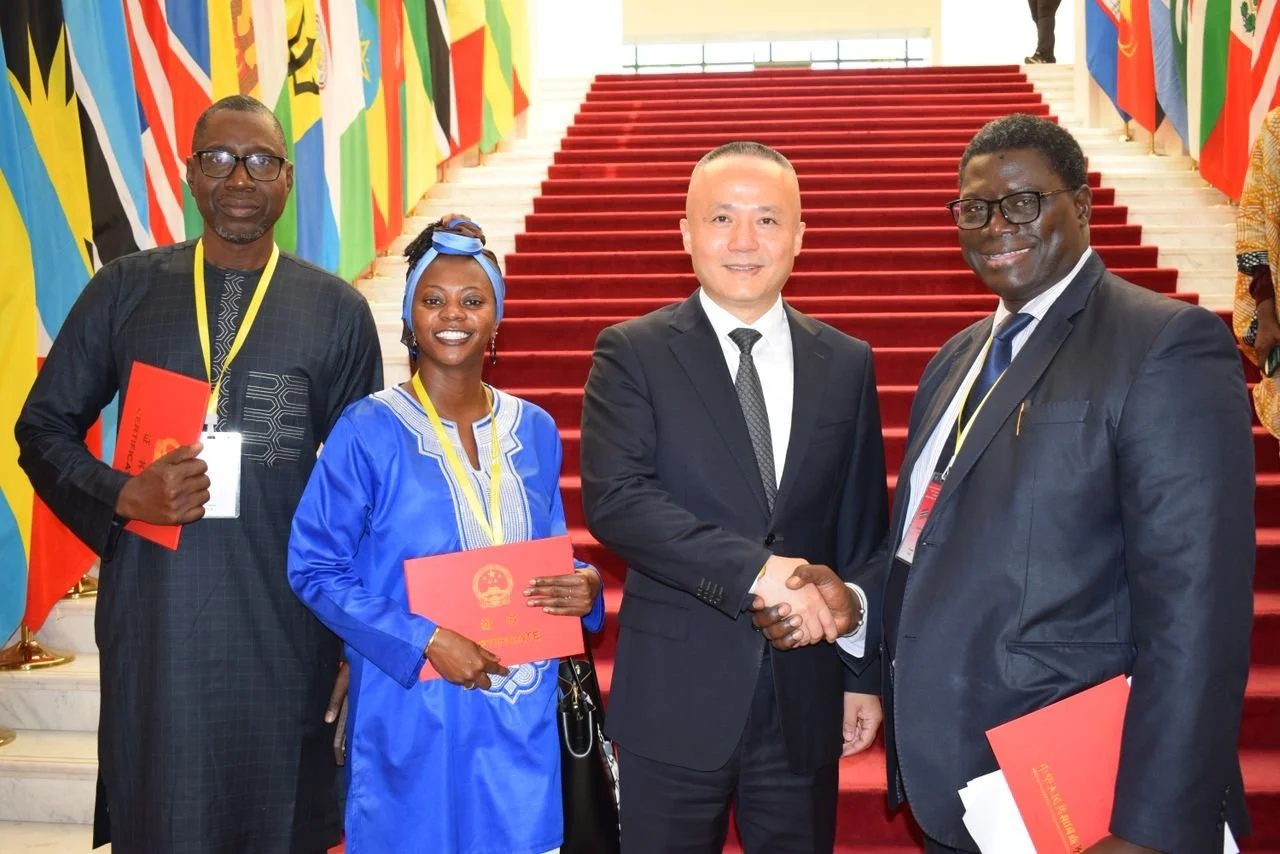
KairaCLO and Chinese Delegate © KairaCLO
By Sirra Chorr
The Kairaba Conservation and Leadership Organisation (KairaCLO), through the Chinese Embassy in Banjul, has successfully concluded a two-week seminar on carbon peaking, carbon neutrality, and green economy in China.
The training organised by the Academy for International Business Officials (AIBO) under China’s Ministry of Commerce brought together 34 participants from 10 countries under the Global Development Initiative aimed at strengthening knowledge sharing on sustainable development, green transitions, and climate action strategies among developing countries.
Speaking at the closing ceremony, the Chairman of KairaCLO, Mr Almami Fanding Taal, spoke on behalf of the delegates; he stated that visiting China allowed participants to better understand its people, systems, and achievements. He emphasized that China’s leadership in energy transition and green development is highly commendable, especially in a time when climate change poses an existential threat to humanity.
Mr Taal highlighted the importance of visionary leadership, organisational discipline, and innovation, noting that these factors have driven China’s rapid development. He also emphasised that ecological civilisation reflects a moral responsibility toward future generations and addresses the global climate crises. He expressed appreciation to AIBO and the Ministry of Commerce for the opportunity.
The Vice President of AIBO, Mr Xu Kai, acknowledged the efforts of participants, organisers and lecturers. He remarked that developing countries share common challenges such as poverty reduction, food security, and climate change. Mr Kai added that no country can address these issues alone and therefore encouraged unity, cooperation, and knowledge sharing while stressing that collective effort is key to achieving sustainable development.
He concluded with a message that China remains committed to supporting developing countries through cooperation and shared progress.
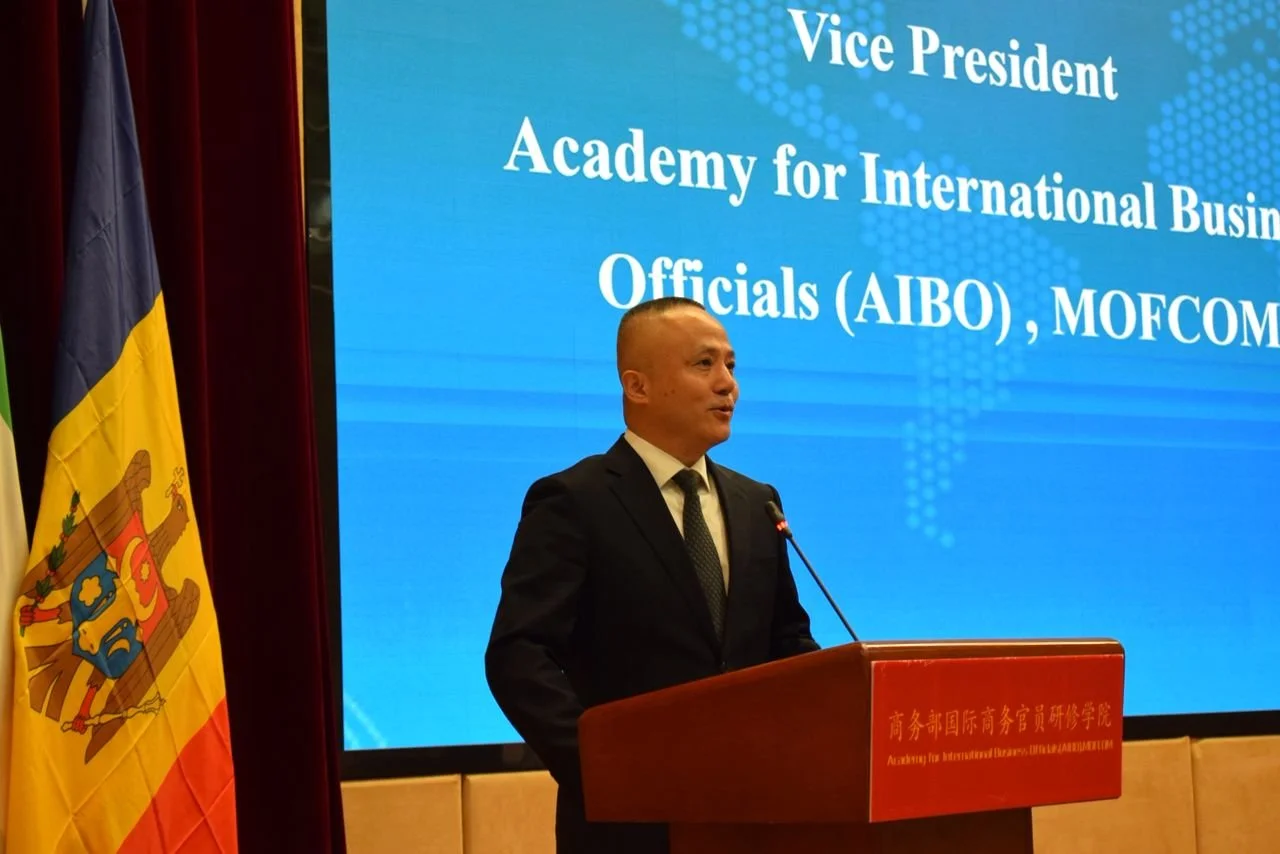
Vice President of AIBO, Mr Xu Kai © KairaCLO
Participants were exposed to a combination of academic lectures, policy discussions, and field visits across Beijing and Haikou, providing both theoretical and practical insights into China’s development model.
The seminar officially opened on 10th April 2026 in Beijing with an orientation and interactive session where participants shared expectations and commitments. Lectures throughout the program focused on China’s modernisation path, ecological civilisation, and green economy strategies.
Professor Yang Yanchun from the Development Research Centre of the State Council presented on China’s national conditions and the historic foundation of its rapid development. Other key sessions included discussions on carbon goals, global governance reform, and ecological civilisation led by experts such as Researcher Ding Yifan, Professor Qu Bo, and Deputy Director General Shen Lixin.
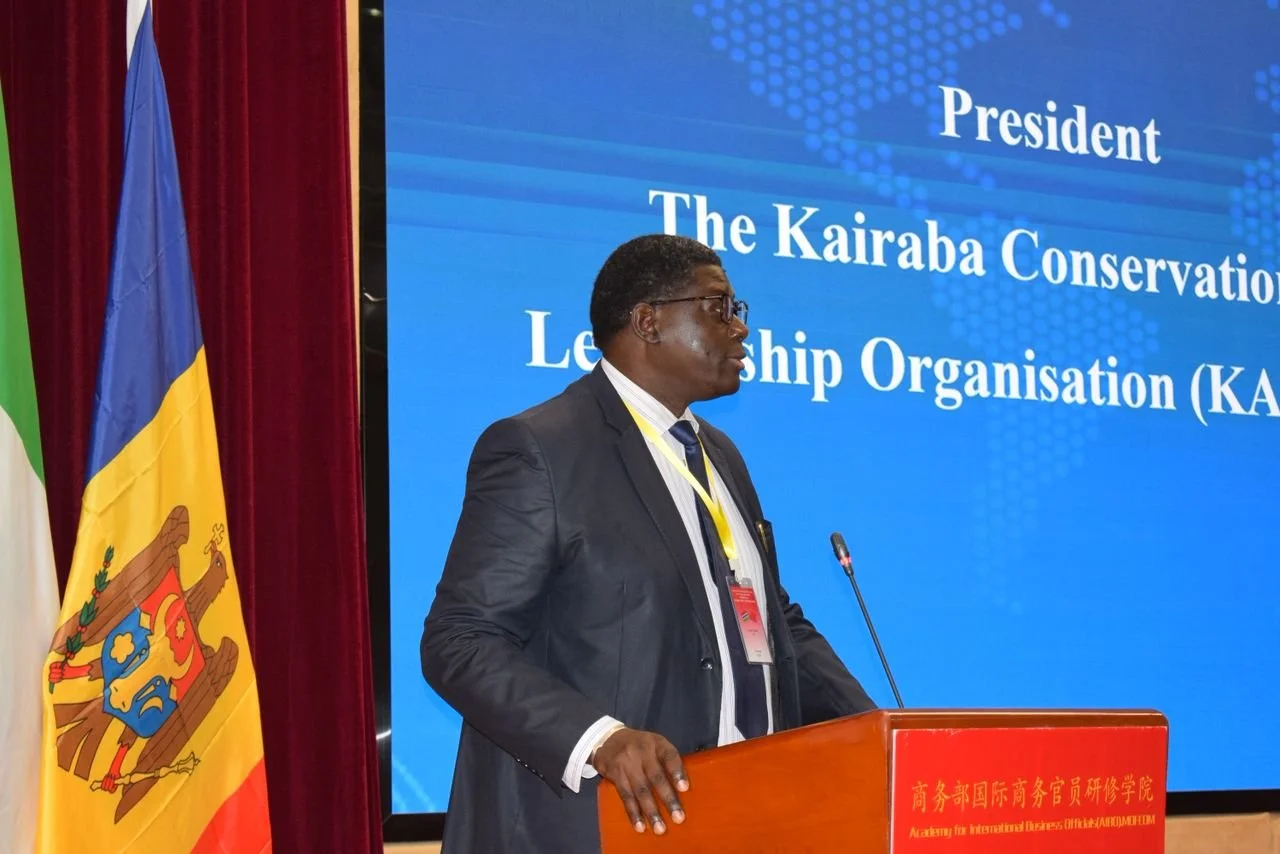
Mr Almami Fanding Taal on the Podium in China © KairaCLO
Sessions also explored forestry development, eco-industrial parks, and policy mechanisms supporting China’s dual carbon goals, delivered by Associate Professor Bian Mingming and Senior Research Engineer Yuan Yin.
Beyond the classroom, participants engaged in several field visits to observe China’s
Technological advancements and environmental practices. These included visits to China Zhongyuan Engineering Corporation and China Nuclear Engineering Company, where insights were shared on clean energy innovations and power systems.
Participants also experienced China’s progress in renewable energy and smart mobility through visits to JA Solar and the Beijing E-town Autonomous Driving demonstration zone, where a self-driving robobus showcased advancement in low-carbon transport.
Cultural and historic exposure formed part of the program, with visits to the Great Wall of China and the Temple of Heaven, offering participants a deeper understanding of Chinese heritage and national identity.
A study tour to Haikou in Hainan Province further highlighted China’s approach to sustainable urban development. Participants visited the Jiangdong New Area, a national ecologicaleconomic pilot zone focused on zero-carbon planning and green infrastructure. Other sites included the Hainan Resort Software Community and Fullsing Internet Industrial
Park, demonstrating the integration of digital innovation with green economic growth. At the Volcanic Dendrobium Park, participants observed how ecological conservation is combined with rural revitalisation, showcasing sustainable agricultural practices using natural volcanic resources.
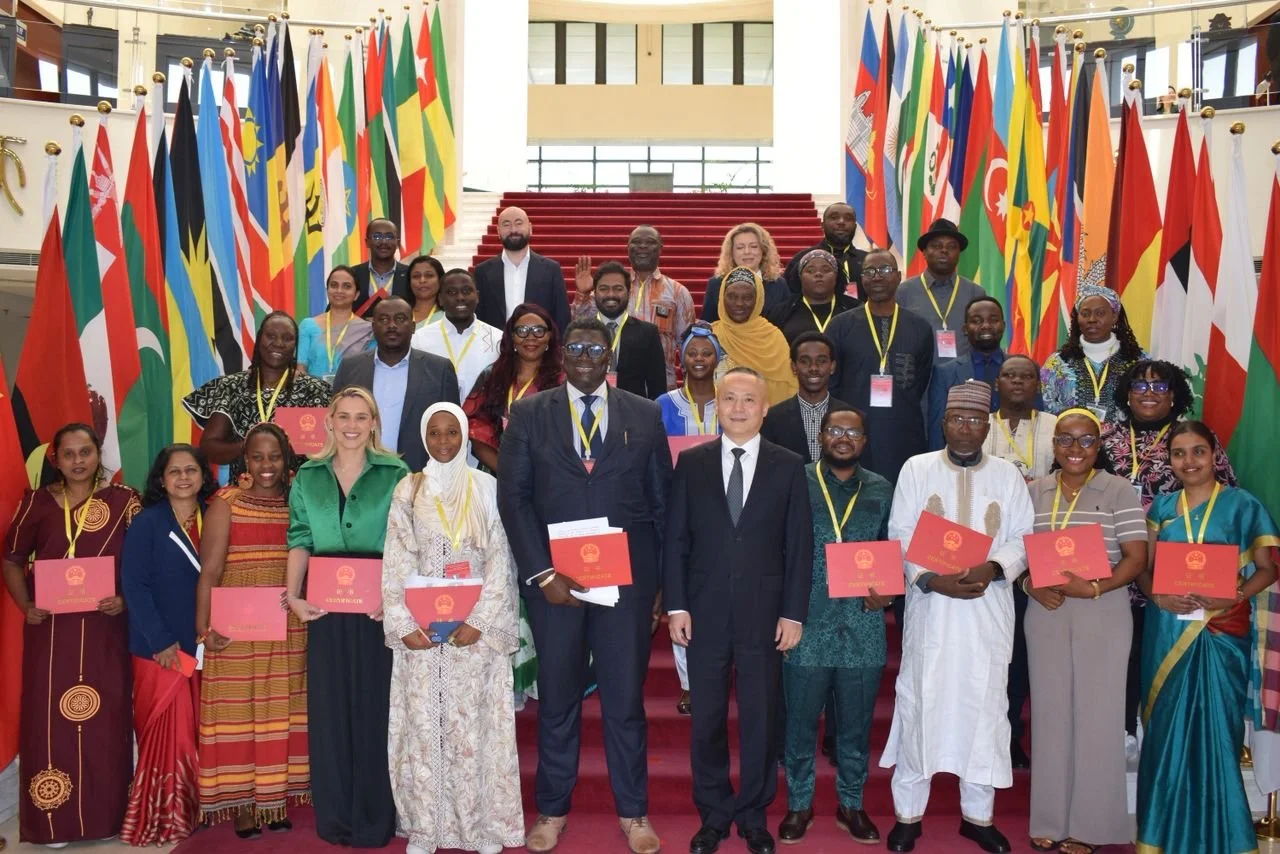
Delegates at the trip © KairaCLO
