
Gambia Participates © Askanwi
By Edward Dalliah, Jr
Almost eight months after the National Assembly confirmed three Anti-Corruption Commissioners in December 2025, the Office of the President is yet to officially hold their swearing-in ceremony to empower the Commission to commence investigating corruption allegations.
This has led the pro-fiscal transparency civil society organisation, Gambia Participates, to blame the presidency for the continued delay in operationalising The Gambia’s Anti-Corruption Commission.
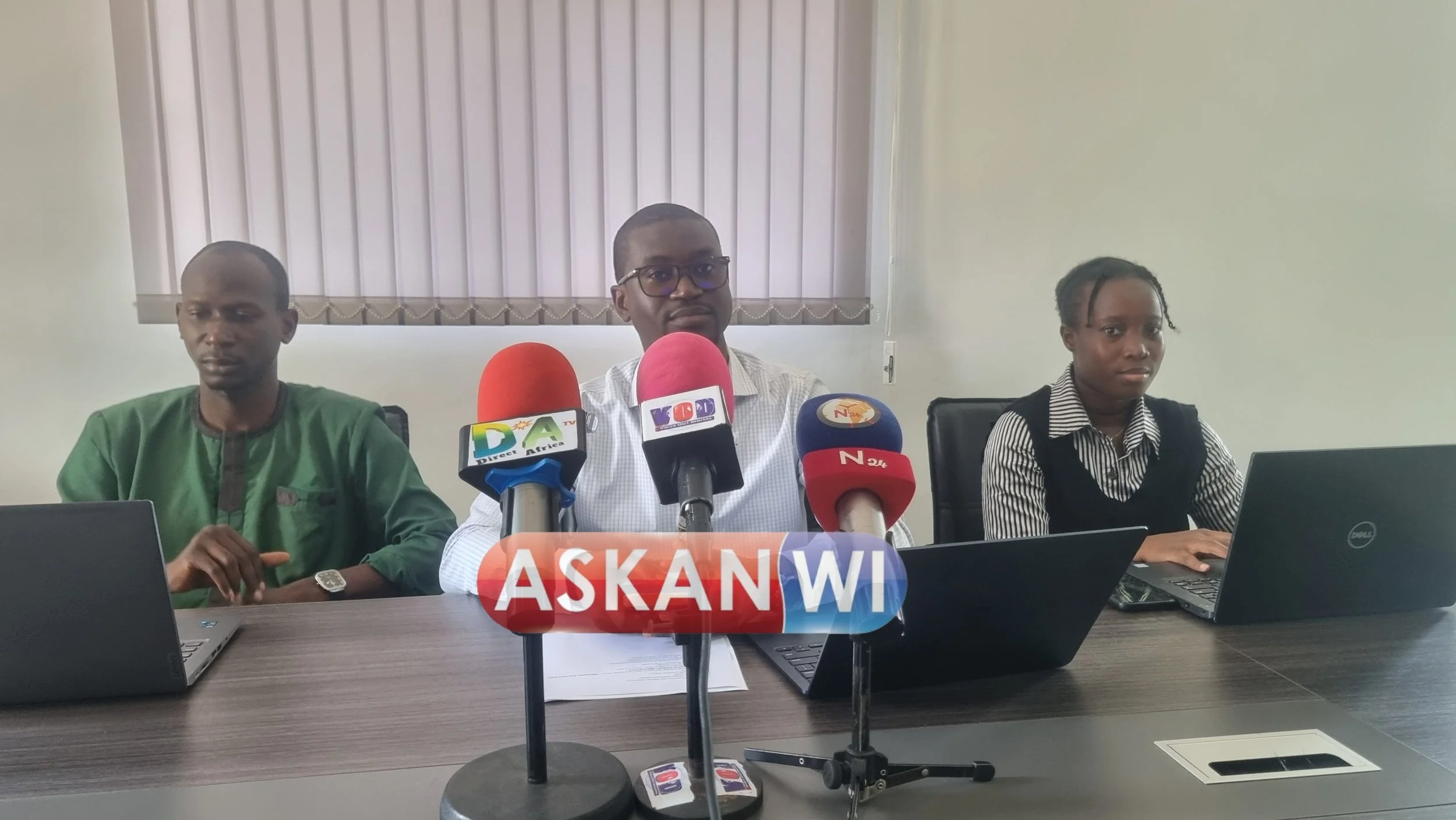
Speaking at a press conference on Thursday, 11th June 2026, at the organisation's office in Kololi, Executive Director, Mr Marr Nyang, said the only remaining obstacle preventing Gambians from having a functioning Anti-Corruption Commission is the failure of the presidency to formally appoint and swear in the three commissioners approved by lawmakers in December 2025.
He told journalists that “since December, we have not heard anything from the Office of the President,” adding that Gambia Participates wrote to the presidency two months ago, reminding the office that “the only thing standing between the Gambian people and having a strong, independent and effective Anti-Corruption Commission is officiating the swearing-in ceremony of the Anti-Corruption Commissioners.”
Although, during the opening of the 2026 Legal Year in January and the 2026 State of the Nation Address (SONA), President Adama Barrow reaffirmed his government’s stance against corruption while announcing the upcoming appointment of Anti-Corruption Commissioners, no visible action has been taken to appoint them.
Mr Nyang stressed that “it is important to note that without the Anti-Corruption Commission being operationalised, the Anti-Corruption Act is as ineffective as any other policy accumulating dust in government offices because the body responsible for executing that law is the Anti-Corruption Commission.”
He added that “the commission cannot exist merely as a structure without personnel.” The delay comes after years of advocacy by civil society organisations, development partners and governance activists calling for the establishment of an independent anti-corruption body in country.
Following the political transition in 2017, anti-corruption reforms became a central governance promise. The issue gained further prominence after the findings of the Janneh Commission, which uncovered widespread abuse of public resources during the former regime.
After several years of consultations and drafting, the Anti-Corruption Bill was eventually passed by the National Assembly and assented to by President Adama Barrow in 2023, paving the way for the creation of the country’s first Anti-Corruption Commission.
The law established an independent body mandated to investigate corruption-related offences, promote transparency and accountability, recover proceeds of corruption, and recommend prosecutions where appropriate.
In December 2025, the National Assembly approved the nominations of Serign Mass Jallow as Chairperson and Almami S. Manga and Isatou J. Nahra as Commissioners.
Civil society groups and governance advocates viewed the approval as a major milestone towards finally activating the commission. However, nearly eight months later, the commissioners are yet to be sworn into office.
According to Mr Nyang, all institutions involved in the establishment process have fulfilled their responsibilities except the presidency.
He told journalists that “the National Assembly has done what it ought to do, and the Ministry of Justice has done what it ought to do,” adding that “what the Office of the President is supposed to do is swear in these three confirmed Anti-Corruption Commissioners.”
Mr Nyang maintained that the continued delay means the country remains without an active institution dedicated to investigating corruption allegations.
“Basically, the reason why The Gambia does not have an active Anti-Corruption Commission is because the Office of the President has not done what it ought to do,” he said. Mr Nyang also added that the presidency has “also not come out publicly to explain the reason for the delay.”
Similar concerns have been raised by the Edward Francis Small Centre for Rights and Justice (EFSCRJ) which has repeatedly called for the immediate operationalisation of the commission.
The organisation has previously warned that the prolonged delay risks undermining public confidence in the government's commitment to fighting corruption and promoting accountability.
As calls for accountability intensify, attention is now focused on whether the Office of the President will move to complete the final step necessary to activate what many view as one of the country’s most important governance reform institutions.
