
RFLD’s Afrofeminist Methodology Sets New Continental Standard for Women Defenders
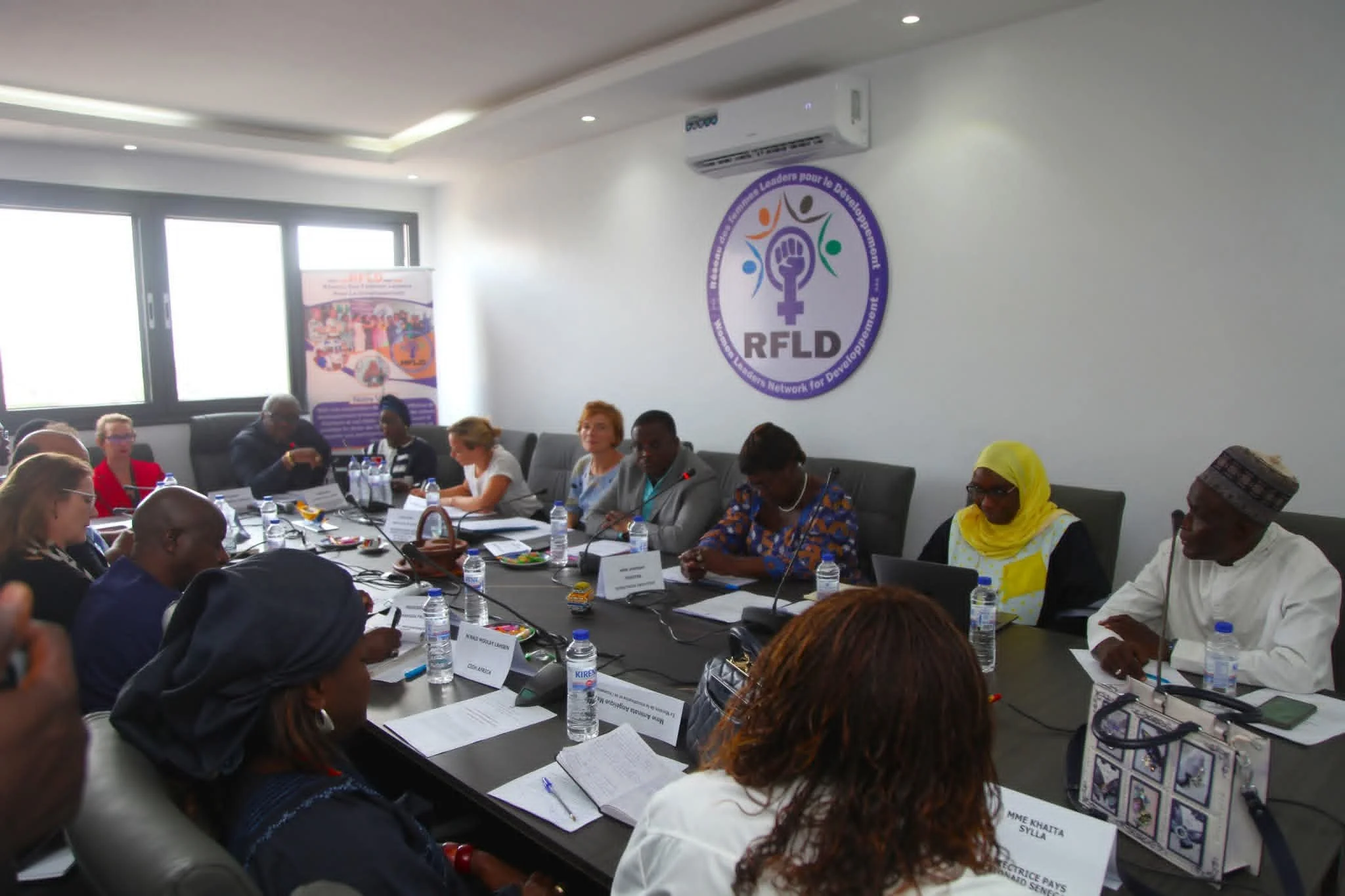
RFLD Office Meeting © RFLD
At the RFLD Dakar Office, an Afrofeminist Methodology Sets a New Standard for Continental Convenings on the Protection of Women Defenders
Dakar, Senegal, 17th June 2026 — In the hall of the Réseau des Femmes Leaders pour le Développement (RFLD) at Cité Keur Gorgui on Tuesday afternoon, a methodological choice was made before any institutional voice had taken the floor. The choice would not appear in the formal programme. It would not be commented on by the State representatives or the bilateral cooperation partners or the multilateral agencies present. But the choice would structure the entire afternoon. The choice was this: the Women Human Rights Defenders invited from across the West African region would speak first.
This choice — that defenders parlent en premier, as RFLD's francophone team has articulated it in dozens of internal documents — is what RFLD characterises as the afrofeminist methodology of the network. It is not a procedural niceness. It is a political claim about the order of authority in conversations about the protection of women in public life. The claim is that the women whose work the international human rights architecture exists to protect are also the women whose analysis must structure the architecture's response. Civil society does not speak after institutional voices have set the framing. Civil society sets the framing, and institutional voices accompany it.
The methodological choice has consequences. The first consequence is that institutional power in the room becomes accountable to civil society analysis from the first minute of the convening. The Honourable Professor Remy Ngoy Lumbu, Special Rapporteur on Human Rights Defenders of the African Commission on Human and Peoples' Rights (ACHPR), enters the conversation not as the first voice but as a respondent to the defenders' analysis. The Ambassador of the Kingdom of Sweden to Senegal, Her Excellency Catharina Cappelin, enters the conversation not as the first diplomatic voice but as a partner whose contribution is shaped by what the defenders have said. The Federal Republic of Germany's three-tier representation — Mrs Henriette Wolf at the Embassy, Mrs Katja Roeckel at GIZ Senegal, — enters the conversation in service of an analysis that defenders have already begun to articulate.
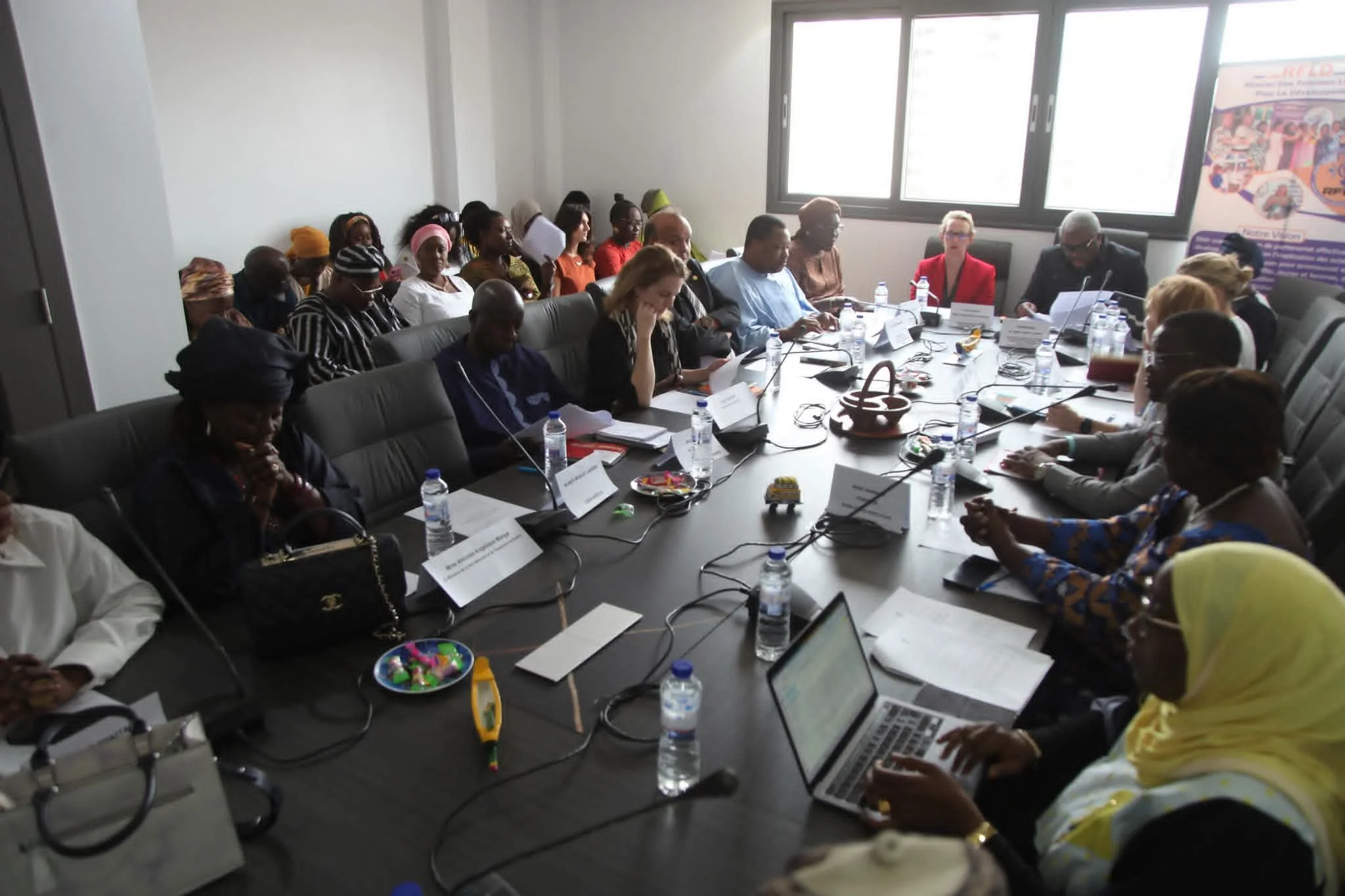
Cross Section of Delegates at RFLD Meeting © RFLD
The second consequence is that the dignity of being heard is restored to defenders whose work, in their own contexts, is too often silenced. Civic space is contracting across the Sahel — in Mali, in Burkina Faso, in Niger, in Guinea. The defenders working in those contexts have, in recent years, found their voices increasingly excluded from policy conversations about the future of their countries. The afrofeminist methodology of the Dakar convening reversed that exclusion at the level of the room.
A defender from the Sahelian context articulated the political stakes of the methodology in a single sentence that may be the most quoted of the afternoon.
"We did not come for sympathy. We came for solidarity, for protection, and for the lineage of engagement that this room recognised."
The phrase lineage of engagement carries weight. It is the title of the convening — Solidarity, Protection and Lineage of Engagement — and it names a specific intellectual claim that the afrofeminist tradition of RFLD has been articulating for more than a decade. The claim is that the work of contemporary Women Human Rights Defenders does not begin in 2026, or in 2010, or in 1995. It begins in a much longer arc of African women's engagement against colonial dispossession, patriarchal violence, authoritarian power, and the multiple forms of silencing imposed on women who claim full place in public life. The contemporary defender stands within that arc. She is part of a lineage. She is not alone.
The institutional architecture of RFLD — four offices in Porto-Novo, Accra, Banjul and Dakar; 670 member organisations across more than 35 African countries; a network spanning francophone, anglophone and lusophone corridors — is itself an expression of the afrofeminist methodology. The network is conceived, governed and led by African women. It holds ACHPR Observer Status N°553 and sits on the Commission's Working Group on Human Rights Defenders. It is not a vehicle through which international actors organise African women. It is an African feminist intermediary that international actors are invited to accompany.
The presence in Dakar of Mrs Hannah Forster — the historical founder of the NGO Forum at the ACHPR, the Executive Director of the African Centre for Democracy and Human Rights Studies (ACDHRS) in Banjul — placed the Convening within a three-decade arc of African civil society engagement with the continental human rights system. The NGO Forum at the ACHPR is the institutional space through which African civil society has, since the 1990s, engaged the African continental human rights system as a peer, not as a subject. Mrs Forster built that institution. Her presence in Dakar was a moment of intergenerational transmission.
The substantive sessions of the convening tested the afrofeminist methodology against the institutional architecture of continental human rights protection. They asked: what does it mean to engage the ACHPR Special Rapporteur on Human Rights Defenders, the ECOWAS framework and its Gender Office, the African Peace and Security Architecture, and the wider African human rights system from a position of civil society first-speech? Professor Mabassa Fall, the senior Senegalese jurist, offered a thesis that may register beyond the Convening: the African human rights system is not under-developed in instruments. It is under-developed in the mechanisms by which civil society, and women defenders specifically, can convert continental decisions into national protection. The thesis re-positions the operationalisation question at the centre of the continental human rights agenda — and re-positions civil society intermediaries like RFLD as the institutional architects of that operationalisation.
The bilateral cooperation partners present in Dakar received the methodology with a posture of accompaniment. Sweden's engagement with RFLD currently flows through Sida and the NAFASI consortium, a three-year initiative to defend Africa's digital civic space. Germany's engagement sits at two complementary levels — co-chair of the SEA-T Programme Advisory Council and operational partner of the Afrofeminist Initiative for Human Rights Development in Francophone West Africa (AIHRDFWA). Both engagements are organised around a recognition that the afrofeminist intermediary architecture is not a deliverable that European bilateral cooperation creates. It is a peer architecture that European bilateral cooperation joins.
The Convening's most enduring contribution may be the institutional standard it has set. The standard is that continental convenings on the protection of women human rights defenders should be organised around the afrofeminist methodology of civil society first-speech. The standard is that institutional voices accompany civil society analysis rather than authoring it. The standard is that the lineage of African women's engagement against the multiple forms of silencing is the lineage from which contemporary protection architectures must be built. The standard is that the women who carry the work also carry the analysis.
As the Dakar afternoon moved towards its closing and the participants prepared for the informal reception that would extend beyond the formal end of the consultation, the methodology had done its work. The defenders from the Sahel, from Mali and Burkina Faso and Niger and Guinea, left the room with the recognition that the architecture surrounding their work is alive and engaged. The institutional voices in the room left with a sharpened analysis of what the operationalisation of continental human rights protection requires. The historical voices — Mrs Forster, Professor Fall, Mr Niass — left with the recognition that the lineage they have built is being transmitted forward. The intermediary architecture of RFLD left with renewed institutional weight.
The afrofeminist methodology, on Tuesday in Dakar, had set a new standard.
