
GPU President Calls for Journalist Compliance with New Media Policies
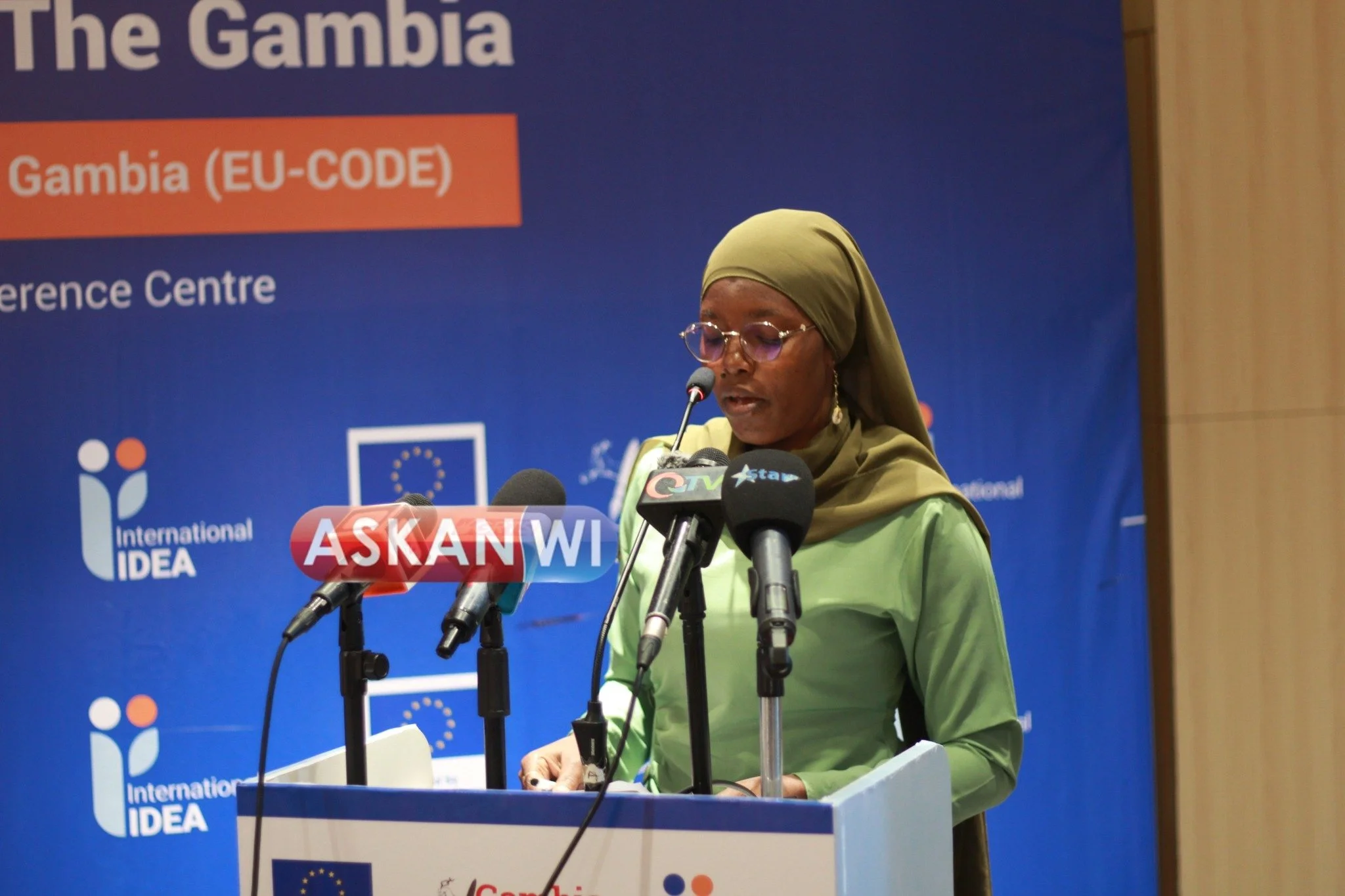
GPU President Idatou Keita © Askanwi
By Edward Francis Dalliah, Jr.
The Gambia Press Union (GPU) has launched three major media policy documents aimed at strengthening professionalism, ethics, and accountability in journalism, with its President, Ms Isatou Keita, urging journalists to strictly comply with the new frameworks to rebuild and safeguard public trust in the media.
The policies, the revised Cherno Jallow Charter of Ethics 2025, the revised Sexual Harassment Policy 2026, and the Complaints and Monitoring Mechanism 2025 were launched on 3rd February 2026 at the Sir Dawda Kairaba Jawara Conference Centre in Bijilo.
Speaking at the event, Ms Keita stressed that adherence to the new frameworks is essential to improving credibility and ethical standards within the profession, noting that they ‘provide clear and practical guidance for ethical journalism and effective self-regulation.’ She told journalists at the launch that the documents are tailored to “respond to emerging challenges in our media landscape and guide journalists, editors, managers, and regulators in upholding professional standards, preventing misconduct and reinforcing public trust in the press.”
Highlighting the importance of the revised Code of Conduct, Ms Keita stated: “We have our Cherno Jallow Charter of Ethics. If we go by everything that is enshrined in this Charter, there wouldn’t be any time that people would question your walk as a journalist.” She warned against treating the documents as symbolic, describing them as essential tools for daily journalistic practice. “These should not be documents that we are just going to hold or leave to gather dust somewhere. Let them be our Bible or Quran that we use every day, because we can’t do without them,” she said.
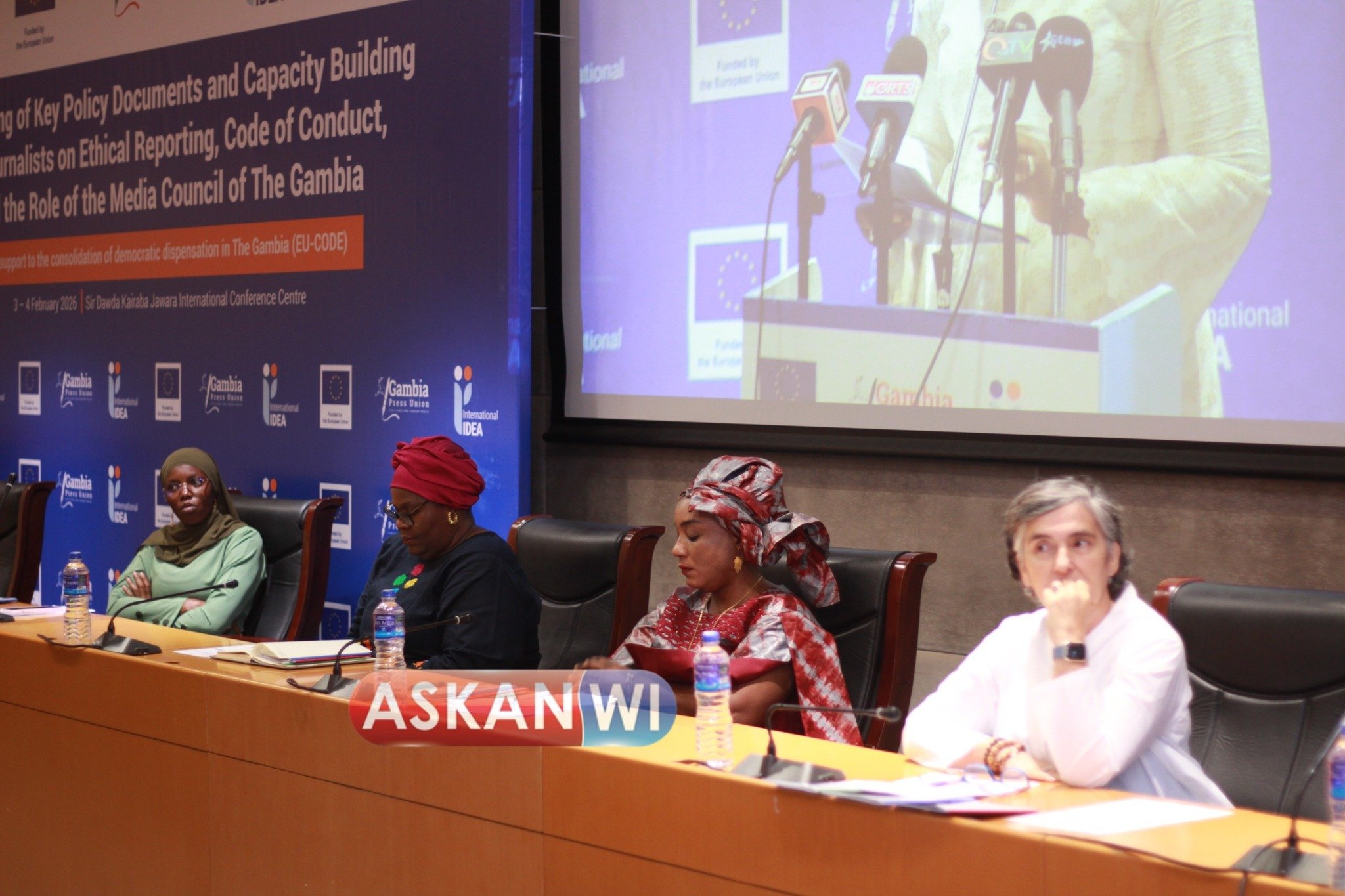
High Table at Launch of Policy Documents © Askanwi
Since the political transition in 2017, The Gambia’s media landscape, comprising print, broadcast, and online platforms, has expanded significantly, particularly in the digital space. However, challenges persist, especially regarding compliance with self-regulatory frameworks established by the GPU.
Against this backdrop, Ms Keita “called on media professionals to embrace [the frameworks] not as obligations but as shared tools to strengthen our profession, protect our colleagues and also serve the public interest with integrity.”
Also speaking at the launch, the Head of Country Office of the International Institute for Democracy and Electoral Assistance (International IDEA), Ms Jainaba Faye, underscored the importance of journalists understanding and adhering to the new policies. She described the revised Charter as “a guiding light for media professionals,” reminding journalists that their role goes beyond reporting facts to upholding truth in service to society.
She added that the three documents, “as the president rightly mentioned, are more than words and paper, they are a response to real-world challenges. Journalists as watchdogs of democracy have a responsibility to inform the public, shape discourse and hold power to account.”
The policy launch was supported by International IDEA, with funding from the European Union (EU), as part of ongoing efforts to strengthen democratic governance, media ethics, and accountability in The Gambia.
