
IEC to Clamp Down on Double Registration and Unregistered Political Movements
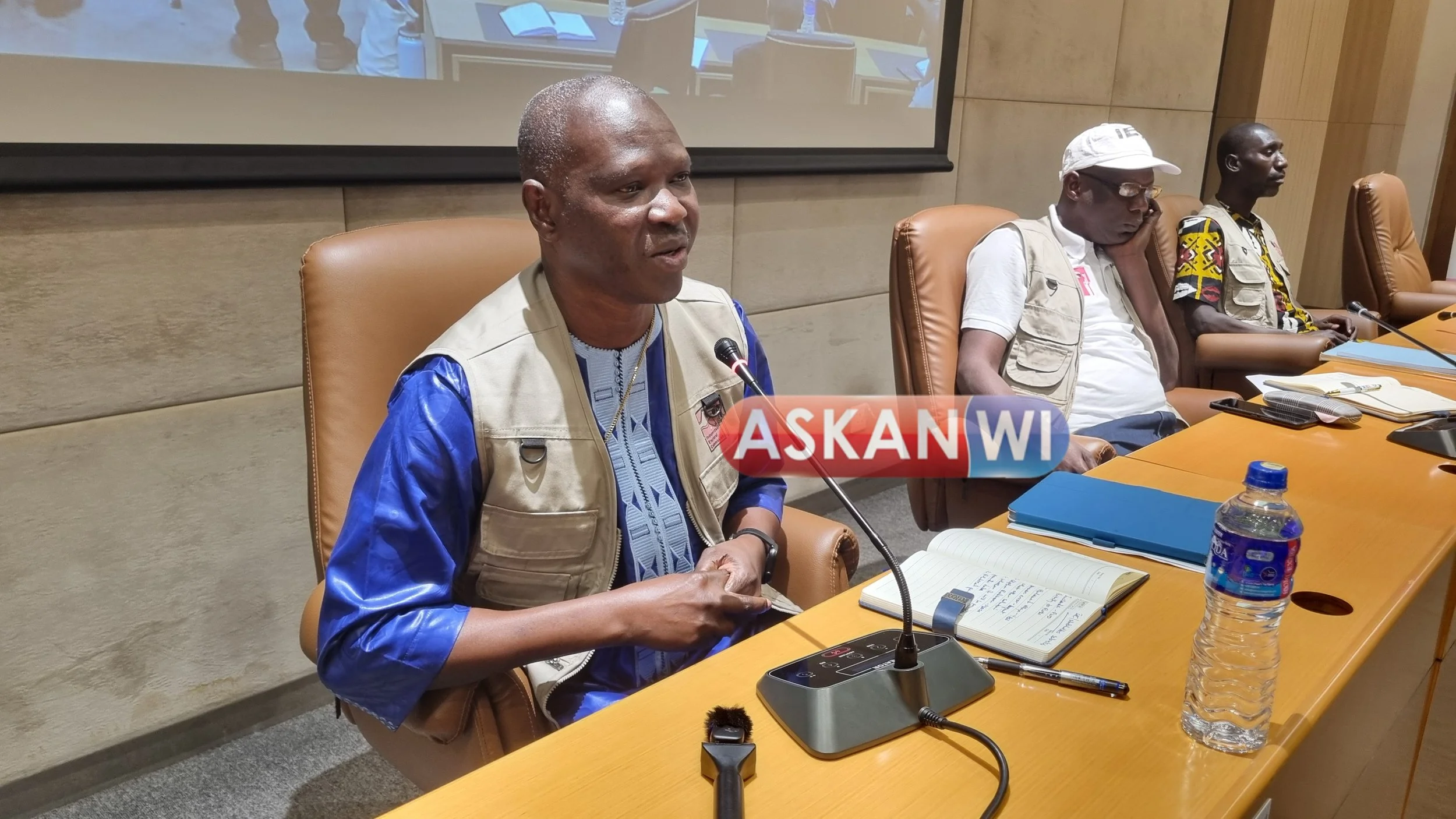
IEC Senior Officials - Chairperson Colley in Blue © Askanwi
By Yusef Taylor, @FlexDan_YT
Two weeks into the supplementary voter registration process ahead of the December 2026 presidential elections, The Gambia’s Independent Electoral Commission (IEC) has warned that it will clamp down on double registration while criticising what it described as “unwarranted political activism” by unregistered political movements.
Speaking at the Sir Dawda Kairaba Jawara Conference Center before a packed audience on 23rd April 2026, IEC Chairperson Mr. Joe Colley announced that a Legal Notice would be issued to clearly distinguish political parties from movements. He also revealed that a meeting would be convened with the Inter-Party Committee and security agencies to determine the way forward.
In his keynote address, Mr. Colley disclosed that the Commission had “identified over 2,000 cases of double registration despite” extensive voter education and sensitisation efforts. Explaining the nature of the offence, he noted that “some voters who were already registered in 2021 are showing up to be registered again. This amounts to double registration, which is a serious offence under the electoral laws of the country.”
A slide presented by one of the consultants indicated “about 2,800 (unconfirmed) cases” of double registration—approximately 8% of registrations recorded so far. To date, 36,217 supplementary voters have been registered in 2026, bringing the total number of registered voters up to 998,233.
Tensions briefly flared when slides displaying “unconfirmed cases” of double registration—both women and men—were shown. The situation became a flashpoint until the IEC Communications Director intervened to halt the presentation, citing the need to protect the personal information of those involved. A civil society advocate also urged the Commission to ensure that the media refrains from publishing individuals’ personal data.
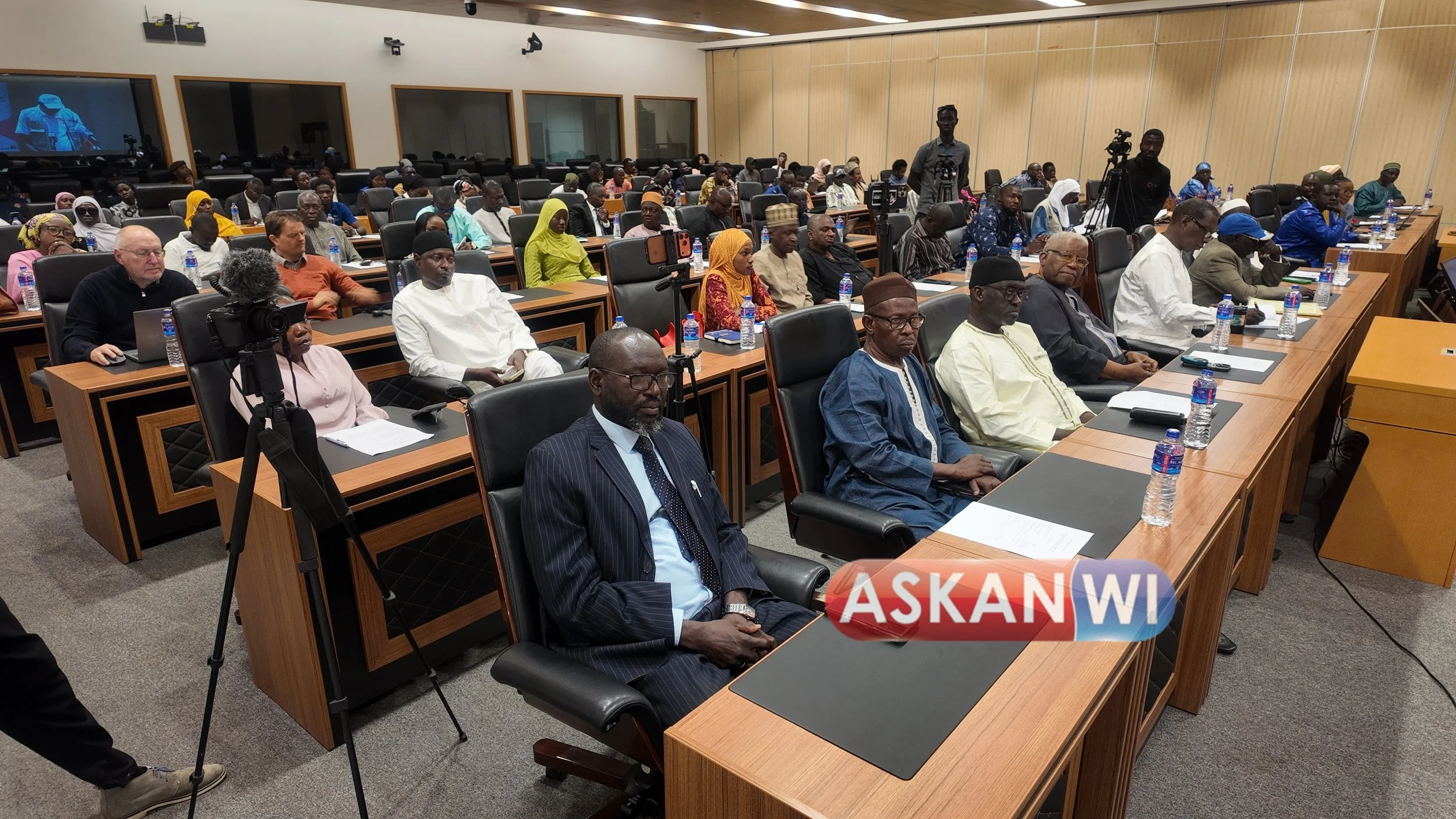
Delegates at the IEC Engagement © Askanwi
Addressing the issue of political movements, Chair Colley stated that “the Commission would like to register its concern over undue interference in the registration process by some political actors.” He warned that such activism “has the potential to hamper the smooth conduct of the voter registration exercise and undermine the integrity of the electoral process.”
He further expressed concern about “some aspiring political parties which are yet to be registered as fully fledged and bona fide political parties,” noting that certain activities may violate Section 105 of the 1997 Constitution and Sections 105 to 110 of the Elections Act 2025.
“Registration exists precisely to regulate the activities of political parties to ensure accountability, transparency, equal competition, and adherence to the rule of law within the political space,” the IEC Chair emphasised.
Dedicating a significant portion of his remarks to the issue, Mr. Colley clarified the Commission’s legal position: “Only political parties duly registered with the IEC, in accordance with the Elections Act, are permitted to sponsor candidates for public elections, access media under regulated airtime, and benefit from the protections accorded to political parties.”
“Any group that is not so registered cannot lawfully represent itself as a political party or enjoy the privileges reserved for registered parties,” he added.
To address these concerns, the Commission outlined a series of enforcement measures, including closer monitoring of the political environment “in collaboration with the Inter-Party Committee and law enforcement agencies.” Mr. Colley noted that where evidence shows an unregistered entity is performing functions reserved exclusively for political parties—such as using party symbols, holding congresses, nominating candidates, or soliciting funds for political office—the Commission is empowered to act.
He added that enforcement options include issuing public notices, referring matters to the Attorney General, and, where necessary, initiating court action to restrain unlawful activities.
“The way forward is for the IEC to discuss this matter with the Inter-Party Committee for deliberation by all registered parties. Additionally, the Commission will issue a legal reminder on the distinction between registered political parties and other associations, and the limits of lawful political activity for unregistered entities,” Mr. Colley concluded.
