
IMF Disburses US$38.15M as Gambia Remains at High Risk of Debt Distress
IMF Loans received last week © Askanwi Media
By Yusef Taylor, @FlexDan_YT
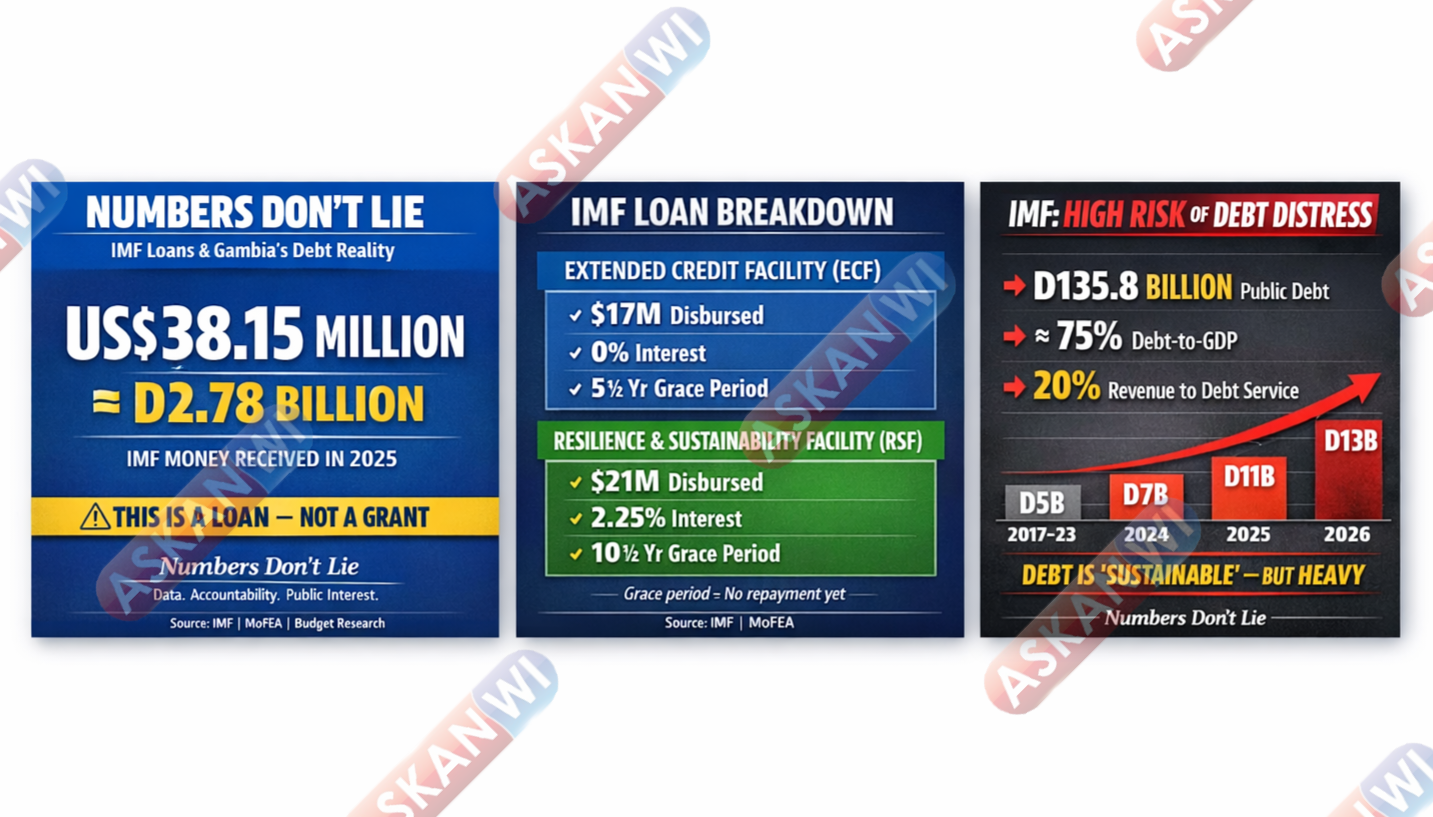
Last week, The Gambia’s Ministry of Finance and Economic Affairs (MoFEA) announced that the International Monetary Fund (IMF) had approved the immediate disbursement of US$38.15 million [equivalent to D2.78 billion]. In its announcement, MoFEA did not indicate that the disbursements are loans or outline their conditions. However, anyone familiar with the IMF will know that it only offers loans. The word “loan” is now often couched in terms such as “credit facility,” which goes over the heads of many people who are not familiar with financial terminology.
Breakdown of the New US$38.15 Million Loan and Conditions
According to new information from the IMF, an Extended Credit Facility (ECF) of about US$100 million has been approved. So far, about US$68 million has been disbursed, with US$17 million disbursed this week. The ECF loan comes with a 0% interest rate, a grace period of five and a half years, and a final maturity of 10 years.
Staying with disbursements reported this week, the IMF also approved a Resilience and Sustainability Facility (RSF) of about US$60 million. To date, US$21 million has been disbursed. Unlike the ECF’s zero interest rate, the RSF includes an interest rate of 2.25% and a grace period of ten and a half years.
Both the ECF and the RSF total US$38.15 million and feature six-month reviews, which end in December 2026. The grace period refers to the time during which no repayments are made after receiving the loan, while the maturity period is the time within which the loan must be repaid after the grace period.
IMF Resident Representative for The Gambia - Patrick Gitton
IMF: The Gambia at High Risk of Debt Distress
Minister Keita believes that “the IMF’s approval reflects continued confidence in The Gambia’s reform programme and its efforts to sustain growth, strengthen fiscal discipline, and enhance governance and climate resilience.”
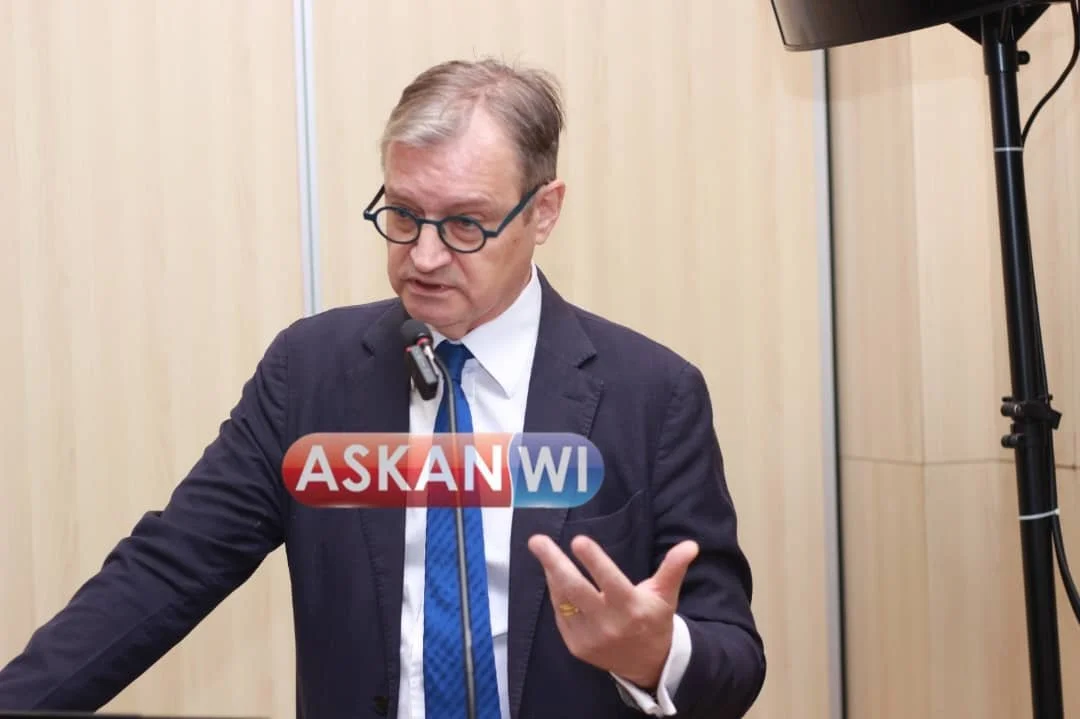
However, the country is in a precarious position, close to debt distress, according to the IMF’s Gambia Representative, Mr. Patrick Gitton. This has not stopped the IMF from continuing to pile “concessional loans” on top of the country’s total debt of D135.8 billion reported at the end of June 2025. According to IMF’s Gitton, this year [2025], “20 countries in the region are either at debt distress or at high risk of debt distress, including The Gambia, but not in distress. The Gambia’s debt is deemed sustainable [as of now].”
He added that although The Gambia’s debt is “around 75% of GDP, which is deemed sustainable, but still high,” a bigger challenge is “the debt service, which is very heavy for The Gambia”.
Our budget research shows that The Gambia’s debt service has been spiralling out of control. From 2017 to 2023, debt service hovered around D4 to D5 billion per year. This sharply increased to D7 billion in 2024 and rose further to D11 billion this year. For next year, a record D13 billion in debt service payments has been approved for 2026.
Mr Gitton is cautioning that debt interest payments relative to fiscal revenue “have increased steadily for all countries” in Sub-Saharan Africa (SSA). In fact, it noted that “SSA is penalised more than other regions when it comes to debt service.” For The Gambia, “20% of revenue is being consumed by debt service,” said Mr Gitton.
Our reporter made enquiries to both the IMF and a National Assembly Member to ascertain if the loans have been approved by Parliament and has been informed that they have not been approved.
