

Journalist Landing Ceesay © Askanwi
By Edward Francis Dalliah, Jr.
Landing Ceesay, a Gambian journalist working with The Gambian Daily, revealed that his brother is among over 190 migrants feared dead at sea after a boat that departed from Nuimi Jinack in November 2025 disappeared without a trace, highlighting the human cost of irregular migration. Ceesay questioned the Minister for Foreign Affairs, Hon. Modou Sering Njie, on the government’s efforts to monitor such tragedies and confirm the deaths.
Ceesay made the emotional disclosure during the final press conference of 2025, organised by the Ministry of Information, Media, and Broadcasting Services on 29th December 2025 at the Sir Dawda Kairaba Jawara International Conference Centre.
While questioning the minister on migration-related issues, he said his family had already begun mourning, pointing out that “the vessel that got lost—carrying 190 people—my brother is part of that, and I just returned from the village. We have done charity for him. We believe he is not alive; he died.” Most importantly, Ceesay questioned Minister Njie, “What is the government doing to confirm that actually the boat got lost?”
The boat in question was earlier declared missing by migration activist Ebrima Drammeh, who on 24th December 2025 announced the conclusion of a month-long search for the vessel. According to Drammeh, the boat left Nuimi Jinack on 17th November 2025, carrying more than 190 people, including at least 45 women and children, many of them Gambians. He wrote that the “boat was not intercepted in Senegal, Mauritania, Morocco, or Cape Verde. We checked the Canary Islands, but it did not arrive, nor did it reach Spain.” Therefore, they said, “We are 100% sure this boat has sunk, and no one has survived.”
Responding to Ceesay, Foreign Minister Njie offered condolences and said the government was engaging regional partners over reports of migrant boat incidents off the Mauritanian coast. He noted that they “also received the news of the migrant boat that had capsized on the coast of Mauritania, and that, according to some reports, 150 Gambians were on board that vessel. The minister told the journalist that the government is working with their mission in Nouakchott and partners to make sure that at least what is needed in terms of rescues and other support is being offered.
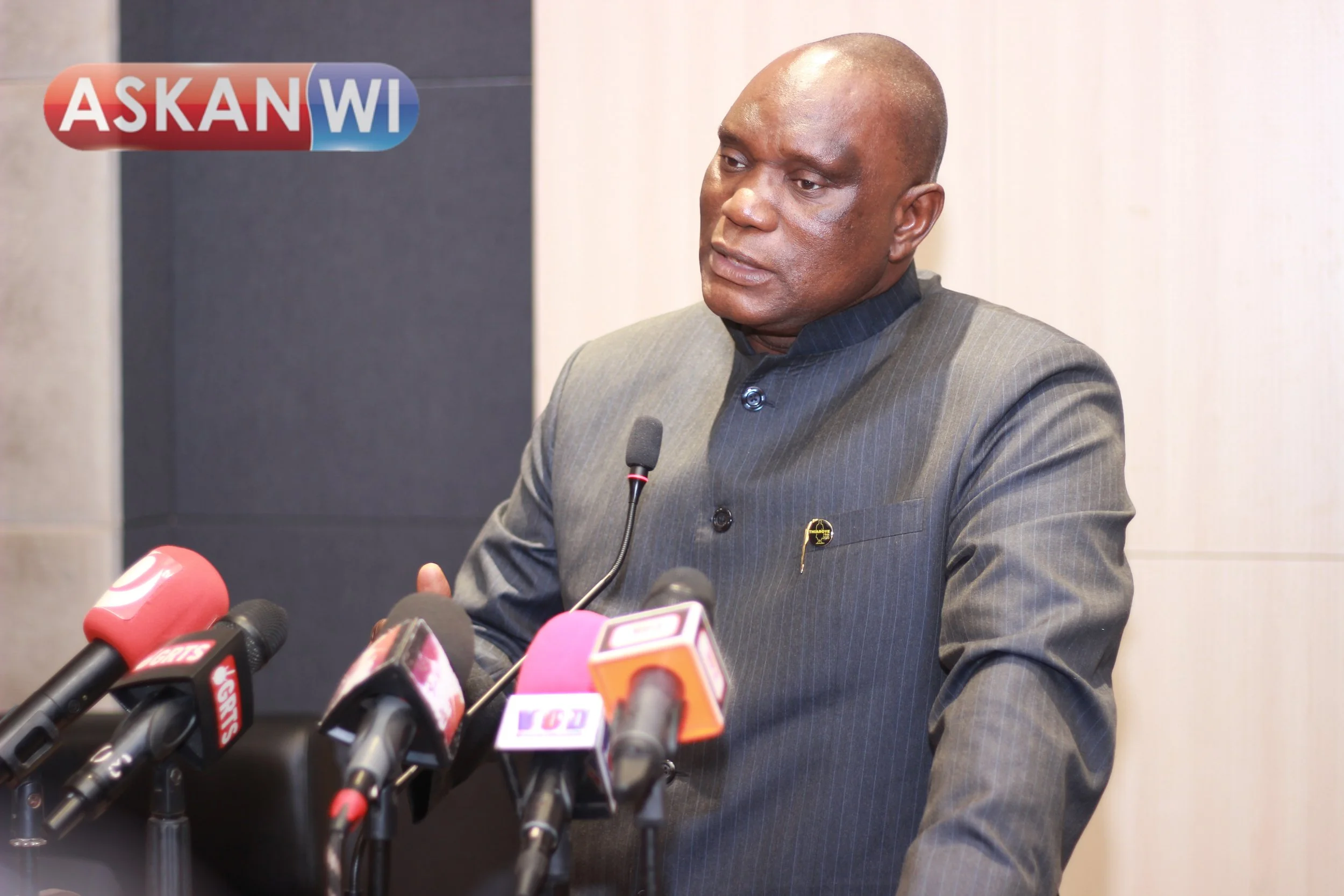
Foreign Affairs Minister Hon Sering Modou Njie © Askanwi
Irregular migration, commonly known as “backway,” has for years drawn young Gambians and other West Africans toward Europe, often through risky sea journeys to Spain or land routes through North Africa toward Italy. The Gambia has also served as a transit point for migrants from across the sub-region, and the dangers of these journeys are not new.
In 2005, during the regime of former president Yahya Jammeh, some 54 West African migrants were arrested, detained, tortured, and later killed after being falsely accused of being mercenaries. The Truth, Reconciliation, and Reparations Commission (TRRC), in Volume 13 of its report, concluded that Jammeh bore responsibility for their killings, enforced disappearances, and torture, having ordered members of the Junglers to execute the migrants.
But despite past tragedies and ongoing awareness campaigns, boats continue to depart Gambian shores. On 7th January 2026, the Gambia Immigration Department (GID) disclosed that following intelligence operations in Jinack Kajata, authorities evacuated 222 migrants using a seized wooden boat. The migrants included ‘68 Senegalese, 26 Gambians, 106 Guineans, 12 Malians, 4 Ivorians, 2 Mauritanians, and 4 Nigerians, who were transported to Bakindik Koto with support from the Gambia Police Force.’ The continued use of Gambian coastal communities as departure and transit points, often resulting in missing boats and mass fatalities at sea, has intensified calls from activists such as Drammeh for stronger action.
While the government, alongside development partners, continues to promote safe and regular migration pathways, including discussions at the Second National Dialogue on Migration held under the theme “Leveraging Regular Pathways for The Gambia’s National Development”, restrictive visa regimes and limited legal migration options for youth remain a major push factor. For families like that of Landing Ceesay, the cost of those barriers is painfully personal, measured not in policy debates but in lives lost at sea.
