
NAMs Sign Gambia Participates’ Good Governance Social Contract
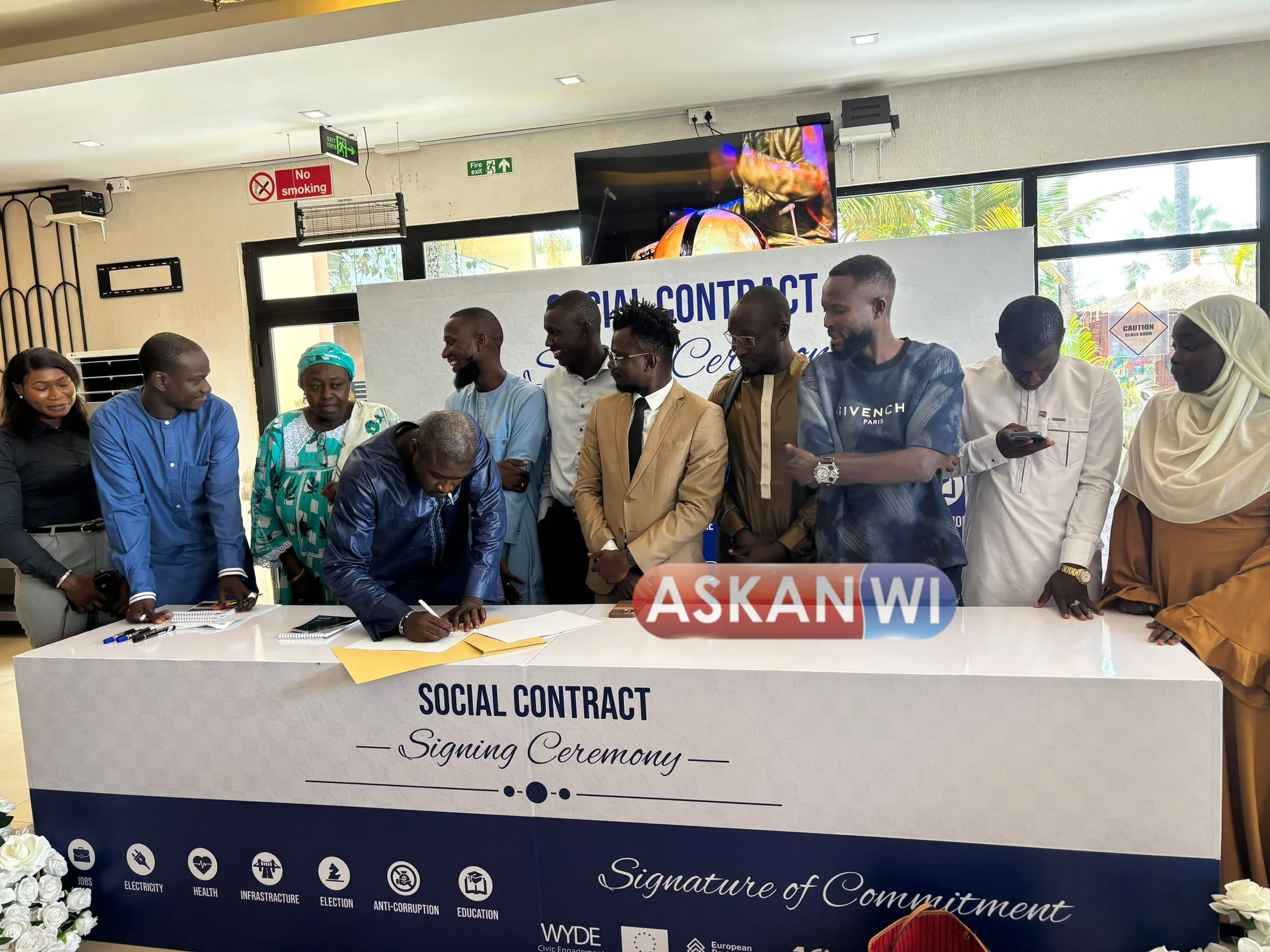
NAMs Sign Contract with Gambia Participates and Advocates © Askanwi Media
By Haddy Ceesay,
Members of The Gambia’s National Assembly signed a Political Social Contract for Accountability and Good Governance hosted by Gambia Participates on Saturday, 27th June 2026, at Bakadaji Hotel in Kololi.
The event brought together National Assembly Members, aspiring political candidates, youth representatives, civil society activists, and members of the public. The initiative seeks to strengthen youth participation in governance by creating a platform where political leaders publicly commit to accountability, transparency, and responsive leadership.
Opening the programme, Gambia Participates Programme Officer Ansumana Ceesay explained that the initiative forms part of the organization's WY Project, implemented with the support of Democracy Reporting International (DRI) and its partners.
Mr Ceesay noted that the project aims to promote meaningful youth participation in electoral and democratic reforms while strengthening democratic governance, citizen participation, and public accountability in The Gambia.
"Today, we have gathered not merely to hold another public event, but to advance a new culture of engagement between political leaders and young people, one built on trust, transparency, mutual respect, and accountability," he said.
Mr. Ceesay noted that young people constitute the majority of The Gambia's population and are central to the country's development aspirations. However, many continue to face significant challenges, including unemployment, limited economic opportunities, unreliable electricity supply, and concerns over corruption, transparency, accountability, and electoral integrity.
"These are not merely youth issues; they are national development issues. Addressing them requires leadership, commitment, and collaboration," he stated.
He emphasized that democracy should not begin and end on election day, adding that citizens must have continuous opportunities to engage with leaders, influence decision-making, and hold public officials accountable.
According to him, the Social Contract is more than a symbolic document. It serves as a practical accountability framework that promotes continuous dialogue, monitoring, measurable commitments, and shared responsibility between elected leaders and citizens.
Mr. Ceesay also reminded young people that accountability is a shared responsibility, urging them to participate peacefully in democratic processes, reject misinformation and violence, and actively contribute to national development.
Following the opening ceremony, a panel discussion involving lawmakers, civil society activists, and youth representatives explored issues surrounding governance, accountability, and youth participation.
National Assembly Member for Kiang West, Hon. Lamin Ceesay, said he has always placed the interests of young people above personal or partisan considerations throughout his tenure in Parliament.
He explained that many of the commitments contained in the Social Contract already fall within the constitutional responsibilities of elected representatives.
"As Members of Parliament, we have three primary responsibilities: legislation, oversight, and representation," said the member from the United Democratic Party.
Hon. Ceesay noted that Parliament is constitutionally mandated to make laws, oversee the work of government ministries and institutions, and represent the concerns of constituents.
He stressed that continuous engagement with citizens is essential for Members of Parliament to effectively understand and address the needs of the people they represent.
"The Constitution, the Local Government Act, the Standing Orders of the National Assembly, and other laws already provide these responsibilities. Many of the issues in this Social Contract are therefore not new; they are already part of our constitutional obligations," he said.
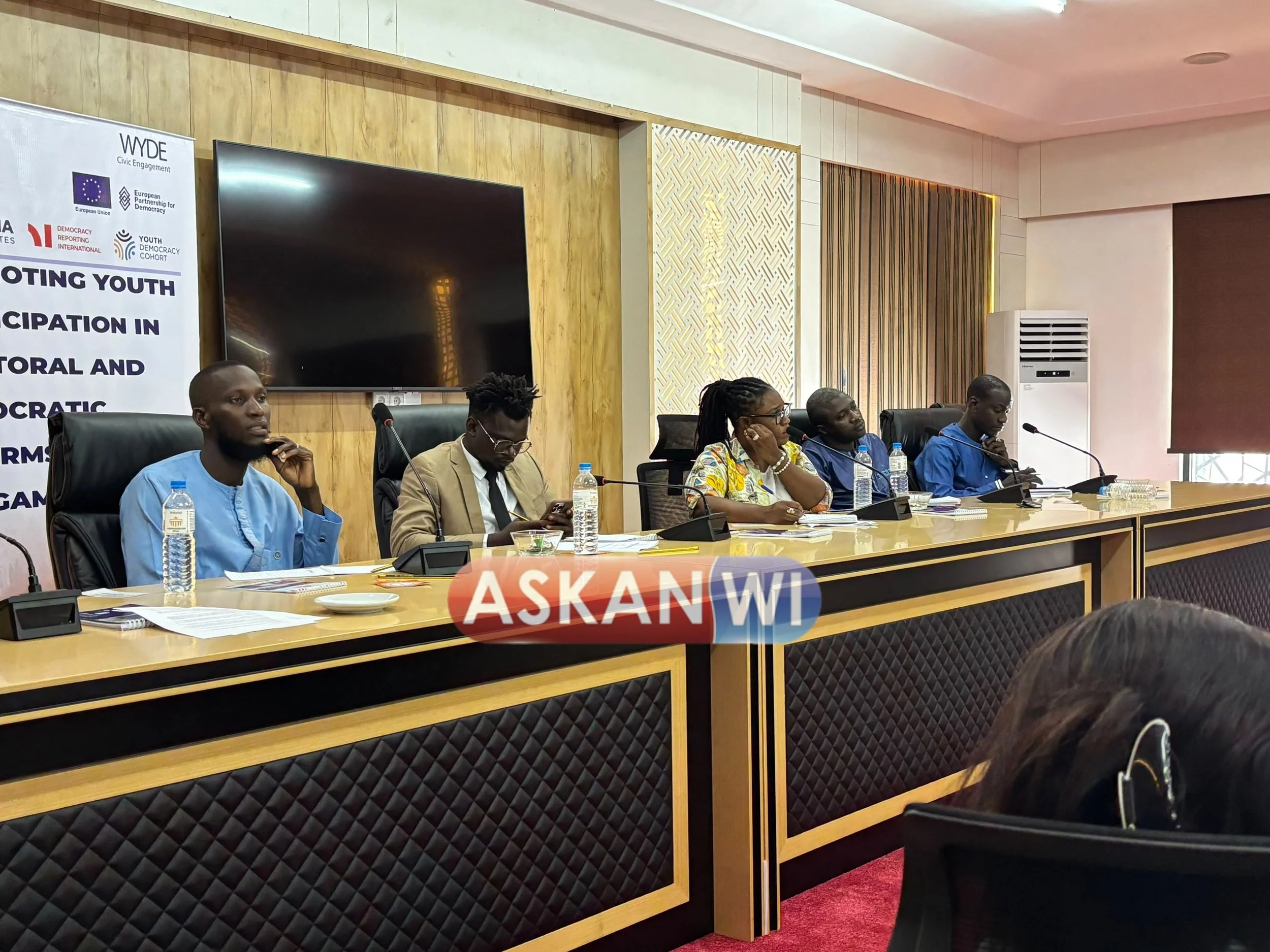
Panel on Signing Ceremony with Gambia Participates and Advocates © Askanwi Media
National Assembly Member for Foni Bintang, Hon. Bakary K. Badjie, acknowledged that not every elected representative contributes effectively in Parliament.
"The reality is that not every elected Member contributes effectively. Some Members lack vision, some lack commitment, and some fail to make meaningful contributions to parliamentary debates and decision-making," said the Independent Member formerly with the No to Alliance Movement affiliated with former President Jammeh.
He added that many parliamentarians remain committed to improving the lives of Gambians despite the challenges.
Hon. Badjie encouraged young people to support one another and avoid allowing political affiliation, tribal identity, or religion to determine their leadership choices.
"Young people must make decisions based on competence, purpose, and a shared vision for national development. Without that mindset, we will never produce the kind of leadership our country truly needs," said the young representative.
He also expressed concern over persistent national challenges such as unreliable electricity, noting that such issues should have been resolved long ago.
Meanwhile, Saibou Camara, spokesperson for GALA, emphasized the need for greater civic education and advocacy to help young people better understand the country's shared values and democratic principles.
He observed that modern society places increasing emphasis on individual identity, making it difficult for citizens to unite around common national values.
"Our individual interests should ultimately be guided by the national interest," said the human rights advocate.
Mr. Camara argued that although political parties develop policies from a national perspective, they are too often implemented based on individual interests rather than the collective good.
He called for a stronger commitment to progressive values, discipline, and principles that prioritize national development over personal or partisan interests.
The ceremony concluded with participating National Assembly Members and aspiring political candidates signing the Political Social Contract, publicly reaffirming their commitment to accountable leadership, transparent governance, and sustained engagement with young people as The Gambia continues its democratic reform journey.
