
Victims in North Bank Region Decry Slow Pace of Justice for Jammeh-Era Abuses
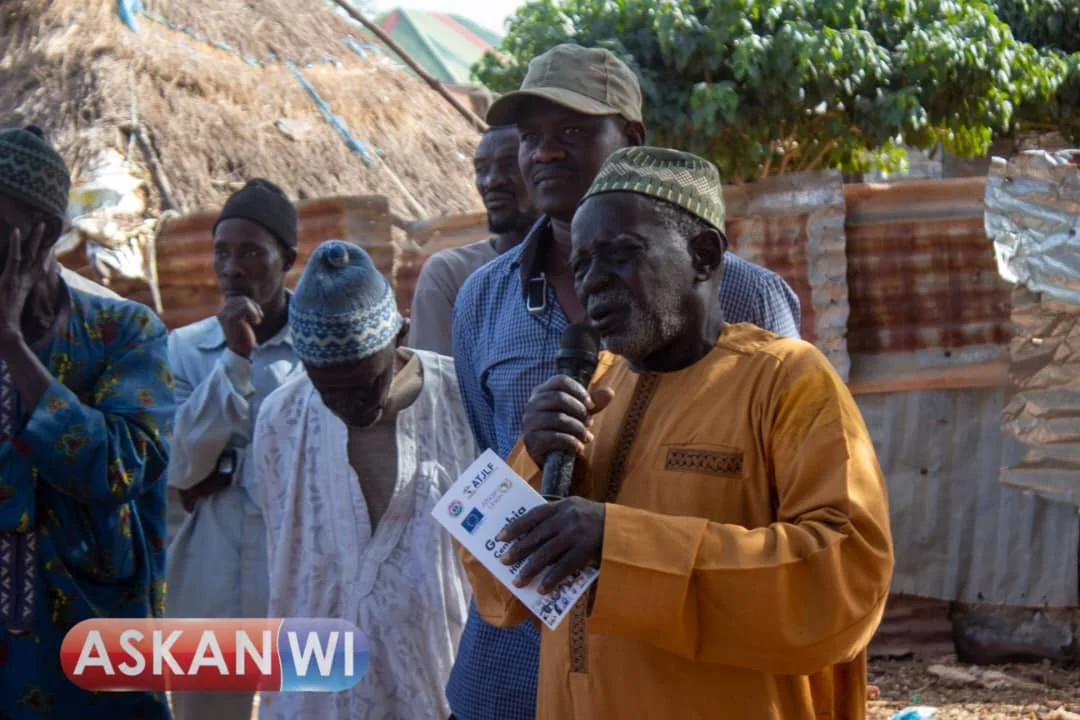
Community Member engages Victim Center © Askanwi
By Edward Francis Dalliah, Jr.
Communities and victims across several villages in The Gambia’s North Bank Region (NBR) have voiced growing frustration over what they describe as ‘the slow pace of justice for human rights violations committed during the 22-year rule of former president Yahya Jammeh,’ questioning the government’s commitment to implementing key accountability measures.
The concerns were raised both on Wednesday, 14th January 2026, during a Musical Caravan outreach organised by the Victims’ Center, aimed at sensitising communities on the African Union Transitional Justice Policy (AUTJP) and the government’s White Paper on the recommendations of the Truth, Reconciliation and Reparations Commission (TRRC).
The outreach brought together villagers, community leaders, youth groups, and survivors of past abuses, providing a platform for open dialogue on accountability, reparations, and justice. Several participants expressed dissatisfaction with what they see as a lack of urgency in prosecuting perpetrators, particularly within The Gambia.
Participants questioned “why some Jammeh-era suspects are being tried in foreign jurisdictions while progress at home remains slow,” warning that prolonged delays risk eroding public trust in the transitional justice process. Ba Foday Sonko, a resident of Bakindi village, criticised the pace of implementation of the TRRC White Paper. He noted that “Justice for victims is moving too slowly, and many victims are still waiting to see those responsible held accountable.” Another community member echoed similar concerns, cautioning that delays ‘could discourage victims from engaging with the process and weaken confidence in state-led accountability efforts.’
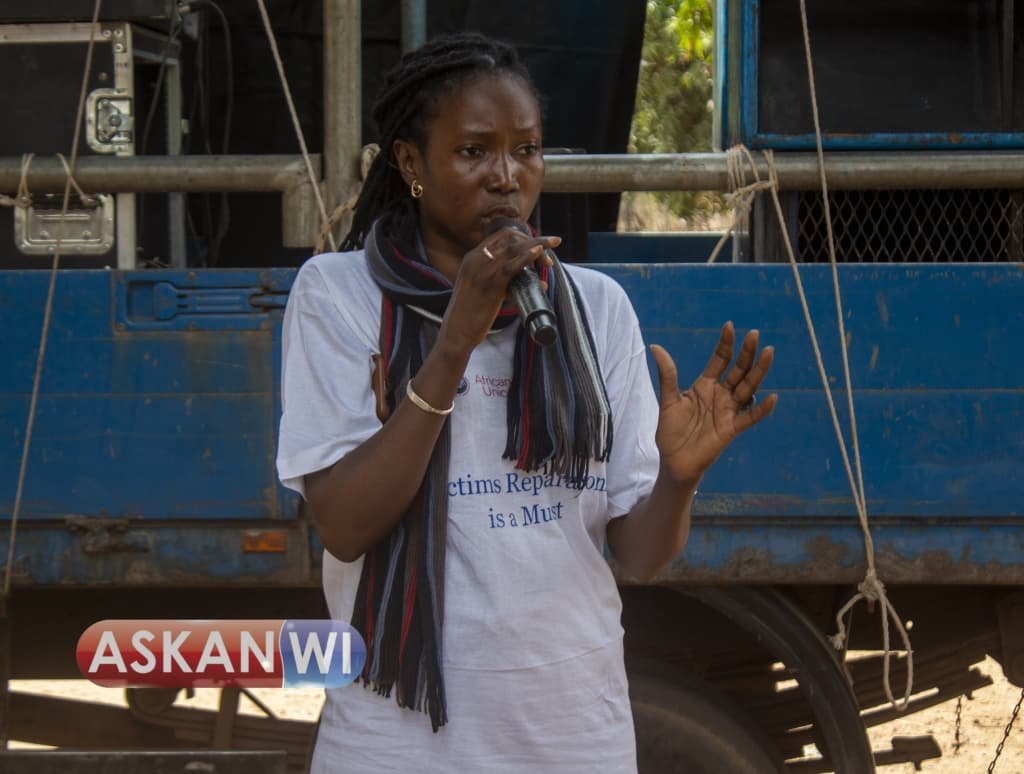
Kaddijatou Kuyateh © Askanwi Media
Responding to the concerns, Kaddijatou Kuyateh, a representative of the Victims’ Center, acknowledged frustrations but noted that steps toward accountability have begun. She cited the conviction of Yankuba Touray and the prosecution of former National Intelligence Agency (NIA) officers in the case widely referred to as “NIA 9.”
Touray, a central figure in the 1994 military coup that ousted President Sir Dawda Kairaba Jawara, is currently serving a prison a life sentence at Mile 2 Central Prison after being convicted for the killing of former Finance Minister Ousman Koro Ceesay.
Further addressing the gathering, Victims’ Center Coordinator Kebba Jome assured communities that additional prosecutions are expected. He disclosed that Sanna Manjang is currently standing trial at the court and highlighted “the establishment of the Special Prosecutor’s Office (SPO) to handle cases recommended by the TRRC.”
Established under the Special Prosecutor’s Office Act, 2024, the SPO is mandated to investigate and prosecute serious human rights violations and international crimes committed between July 1994 and January 2017. The office operates independently and is responsible for overseeing investigations, preparing cases for trial, and representing the state in court.
The Musical Caravan forms part of ongoing efforts by the Victims’ Center to deepen public engagement on transitional justice, even as victims continue to demand faster action, accountability, and meaningful closure nearly a decade after the end of Jammeh’s rule.
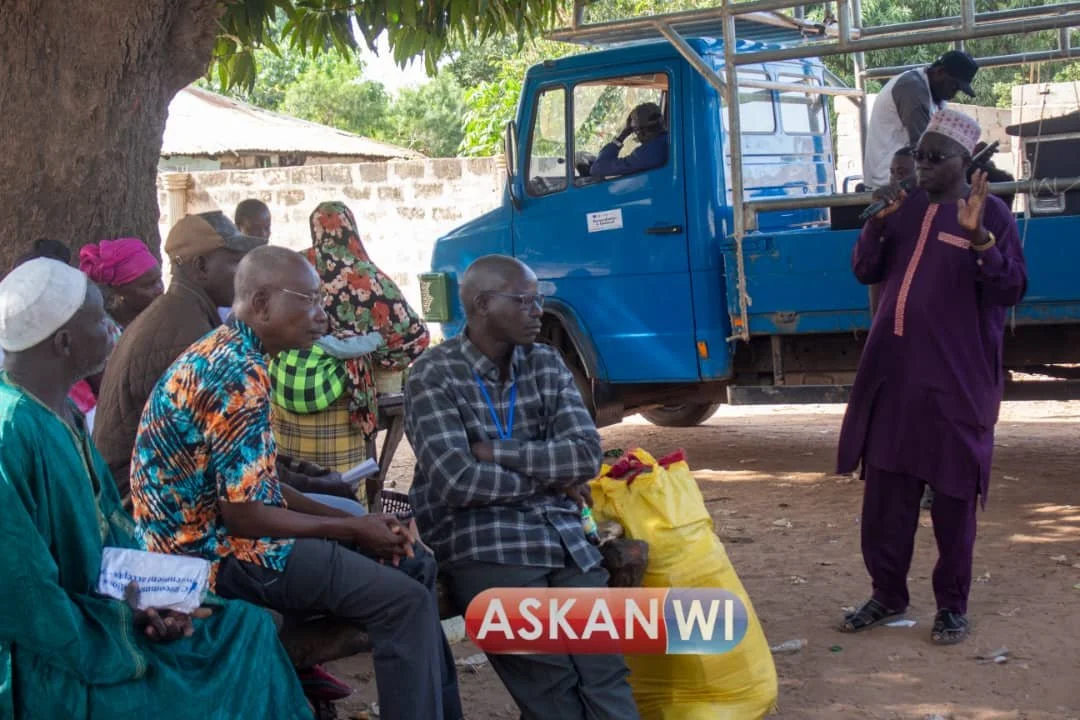
Victim Center Public Engagement © Askanwi Media
