
The Gambia Needs More Than Generators: Why Renewable Energy Must Power Our Future
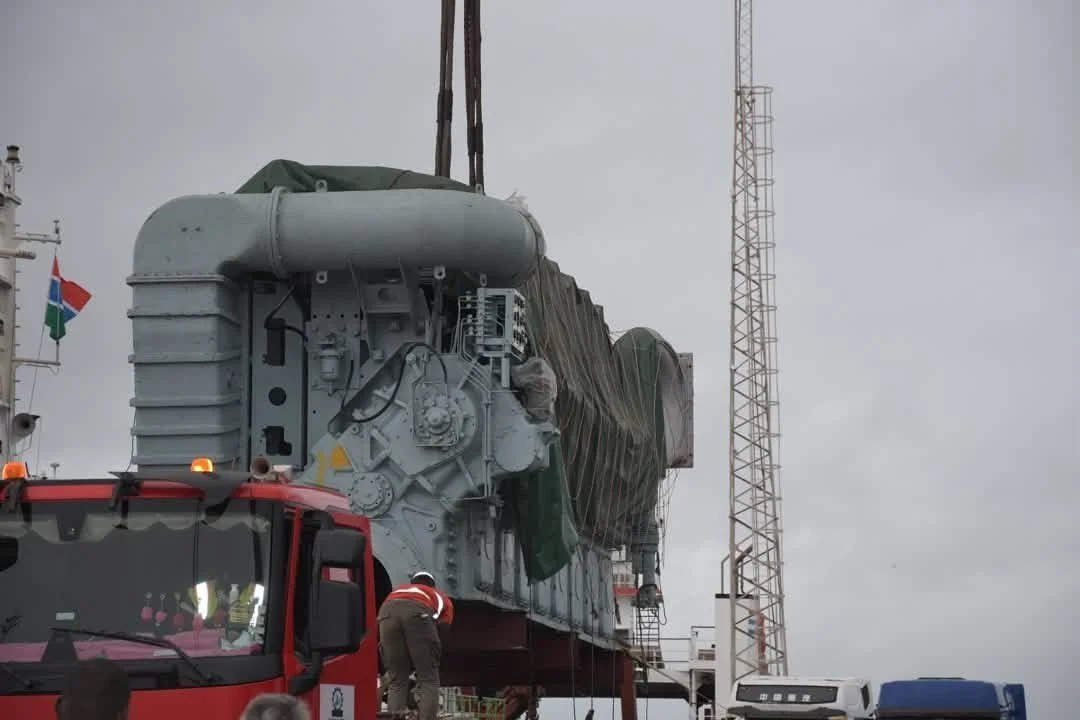
NAWEC Generators © NAWEC
By Baboucarr Nyang
The arrival of new heavy-duty generators for the National Water and Electricity Company (NAWEC) provides an important opportunity to have a much bigger national conversation about the future of electricity generation in The Gambia.
There is no question that The Gambia urgently needs reliable electricity. Businesses cannot operate efficiently without dependable power. Hospitals, schools, households and public institutions cannot function properly when electricity supply is uncertain. Therefore, investments that help stabilise the national grid are important.
However, the question we must ask is whether continuously investing in fossil-fuel generation can be the foundation of our long-term energy future.
The answer requires us to look beyond the immediate increase in generation capacity and examine the full cost of producing electricity.
A heavy-duty generator may provide electricity when we need it, but it also requires a continuous supply of fuel, lubricants, spare parts, maintenance and technical expertise. The machine itself may be purchased once, but the expenditure does not end there. Every hour it operates creates additional fuel and maintenance costs.
For a country like The Gambia, where much of our fuel is imported, this also exposes our electricity system to international fuel prices, foreign-exchange pressures and disruptions in global energy markets.
This is particularly important at a time when the country is also experiencing the consequences of a changing climate.
There is a contradiction that deserves serious national discussion: if climate change is contributing to increasing temperatures and electricity demand, should our response be to deepen our dependence on fossil fuels that contribute to greenhouse-gas emissions?
The answer should not be to reject conventional generators overnight. They have an important role to play, particularly as backup capacity while the country transitions towards a more resilient energy system.
But generators should increasingly become part of the transition, rather than the destination.
The Gambia has an enormous renewable-energy opportunity, particularly in solar power. We have abundant sunshine for much of the year, yet we continue to spend significant resources importing fuel to generate electricity.
Solar photovoltaic technology has changed dramatically over the past decade. The cost of solar systems has fallen, battery technology is improving, and large-scale solar plants can now be combined with battery storage to provide electricity beyond daylight hours.
The country has already taken steps in this direction, including the development of the Jambur solar project and plans for additional solar generation and battery storage.
These investments should be accelerated.
Imagine an electricity system in which solar provides a significant share of daytime electricity, batteries store excess power for evening demand, regional electricity interconnections provide additional stability, and conventional generators remain available for emergencies and periods of exceptionally high demand.
That would be a very different energy model from one in which generators remain the primary source of electricity and the country continuously purchases fuel to keep them running.
The economic argument is just as important as the environmental argument.
When a generator runs on imported fuel, the cost of electricity is tied to the price of that fuel. When a solar panel generates electricity, there is no fuel bill for the sunlight. The major investment is made upfront, followed by comparatively low operating costs.
This does not mean solar electricity is free. Solar installations require significant initial investment, land, transmission infrastructure, batteries and maintenance. But when decisions are made, we should compare the lifetime cost of the entire system, not simply the purchase price of a generator against the installation cost of a solar plant.
The debate should therefore move from “How many more megawatts can we generate?” to “What is the most affordable, reliable and sustainable way to generate those megawatts over the next 20 to 30 years?”
That is the conversation The Gambia needs.
Renewable energy is also an opportunity for energy independence. Every litre of imported fuel that we no longer need for electricity generation reduces our exposure to external shocks. Money that would otherwise leave the country to purchase fuel can increasingly be invested in local infrastructure, businesses, skills and jobs.
A renewable-energy transition can also create new economic opportunities for young Gambians: solar installation, electrical engineering, battery systems, maintenance, energy auditing, mini-grid development, manufacturing and other emerging areas of the green economy.
This is not simply a climate issue. It is an economic development issue, an energy-security issue and a national resilience issue.
The arrival of new NAWEC generators should therefore not be viewed negatively. Instead, it should encourage us to think strategically.
If the generators help stabilise the electricity system today, let us use that stability to build the renewable-energy system of tomorrow.
The government, NAWEC, development partners, private investors and civil society should work together on a clear national pathway towards a predominantly renewable electricity system. This should include large-scale solar, battery storage, distributed rooftop solar, renewable-powered water systems, stronger transmission infrastructure and appropriate regional power integration.
Most importantly, future energy investments should be assessed on lifetime economic cost, fuel dependency, climate impact, energy security and affordability for ordinary Gambians.
The Gambia cannot afford to keep solving tomorrow’s electricity problems with yesterday’s energy technologies.
We need reliable electricity today. But we also need to ask what kind of electricity system we want our children to inherit.
Generators may help keep the lights on during the transition. But renewable energy must increasingly power the future of The Gambia.
